Skip to content
You can now search across every topic, entity and event.What's new
Pandemics and Biosecurity
9JUN

PABS talks reopen under a deadline

2 min read
09:58UTC

The seventh Intergovernmental Working Group opened in Geneva on 6 July to break the deadlock over pandemic-era vaccine sharing, under a 17 July deadline Lula and Tedros called a deadline, not a milestone.

ScienceDeveloping
Key takeaway

IGWG7 has until 17 July to conclude the PABS annex or defer pandemic-era vaccine sharing a fourth time.

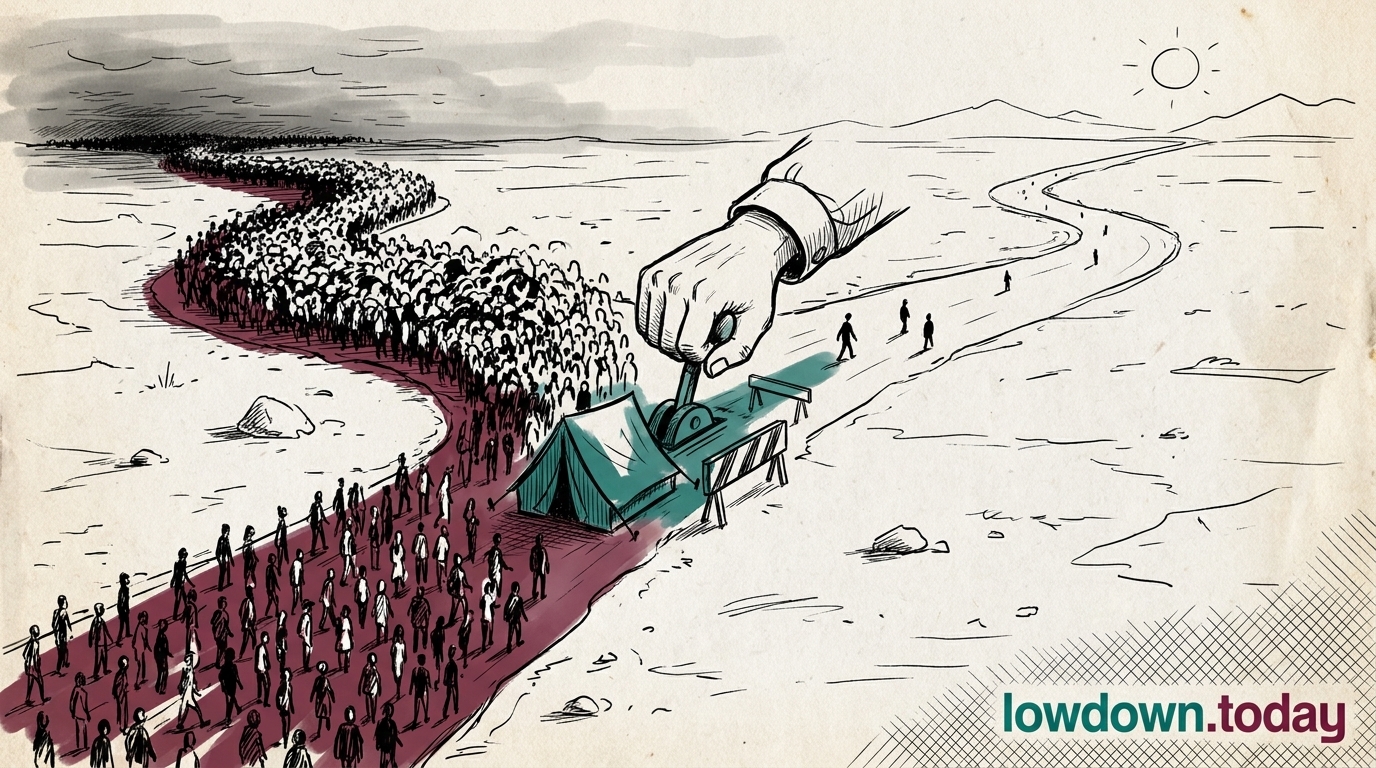
The seventh Intergovernmental Working Group (IGWG7) on the WHO Pandemic Agreement opened in Geneva on Monday 6 July, running to 17 July, to try again on the Pathogen Access and Benefit-Sharing (PABS) annex 1. PABS is the mechanism meant to guarantee that countries which share virus samples receive the vaccines made from them, and it has been deadlocked since the World Health Assembly, WHO's member-state governing body, deferred it in May , with talks stalling again ahead of this session .

On Monday 15 June, Brazilian President Lula and WHO Director-General Tedros Adhanom Ghebreyesus co-signed an open letter to the leaders of the G7, G20 and BRICS, naming 17 July "a deadline, not a milestone." That letter carried the first head-of-state signature on the PABS push; the two earlier extensions bore only WHO's name. The letter set out the three unresolved questions plainly: how benefits are shared, how the system is governed, and how equity is guaranteed.

PABS turns on one trade: manufacturers and rich states hold the production capacity, while the countries where novel pathogens most often emerge hold the samples and want binding access in return. That North-South bargain is the pandemic-era successor to a 2011 influenza-only framework, which itself took four years to negotiate; extending it to every pathogen is the harder task now stalled. A Brazilian president signing the demand signals which side now feels the urgency.

Deep Analysis

In plain English

PABS stands for Pathogen Access and Benefit Sharing. It's the part of the WHO Pandemic Agreement meant to answer a simple question: if a country shares a dangerous virus sample so vaccine makers can study it, what does that country get back once a vaccine exists? Right now there's no binding answer. Countries like DRC share outbreak data and virus samples in real time, but have no guaranteed right to buy the vaccines and treatments that data helps produce. IGWG7, running in Geneva from 6 to 17 July, is the seventh attempt to agree binding rules. Brazil's President Lula and WHO's Director-General set a public deadline in a 15 June letter, hoping a named date succeeds where earlier rounds didn't.

Deep Analysis
Root Causes

IGWG7's deadlock traces to one unresolved clause: what share of real-time vaccine, therapeutic and diagnostic production a manufacturer must reserve for WHO-coordinated distribution during a declared pandemic, before any bilateral advance-purchase agreement is honoured.

Manufacturing states, home to the pharmaceutical companies that would carry that obligation, have resisted a fixed percentage since the clause first appeared in draft text; countries without domestic manufacturing capacity, DRC prominent among them given its real-time Bundibugyo sequence-sharing, treat the same percentage as the entire point of the treaty.

What could happen next?
  • Consequence

    A further missed PABS deadline would leave DRC sharing Bundibugyo sequence data through the current outbreak with no treaty-guaranteed claim on any vaccine or treatment that data helps develop.

First Reported In

Update #9 · Ebola's toolkit arrives, outbreak climbs

WHO· 5 Jul 2026
Read original
Different Perspectives
UK Health Security Agency
UKHSA said egg consumption remains the strongest signal in its 207-case Salmonella Enteritidis investigation. The genomic cluster and 38% hospitalisation among people with available information make exposure identification a public-health priority.
GLEWS+
GLEWS+
GLEWS+ assessed spillover risk from clade B MERS in Nile Basin camels as high if the clade establishes, while rating evidence for spread in camel populations low confidence. The joint assessment makes whole-genome sequencing the next test of the threat.
WHO Regional Office for Africa
WHO's Africa office said transmission in DR Congo is outpacing control efforts after laboratory capacity reached 19 sites and treatment capacity exceeded 1,300 beds. The assessment puts access, insecurity, community deaths and late care-seeking ahead of a simple equipment shortage.
People in Guatemala
People in Guatemala
Guatemala's population now carries the region's largest reported measles burden, with 30,371 confirmed cases and 26 deaths. The scale shifts practical attention from the Mexico-centred frame that followed the World Cup's travel consequences.
Pan American Health Organization
PAHO rated regional measles risk very high after recording 47,459 confirmed cases and 44 deaths through week 28. It names vaccination coverage, accumulated susceptibles and mass gatherings with broad international participation as general risk factors.
Chinese health authorities
China reported three human H9N2 cases to WHO between 10 and 16 July: two four-year-olds recovered, a 44-year-old man remains in intensive care, the first severity signal in a cluster that has produced 173 cases and 2 deaths globally since 2015. The subtype is distinct from the H5N1 series this topic otherwise tracks.
