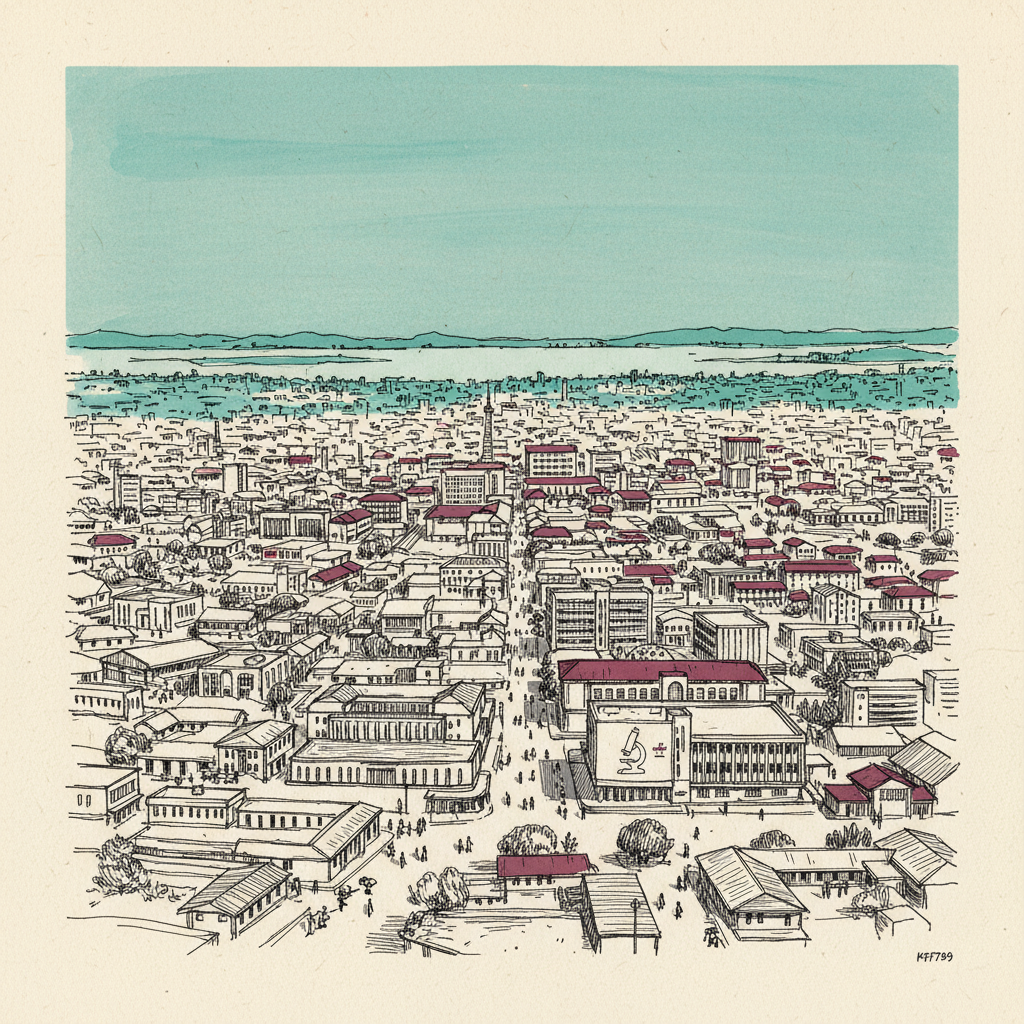
Uganda
East African state; confirmed urban Bundibugyo Ebola cluster in Kampala and Wakiso, May 2026.
On 28 July, Uganda declared its 20-case Bundibugyo Ebola cluster over after the last patient left Kampala’s Mulago Hospital on 16 July.
Last refreshed: 22 September 2026 · Appears in 1 active topic
Can Uganda contain urban Ebola with no approved treatment, as it did in 2022?
Timeline for Uganda
Mentioned in: G20 talks take Ebola pledges to US$3bn
Pandemics and BiosecurityCompleted WHO's 42-day countdown
Pandemics and Biosecurity: WHO calls Uganda's Ebola outbreak overMentioned in: DR Congo's 19 Ebola labs still trail the outbreak
Pandemics and BiosecurityMentioned in: Bundibugyo sets DR Congo's Ebola record
Pandemics and BiosecurityClosed the shared border to non-essential travel
Pandemics and Biosecurity: Uganda and DRC shut their shared borderBackground
Uganda is a landlocked East African state whose capital is Kampala. Its western frontier with DR Congo places it near recurrent zoonotic disease risks from the Congo Basin. The country’s health system has direct experience of Ebola containment, including a 2022 Sudan ebolavirus outbreak managed through contact tracing and community engagement.
Bundibugyo ebolavirus takes its name from Uganda’s Bundibugyo District, where the species was first identified in 2007. Uganda therefore has institutional experience with the pathogen as well as with outbreak control where matched vaccines and treatments are unavailable.
Uganda also hosts the Uganda Virus Research Institute and participates in ARILAC, an Africa CDC, African Society for Laboratory Medicine and EU programme that builds antimicrobial-resistance testing capacity across eight African states.
Uganda declares its outbreak over
Uganda declared its Bundibugyo Ebola outbreak over on 28 July, before the 42-day monitoring period due to end on 27 August. Its health ministry, the WHO and Africa CDC gave different accounts of why the declaration came early.
The declaration followed the discharge of Uganda’s last confirmed patient from Mulago Hospital in Kampala on 16 July. The cluster had recorded 20 cases and two deaths. Uganda’s response again relied on contact tracing and supportive care, methods used during its 2022 Sudan ebolavirus outbreak, because Bundibugyo Ebola had no licensed vaccine or treatment.
Uganda declares its outbreak over
Has Uganda's Ebola outbreak officially ended?
What does ECDC say about the risk of Ebola spreading to Europe from Uganda?
How many of Uganda's Ebola cases came from local transmission?
Is Uganda's Ebola outbreak still spreading?
How many Ebola cases are there in Uganda right now?
Has Uganda had Ebola before 2026?
How did Uganda contain Ebola in 2022 without a vaccine?
How did Uganda confirm its first Ebola case in May 2026?
Reference
Why is the Ebola outbreak named after a place in Uganda?
How has Uganda dealt with mpox outbreaks?
What is UVRI and what does it do in Uganda?
Recently resolved
Why is Uganda selected for ARILAC?

