Skip to content
Briefings are running a touch slower this week while we rebuild the foundations.See roadmap
Pandemics and Biosecurity
9JUN

WHO defers vaccine-sharing pact to 2027

3 min read
09:58UTC

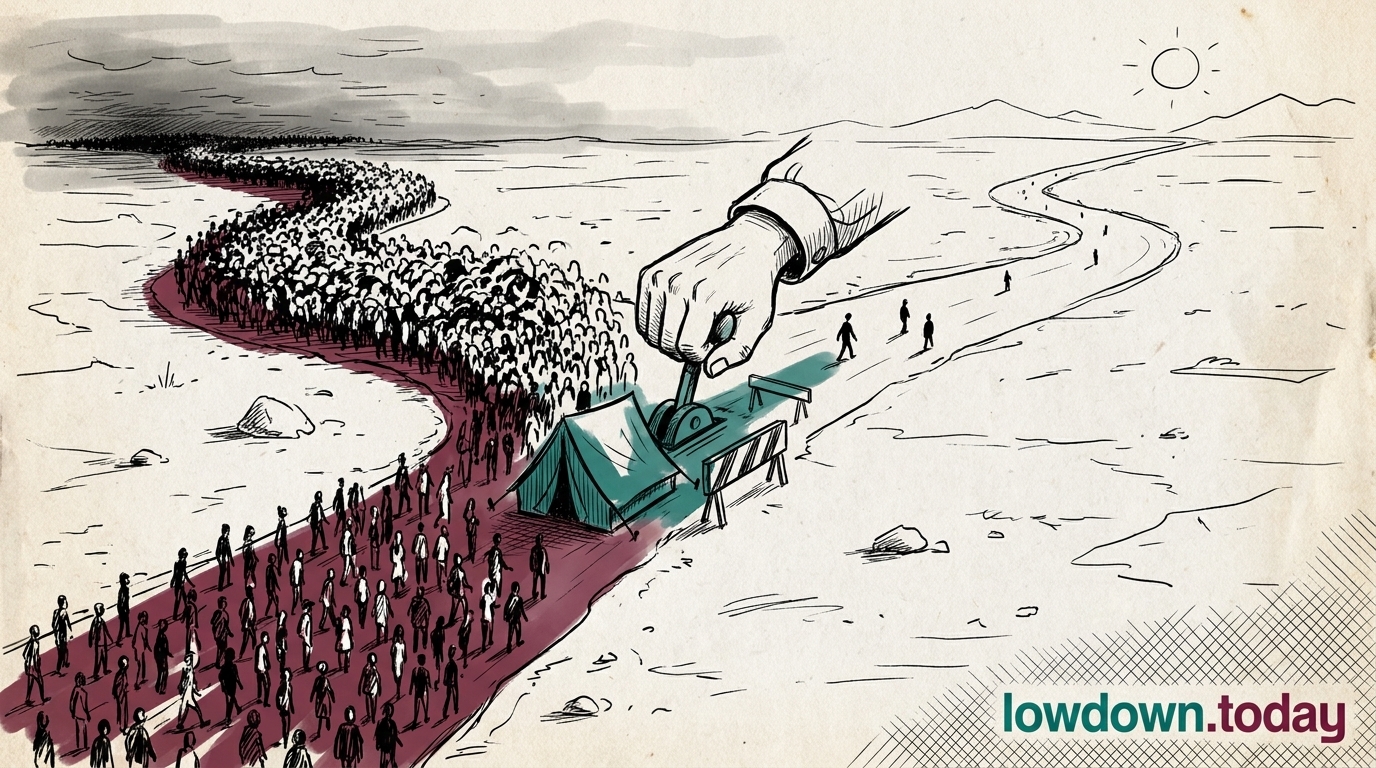
WHA79 deferred the Pandemic Agreement's vaccine-sharing annex to 2027, leaving the treaty's equity core inoperative during an emergency that has no licensed product to share.

ScienceDeveloping
Key takeaway

The treaty's vaccine-sharing core stays unfinished until 2027, just as an outbreak with no licensed product needs it.

The 79th World Health Assembly (WHA79) deferred adoption of the Pandemic Agreement's Pathogen Access and Benefit-Sharing (PABS) annex to WHA80 in May 2027, or to an earlier special session if a text is ready 1. The next negotiating round, the seventh Intergovernmental Working Group session (IGWG7), is set for 6 to 17 July 2026 2. PABS is the part of the treaty meant to guarantee that countries which share virus samples receive fair access to the vaccines made from them. Tedros Adhanom Ghebreyesus said real progress had been made, and member states cited a need for more time 3.

This is the second slip in a month: negotiators had already agreed to extend the PABS talks at the resumed sixth IGWG session on 1 May . The annex has stalled because high-income states resist binding sharing obligations they fear will constrain their own manufacturers, the same fault line that has dogged every benefit-sharing negotiation since the 2007 dispute over Indonesian H5N1 samples.

The timing gives the deferral its edge. The treaty's vaccine-sharing core stays inoperative at the exact moment a novel-species emergency with no licensed countermeasure would have tested it. If a Bundibugyo vaccine reaches trials this year, there is still no binding legal route to push doses to the low-income countries carrying the outbreak; allocation stays at the discretion of manufacturers and the buyers WHO can pay first. The world adopted the treaty in 2024 and, two years on, still cannot do the one thing its equity advocates designed it to do.

Deep Analysis

In plain English

When a new dangerous virus emerges, countries need to share samples of it quickly so that scientists around the world can study it and start making vaccines. The problem is that in past pandemics, like H1N1 in 2009, the countries that shared their virus samples did not get any of the vaccines that were made from those samples. Rich countries bought them all first. PABS (Pathogen Access and Benefit-Sharing) is meant to be the rule that fixes this: countries share samples and in return get guaranteed access to vaccines produced from them. The 79th World Health Assembly, which met in Geneva in May 2026, pushed the decision on PABS to a 2027 meeting because member states cannot agree on how the rules would work in practice. During the current Bundibugyo Ebola outbreak, there is no licensed vaccine for this species at all; the PABS negotiations apply to future outbreaks where a sharing-and-access mechanism could make the difference between equitable and inequitable vaccine distribution.

First Reported In

Update #4 · Ebola triples, response misfires

Konrad-Adenauer-Stiftung Geneva Multilateral Dialogue· 24 May 2026
Read original
Different Perspectives
World Health Organization
WHO's DON606 recalibration to confirmed-only reporting gives the clean baseline the CDC model rests on, but the apparent fall from 1,040 to 534 carries misinterpretation risk WHO communications have not pre-empted. The PABS deadlock ahead of IGWG7 and continuing MBP134/remdesivir assessment without authorisation make WHO the body most able to accelerate the two decisions that could change the outbreak's trajectory.
European Union (ECDC)
ECDC's Week 23 CDTR tracked four simultaneous non-Ebola signals: the Dermatophilus congolensis novel-transmission cluster across France, Germany and Spain; a 4.2-fold malaria surge in Mayotte; the Salmonella ST2045 multi-country cluster; and two new Saudi MERS cases. The continental early-warning layer is carrying a full multi-pathogen picture while Bundibugyo dominates headlines.
Uganda
Uganda
Uganda's 19 confirmed cases are concentrated in Kampala and Wakiso, an urban cluster that applied the 2022 Sudan-ebolavirus playbook; the Bwera border laboratory shortens cross-border confirmation to same-day. Uganda's regulatory authority must co-sign before MBP134 or remdesivir can dose any patient.
Democratic Republic of the Congo
Kinshasa shares Bundibugyo sequence data in real time with no treaty-guaranteed access to the vaccines that data informs, and its health minister called the US entry ban discriminatory while negotiating an early lift. DRC accounts for 515 of 534 confirmed cases and faces IS-controlled access blockades in Mambasa that health authorities cannot resolve.
United States (HHS/CDC)
HHS expanded the Ebola entry ban to green-card holders on 5 June, widening a restriction expiring around 17 June against WHO advice. The CDC simultaneously published the R0=2.51 modelling, the sharpest analytical contribution to the response, from a federal bench that holds the NIH and acting CDC director roles in one person.
Imperial College London / Cori and Ferguson
Anne Cori and Neil Ferguson place the case-fatality ratio at 30 to 40 per cent and read the 6.8-to-1 suspected-to-confirmed ratio as evidence that the laboratory figure understates true lethality. Many people die before a swab reaches them.
