Skip to content
Briefings are running a touch slower this week while we rebuild the foundations.See roadmap
Iran Conflict 2026
16MAY

OFAC named India three days before IRGC fire

4 min read
12:41UTC

Lowdown Bureau / Legal. The one Iran instrument Treasury signed all week dragged Delhi inside the same enforcement action Tehran provoked.

ConflictDeveloping
Key takeaway

A single 15 April designation placed Delhi inside the enforcement perimeter Tehran provoked three days later.

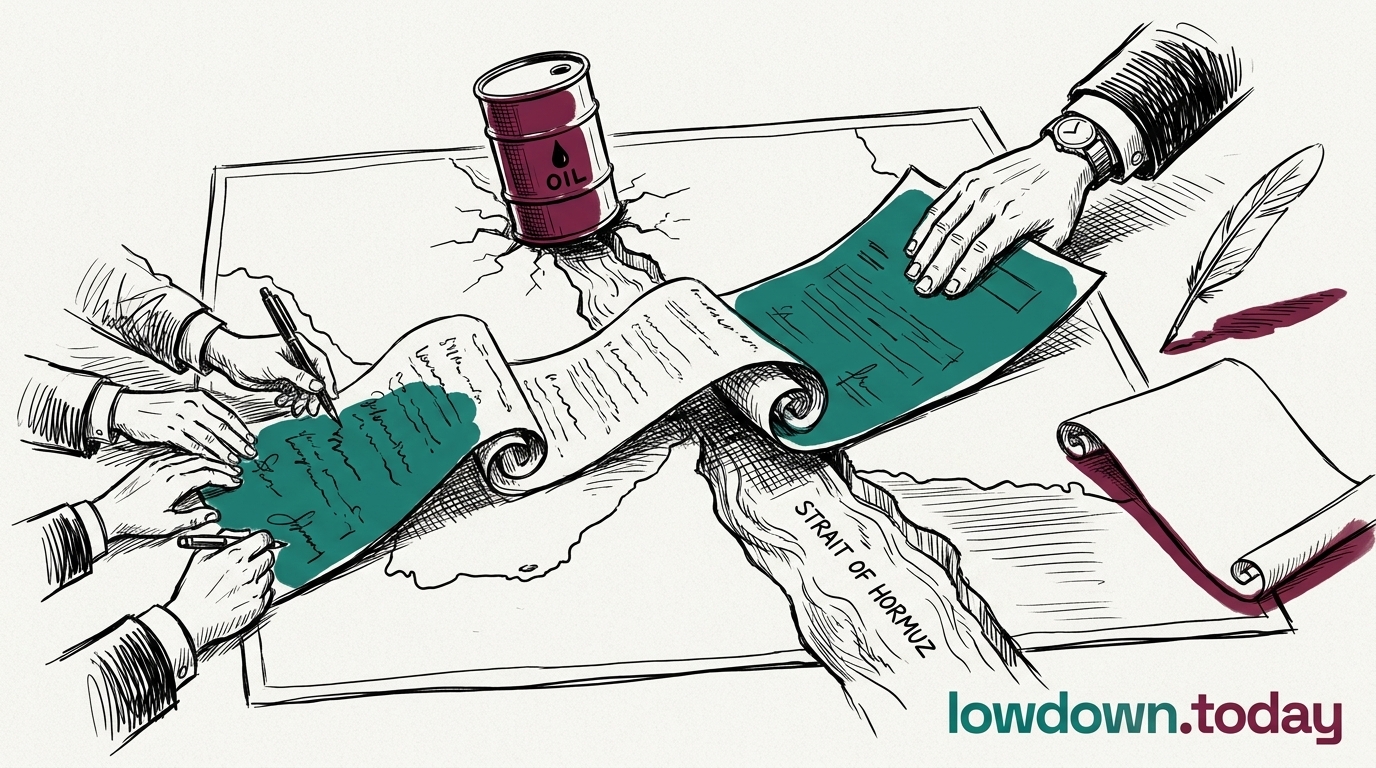
The Office of Foreign Assets Control (OFAC), the US Treasury bureau that administers sanctions, issued on 15 April a designation which Treasury titled "Economic Fury Targets Illicit Oil Smuggling Network Run by Iranian regime Elite". The action, listed under the Treasury programmes Iran-EO13902 and SDGT, named two Indian nationals, Chetan Prakash Balhotra and Tanjore Sunilkumar Srinivas, both based in the UAE. It named three companies, including Fleet Tanqo Private Limited of Navi Mumbai and House of Shipping Private Limited of Chennai. It added nine tankers (ANAYA, ANIKA, AURA, BELLARIS, CAUVERI, DAPHNE V, HORAE, SILVAR, VERSA) to the Specially Designated Nationals (SDN) list. It is the only Iran-specific instrument Donald Trump's Treasury has signed all week.

The anchor is Ali Shamkhani, former Secretary of Iran's Supreme National Security Council, whose smuggling network depends on Indian facilitators based in The Gulf to clear Iranian crude through sanctioned shipping. Three days after the designation, the IRGC fired on the Indian-flagged Sanmar Herald and Jag Arnav after granting them radio clearance . Foreign Secretary Vikram Misri summoned Iran's ambassador Iraj Elahi Fathali that evening and warned of consequences . Delhi has issued no statement on the OFAC designations naming its own nationals and India-registered companies.

OFAC's SDN architecture does the structural work here. Designation blocks the named parties from the US financial system, and it exposes any counterparty, including Indian state-owned refiners and clearing banks, to secondary sanctions that can cut off dollar access. Indian Oil Corporation, Bharat Petroleum and Hindustan Petroleum have historically carried Shamkhani-adjacent exposure on Iranian crude. Registering enforcement at Navi Mumbai and Chennai puts OFAC inside Indian municipal jurisdiction for the first time in this war. The nearest precedent is the Chabahar SDN exposure on Iranian port-linked Indian firms seven years ago, which Delhi resolved through silent compliance adjustments rather than public protest.

The two diplomatic tracks now operate on timelines that cannot stay separate much longer. Misri has a live demarche protesting IRGC fire on Indian ships; Delhi simultaneously sits inside an American enforcement action naming two Indian citizens and two India-registered entities. Neither side of the US-India-Iran triangle has yet acknowledged the other in public.

Deep Analysis

In plain English

The US Treasury's sanctions office (OFAC) placed two Indian businessmen and two Indian shipping companies on its blacklist on 15 April. These companies were facilitating the export of Iranian oil for a network controlled by Ali Shamkhani, a former top Iranian security official. Being on this blacklist (called the SDN list) means that any bank in the world that processes US dollar payments;which is almost every bank, since the US dollar is the world's trade currency;must refuse to do business with these companies. The freeze extends beyond the named companies: any bank or trader doing business with them also risks losing access to US dollar clearing. The timing matters: this designation came three days before Iran's Revolutionary Guards fired on two Indian-flagged tankers. India is now caught between a US sanctions action targeting Indian nationals and an Iranian military attack on Indian ships;pressure from both sides at once.

Deep Analysis
Root Causes

SDN designation propagates through correspondent banking by the mechanics of US dollar settlement. Any financial institution processing US dollar transactions for a designated entity;or for a counterparty that itself transacts with a designated entity;faces primary OFAC liability, regardless of its own nationality.

Fleet Tanqo and House of Shipping are India-registered, but their shipping operations denominated in US dollars route through correspondent banks with US Federal Reserve master accounts.

The Shamkhani network designation reflects a structural gap in Iran's oil export infrastructure: Shamkhani's network needed third-country facilitators precisely because direct Iranian entities were already fully sanctioned. By targeting the Indian facilitation layer rather than additional Iranian entities, OFAC maximises secondary pressure at minimum diplomatic cost to Washington;the legal action lands on New Delhi, not Tehran.

What could happen next?
  • Consequence

    Indian banks clearing US-dollar transactions for Fleet Tanqo or House of Shipping face OFAC secondary sanctions liability regardless of New Delhi's diplomatic response, forcing a compliance decision within 30 days of the SDN designation publication.

    Immediate · 0.85
  • Risk

    India's silence on the OFAC designations, combined with its ambassador summons over the IRGC firing, creates an asymmetric liability: publicly visible diplomatic protest without legal remedy for the sanctions exposure affecting Indian nationals.

    Short term · 0.72
  • Precedent

    Co-ordinating an SDN action targeting third-country nationals three days before a partner's vessels are attacked establishes a template for using sanctions and kinetic incidents as sequential pressure instruments on neutral states.

    Medium term · 0.6
First Reported In

Update #75 · Ceasefire ends in the water, a day early

US Treasury Office of Foreign Assets Control· 21 Apr 2026
Read original
Different Perspectives
India (BRICS meeting host, grey-market beneficiary)
New Delhi hosted the BRICS foreign ministers' meeting on 14 May that Araghchi attended under the Minab168 designation, giving India a front-row seat to Iran's diplomatic positioning. India's state refiners have been absorbing discounted Iranian crude through grey-market routing since April; Brent at $109.30 means every barrel sourced outside the formal market generates a structural saving.
Hengaw / Kurdish human rights monitors
Hengaw's daily reports from Iran's Kurdish provinces remain the sole independent cross-check on Iran's judicial activity during the conflict. Two executions across Qom and Karaj Central prisons on 15 May and five Kurdish detentions on 15-16 May indicate the wartime judicial pipeline is operating independently of military tempo.
Pakistan (mediator and bilateral partner)
Islamabad spent its diplomatic capital as the US-Iran MOU carrier to secure LNG passage for two Qatari vessels through a bilateral Pakistan-Iran agreement, spending its mediation credit for direct economic gain. China's public endorsement of Pakistan's mediatory role on 13 May is the structural reward.
China and BRICS bloc
Beijing endorsed Pakistan's mediatory role on 13 May, one day after the BRICS foreign ministers' meeting in New Delhi. Chinese state banks are processing PGSA yuan toll payments; China has not commented on its vessels' continued Hormuz passage, but benefits structurally from a non-dollar toll system it did not design.
Iraq (bilateral passage partner)
Baghdad negotiated a 2-million-barrel VLCC transit without paying PGSA yuan tolls, offering political alignment in lieu of cash. Iraq's position inside Iran's adjacent bloc makes it the natural first bilateral partner and a template for how Tehran structures passage deals with states that cannot afford Western coalition membership.
Bahrain and Qatar (Gulf signatories)
Both signed the Western coalition paper while hosting US Fifth Fleet and CENTCOM's Al Udeid base, respectively. Qatar occupies the sharpest contradiction: it is on coalition paper while simultaneously receiving LNG passage through the bilateral Iran-Pakistan track, a position Doha has tacitly accepted from both sides.