Skip to content
Briefings are running a touch slower this week while we rebuild the foundations.See roadmap
Iran Conflict 2026
1MAY

IEA: 8m barrels/day — record disruption

5 min read
10:38UTC

Global oil supply has fallen by 8 million barrels per day — the largest disruption ever recorded. Strategic reserves cover roughly 50 days. The war is on day 22.

ConflictDeveloping
Key takeaway

SPR reserves cover roughly 50 days of the shortfall — after that, markets are unprotected.

The International Energy Agency's March 2026 Oil Market Report confirmed global oil supply fell by 8 million barrels per day — the largest disruption in the agency's records 1. The previous benchmark was the 1979 Iranian Revolution, which removed roughly 4.5 million barrels per day of Iranian production at its nadir. The 1990 Gulf War — when Iraq's invasion of Kuwait took both countries offline — cut approximately 4.3 million barrels per day. The current shortfall exceeds either by a wide margin, because it involves not one or two producers but the simultaneous curtailment of five Gulf States' output through a combination of direct strikes, Strait closure, and downstream infrastructure damage.

Gulf production is curtailed by at least 10 million barrels per day including condensates — the broader measure capturing lighter hydrocarbons essential to petrochemical feedstocks 2. The losses have compounded across three weeks through distinct vectors. Iraq declared Force majeure on all foreign-operated oilfields, unable to export through the closed Strait . Qatar lost 12.8 million tonnes per year of LNG export capacity — 17% of its total — for an estimated three to five years after Iranian strikes destroyed two LNG trains at Ras Laffan . Kuwait's Mina Al-Ahmadi refinery, processing 730,000 barrels per day, has been hit by Iranian drones on consecutive days . The UAE shut down the Habshan, Bab, and Shah gas facilities after missile debris and drone strikes , . Each loss is individually containable. Together they removed supply from five of The Gulf's six major producing states at once — a configuration that required a state actor to attack the Energy infrastructure of countries it maintained diplomatic relations with weeks earlier.

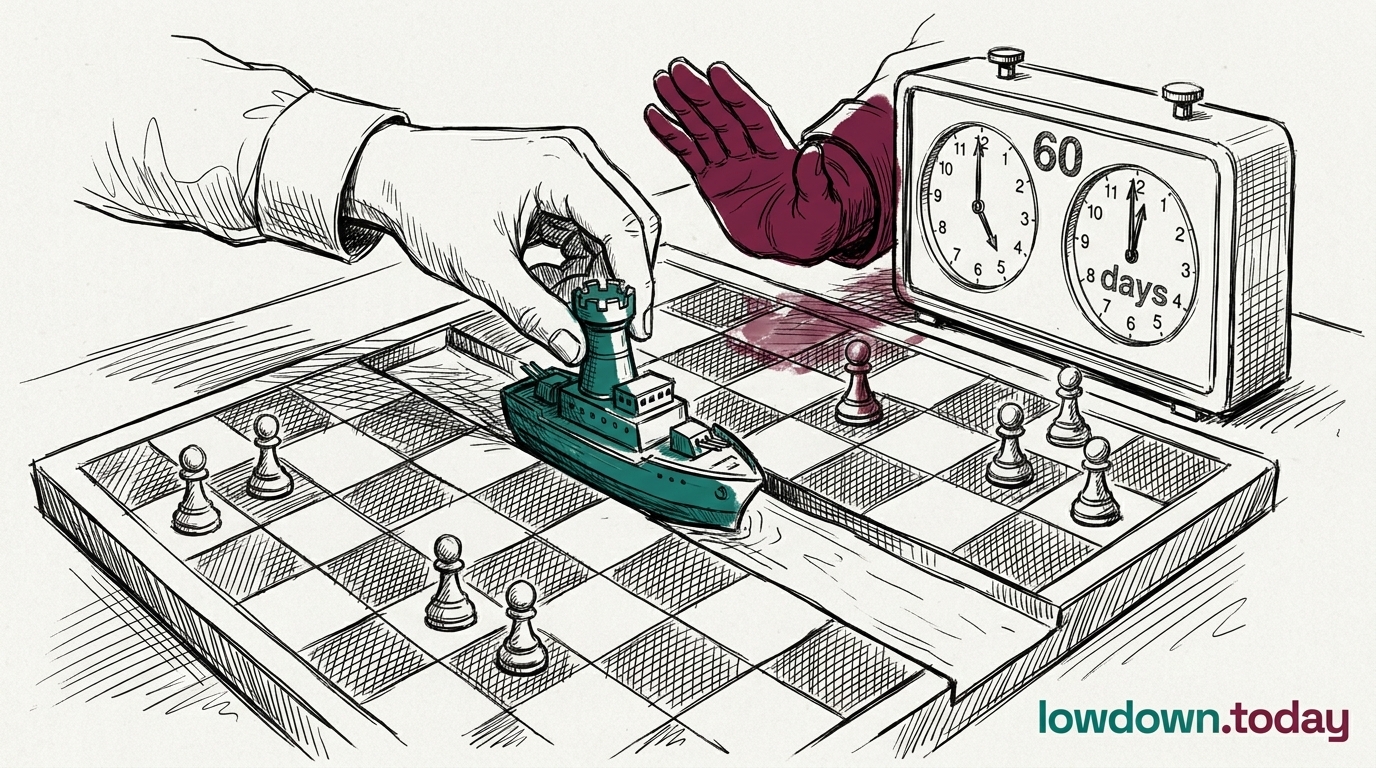
IEA member nations coordinated the release of 400 million barrels from strategic petroleum reserves — the largest drawdown in the system's five-decade history 3. At the current supply gap, those barrels cover approximately 50 days. The IEA described the release as "a stop-gap measure" dependent on swift conflict resolution. Goldman Sachs's Daan Struyven has warned Brent could exceed its 2008 all-time intraday record of $147.50 per barrel if Hormuz flows remain depressed for 60 days — roughly ten days beyond the SPR runway. Brent closed at $112.19 on Thursday , 66% above the pre-war $67.41, with Bloomberg-reported physical delivery premiums pushing the effective cost of a delivered barrel above $126. The 1973 and 1979 oil shocks each preceded global recessions within 12 months. The current disruption is larger than both, and the reserves intended to buffer it have a finite and publicly known expiry date.

Deep Analysis

In plain English

The world uses about 100 million barrels of oil every single day. This conflict has removed 8 million of those daily barrels from global supply — roughly the same proportion as the Arab nations cut off in 1973, when petrol queues stretched for miles and Western economies went into deep recession. Governments are releasing emergency stockpiles — 400 million barrels — but at 8 mb/d shortfall that only fills the gap for approximately 50 days. After those reserves are drawn down, if the Strait remains closed, there is no remaining buffer. Goldman Sachs is warning that oil could reach its 2008 all-time intraday high of $147.50 per barrel. That would mean record fuel prices in most countries, higher costs for everything transported by road, and a serious risk of recession in oil-importing economies.

Deep Analysis
Synthesis

The IEA's coordinated SPR release is a Western-institution response — and its limits are geopolitically asymmetric. China, India, and Brazil are IEA non-members and have not announced coordinated releases. China holds an estimated 900 mb in strategic reserves and may be absorbing discounted Iranian or Russian crude rather than releasing stocks. If Chinese demand continues to be met through alternative channels while Western supply chains draw down SPRs, the shock bifurcates: Western consumer economies face rationing pressure faster than non-Western economies, deepening a geopolitical divergence that outlasts the conflict itself.

Root Causes

The depth of the disruption reflects structural over-dependence on a single chokepoint that energy policy repeatedly failed to address. Gulf producers built export infrastructure assuming permanent US naval protection of Hormuz as a fixed condition. IEA member states drew strategic reserves down from ~300 days of import cover in 2001 to approximately 60–90 days by 2026, prioritising cost over resilience. Neither assumption survived three weeks of conflict.

What could happen next?
2 consequence2 risk1 meaning1 precedent
  • Consequence

    IEA SPR buffer of 400 mb covers approximately 50 days of deficit at 8 mb/d — after which markets face an unprotected shortfall without supply-side resolution.

    Short term · Assessed
  • Risk

    Brent exceeding $147.50/barrel would constitute a demand-destruction shock historically associated with recession onset in oil-importing economies within two quarters.

    Short term · Suggested
  • Consequence

    European gas markets face a secondary LNG supply shock as Qatari exports are disrupted, compounding crude price pressure on heating and power-generation costs.

    Short term · Assessed
  • Meaning

    This is the first recorded disruption to simultaneously curtail crude, condensate, and LNG exports from a single chokepoint — conventional oil-market modelling understates total impact.

    Immediate · Assessed
  • Risk

    Petrochemical feedstock shortages will propagate through plastics, pharmaceuticals, and manufacturing supply chains within 30–60 days, affecting sectors not modelled as direct energy exposures.

    Short term · Suggested
  • Precedent

    Sustained Hormuz closure above 60 days makes Cape of Good Hope re-routing and alternative pipeline infrastructure economically viable at scale — permanently altering Gulf export geography.

    Long term · Suggested
First Reported In

Update #44 · Trump: 48 hours to destroy Iran power grid

IEA· 22 Mar 2026
Read original
Causes and effects
This Event
IEA: 8m barrels/day — record disruption
The 8 million barrel per day shortfall exceeds every previous oil supply disruption in recorded history. The coordinated 400 million barrel SPR release covers approximately 50 days at the current gap. If the Strait remains closed beyond that window, global strategic reserves cannot bridge the deficit, and the Goldman Sachs price trajectory — past $147.50 per barrel — becomes the base case rather than the tail risk.
Different Perspectives
Oil markets
Oil markets
Brent fell $1.05 to $106.0 on summit Day 1 but remains $5-7 above the post-ceasefire equilibrium analysts modelled in March; the market is pricing a holding pattern, not a breakthrough. OilPrice.com and Aramco CEO Nasser converge on buffer-exhaustion before Hormuz reopens if the blockade extends past mid-June.
Iranian dissidents and human rights monitors
Hengaw documented a five-prison simultaneous execution cluster on 13 May, with Gorgan appearing for the first time in the wartime register. Espionage charges framed as Israel-linked moharebeh now extend across Mashhad, Karaj, and Gorgan, using the war as judicial cover for protest-era detainees.
BRICS / Global South
Araghchi's Delhi appearance positioned Iran as a victim of US aggression before non-Western foreign ministers, with Deputy FM Bagheri Kani calling on BRICS to act against US aggression. India, as the largest non-Chinese user of Iranian-routed crude, faces pressure to balance bloc solidarity against its own shipping and sanctions exposure.
China
China
Beijing accepted the Nvidia chip clearance on summit Day 1 and gave Rubio verbal acknowledgement of Iran as an Asian stability concern, having already put Pakistan on paper as the mediatory channel on 13 May (ID:3253), deflecting the US ask for direct Chinese action without refusing it.
Iran (government and civilian diplomatic track)
Araghchi denied any Hormuz obstruction at BRICS Delhi on 14 May while Iran's SNSC had finalised a Hormuz security plan the day before. Israel Hayom's single-sourced 15-year freeze offer gives Tehran a deployable figure in non-Western forums regardless of corroboration; the state attributed 3,468 wartime deaths with no independent verification.
United States (Trump administration and Senate moderates)
Trump signed a chip clearance for 10 Chinese firms on summit Day 1 and zero Iran instruments across 76 days; Rubio and Vance made verbal Iran asks without paper. Murkowski voted yes on the 49-50 war-powers resolution after Hegseth told the Senate that Article 2 makes an AUMF unnecessary.