Skip to content
Briefings are running a touch slower this week while we rebuild the foundations.See roadmap
Iran Conflict 2026
18APR

Trump's toll-payer order targets allied ships

3 min read
14:57UTC

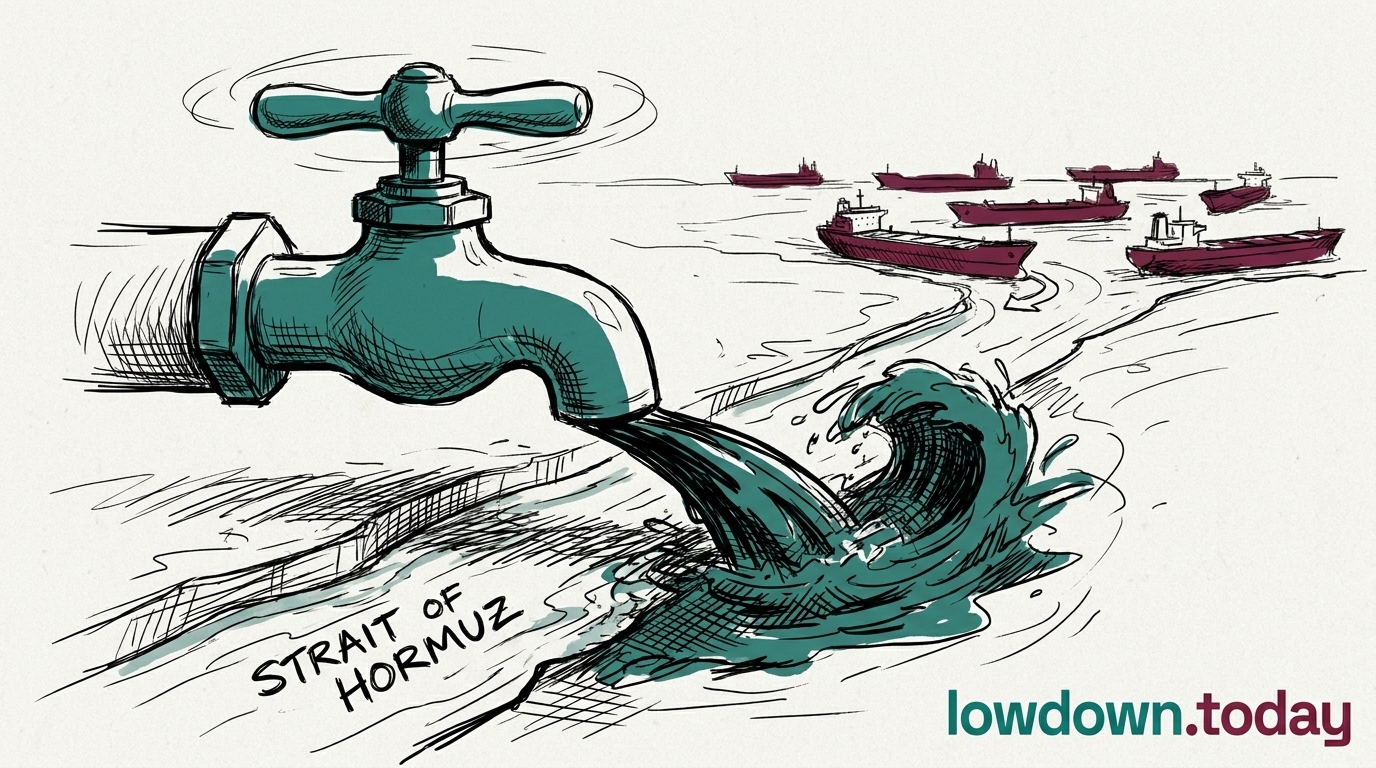
Trump ordered the Navy to stop any vessel that paid Iran's Hormuz toll, a list that includes French and Japanese ships whose governments refused to join the blockade.

ConflictDeveloping
Key takeaway

The blockade threatens to interdict vessels from allies who refused to join it.

France's CMA CGM Kribi and Japan's Mitsui OSK both paid Iran's Hormuz toll in yuan in early April. Under Trump's toll-interdiction order, both vessels, and potentially others from the Philippines and UAE, are targets for US Navy interception in international waters.

CENTCOM's operational order does not include this provision. Whether that reflects a deliberate decision to avoid the most explosive implications of the tweet, or a narrower military reading of the order, is unknown. The gap creates daily legal exposure: any officer who intercepts a French or Japanese vessel under the presidential order, or any officer who does not, acts without clear authority.

The blockade was designed to pressure Tehran. It has instead handed Paris and Tokyo a grievance against Washington . The EU had already rejected Trump's suggestion of a US-Iran "joint venture" on toll collection, citing UNCLOS transit passage rights. France and Japan are now members of the UK's reopening coalition while also appearing on the US interception list for having paid Iran's fees.

Deep Analysis

In plain English

Iran has been charging ships a fee , called a toll , to pass through the Strait of Hormuz. Some European and Asian companies paid this toll to keep their goods moving, including a French shipping company (CMA CGM) and a Japanese energy firm (Mitsui OSK). Trump's social media post said the US Navy should stop any ship that had paid Iran this toll , which would include those French and Japanese vessels. France and Japan are US allies who refused to join the blockade. CENTCOM's actual military order did not include this instruction. So right now, there is a gap between what Trump said should happen to allied ships and what the US military is actually doing. That gap has not been publicly resolved.

What could happen next?
  • Risk

    France could invoke UNCLOS Article 300 (good faith obligations) and file immediate ITLOS proceedings if a CMA CGM vessel is stopped, creating an international court process that would take months but generate immediate diplomatic crisis.

    Short term · 0.72
  • Consequence

    CENTCOM's omission of the toll-interdiction provision from its operational order leaves a daily decision gap: every officer on patrol near a toll-paying allied vessel must choose which authority to obey without clear guidance.

    Immediate · 0.88
  • Risk

    If France and Japan are both targeted as toll-payers and members of the UK's 40-nation reopening coalition, the US blockade and the UK coalition are in direct operational conflict over the same vessels in the same waterway.

    Immediate · 0.8
First Reported In

Update #67 · Trump blockades Iran on a tweet

CENTCOM / Al Jazeera· 13 Apr 2026
Read original
Different Perspectives
Lloyd's of London war-risk underwriters
Lloyd's kept its Hormuz war-risk designation unchanged at $10-14 million per voyage even as Brent spiked 7%, holding the split from futures that has run since late May. Underwriters require a Security Council resolution or government certification, not a presidential phone call.
Gulf Cooperation Council states
Gulf states, having written to the IMO rejecting Iran's Hormuz transit authority, watched a fresh missile exchange land on Kuwaiti soil. Riyadh and Abu Dhabi remain caught between US security guarantees and Iranian fire, with no Gulf state co-belligerent except Kuwait.
China
China
Beijing stayed out of the diplomatic rupture, sending no envoy and offering no public position on the suspended talks. China keeps its bilateral energy corridor with Tehran while declining the exposure of a mediating role Trump barred it from anyway.
Kuwait
Kuwait
Kuwait's air defences engaged two Iranian ballistic missiles aimed at US forces late on 31 May, the second interception in days after invoking Article 51. Repeated strikes test whether Kuwait's politics can sustain hosting US forces as a de facto co-belligerent.
Lebanon and Hezbollah
Lebanon announced a partial ceasefire under which Hezbollah pledged to stop attacking Israel, the concrete output of Trump's call. Beirut heads to Washington on 3 June with Israeli forces still inside the south, testing whether the truce survives contact.
Israel under Netanyahu
Netanyahu stood down the planned Beirut operation under Trump's pressure but kept his ground advance running toward the Zaharani river, the deepest incursion in 25 years, and disputed Trump's claim that troops had turned around. Israel signalled the halt is tactical, not a wind-down.