Skip to content
Briefings are running a touch slower this week while we rebuild the foundations.See roadmap
Iran Conflict 2026
18APR

Iran-Oman draft toll outside US reach

4 min read
14:57UTC

IRNA confirmed Iran is drafting a bilateral transit protocol with Oman; Fortune reports a toll-collection mechanism. Oman's territorial waters cover the southern half of the strait under UNCLOS, placing the levy outside CENTCOM's enforcement geometry.

ConflictDeveloping
Key takeaway

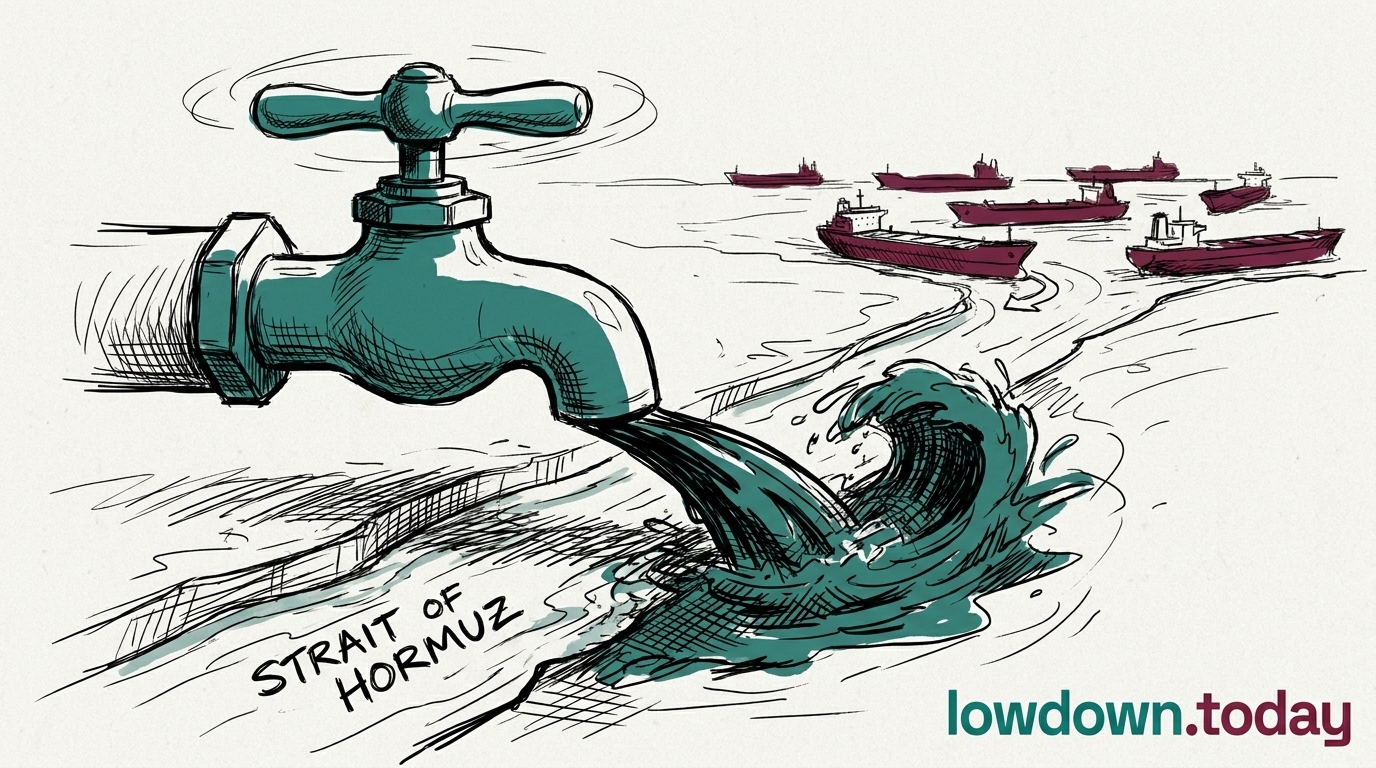
Iran is engineering a Hormuz toll Washington cannot lawfully block by routing it through Oman's UNCLOS waters.

IRNA confirmed on 27 April that Iran is drafting a bilateral transit protocol with Oman to oversee Strait of Hormuz passage 1. Fortune reports the protocol carries a toll-collection mechanism Iran could not impose unilaterally 2. Abbas Araghchi, Iran's Foreign Minister, met Sultan Haitham bin Tariq in Muscat on Sunday 26 April to negotiate the arrangement , six days after an IRGC drone struck Salalah port in Oman's south.

The legal mechanics are doing the work. Under the UN Convention on the Law of the Sea (UNCLOS), Oman's territorial waters extend twelve nautical miles from its coast and cover the southern half of the 33-kilometre chokepoint. A toll administered through a UNCLOS-compliant Gulf state sits outside CENTCOM's enforcement geometry by design. Washington can interdict tankers under the blockade order signed in April, but it cannot override a transit fee imposed inside Omani jurisdiction without picking a fight with Muscat, the only Gulf capital still trusted by both Tehran and the West.

The sequencing alongside Phase 2 of Iran's three-phase Pakistan text matters here. The bilateral with Oman is the operational instrument Iran would point to if Phase 2 stalls; revenue through Muscat does not require Washington's signature. The 1968 IMO traffic-separation scheme governing the strait is jointly operated by Iran and Oman to this day, which gives the protocol an institutional foothold the strait's other framework drafters do not have.

Deep Analysis

In plain English

Iran wants to charge ships a fee for passing through the Strait of Hormuz. If Iran collects that fee on its own, the US argues it is illegal and CENTCOM can block the vessels. Iran's answer is to route the toll through Oman instead. Oman, the country whose coastline runs along the southern half of the strait, has agreed to co-administer a toll collection system with Iran. Because Oman is a respected Gulf state that has signed the international maritime law convention (UNCLOS), a toll collected through Oman sits in a legal grey zone that the US cannot simply override with a military order. Think of it as Iran finding a licensed partner for a business it could not operate alone. The US Navy can stop Iranian ships. It cannot easily stop Omani-administered shipping fees without confronting Oman, which is the one Gulf capital both Tehran and Washington still talk to.

Deep Analysis
Root Causes

The Oman protocol's structural origin lies in a specific legal gap: Iran never ratified UNCLOS, which means it cannot invoke UNCLOS transit-passage doctrine to justify toll collection in the strait. Oman ratified UNCLOS in 1989. A toll collected inside Omani territorial waters under a bilateral protocol with UNCLOS-signatory authority is not subject to the same legal challenge as a unilateral Iranian toll in waters whose legal status Iran contests.

The 1968 IMO traffic-separation scheme is jointly administered by Iran and Oman, which gives Muscat an existing operational stake in Hormuz governance. Iran is exploiting that legacy institutional footprint: by embedding the toll in the existing co-administration framework, Tehran transforms a new revenue mechanism into an extension of a 58-year-old bilateral arrangement that no US naval order has previously needed to override.

What could happen next?
  • Consequence

    If signed, the Iran-Oman protocol creates a revenue stream for Tehran that bypasses both CENTCOM's blockade geometry and OFAC's sanctions architecture, giving Iran economic durability independent of any ceasefire.

    Short term · 0.75
  • Risk

    An OFAC designation of any Omani entity involved in toll collection would force Muscat to choose between the toll revenue and dollar-system access, potentially collapsing both the protocol and Oman's mediating role.

    Short term · 0.7
  • Precedent

    A signed Iran-Oman Hormuz protocol would be the first multilateral legal instrument governing the strait's toll collection, establishing a template that could outlast the current conflict and constrain future US freedom-of-navigation operations.

    Long term · 0.68
First Reported In

Update #81 · Iran writes Phase 3; Trump posts Phase 1

Oman Observer· 27 Apr 2026
Read original
Different Perspectives
Lloyd's of London war-risk underwriters
Lloyd's kept its Hormuz war-risk designation unchanged at $10-14 million per voyage even as Brent spiked 7%, holding the split from futures that has run since late May. Underwriters require a Security Council resolution or government certification, not a presidential phone call.
Gulf Cooperation Council states
Gulf states, having written to the IMO rejecting Iran's Hormuz transit authority, watched a fresh missile exchange land on Kuwaiti soil. Riyadh and Abu Dhabi remain caught between US security guarantees and Iranian fire, with no Gulf state co-belligerent except Kuwait.
China
China
Beijing stayed out of the diplomatic rupture, sending no envoy and offering no public position on the suspended talks. China keeps its bilateral energy corridor with Tehran while declining the exposure of a mediating role Trump barred it from anyway.
Kuwait
Kuwait
Kuwait's air defences engaged two Iranian ballistic missiles aimed at US forces late on 31 May, the second interception in days after invoking Article 51. Repeated strikes test whether Kuwait's politics can sustain hosting US forces as a de facto co-belligerent.
Lebanon and Hezbollah
Lebanon announced a partial ceasefire under which Hezbollah pledged to stop attacking Israel, the concrete output of Trump's call. Beirut heads to Washington on 3 June with Israeli forces still inside the south, testing whether the truce survives contact.
Israel under Netanyahu
Netanyahu stood down the planned Beirut operation under Trump's pressure but kept his ground advance running toward the Zaharani river, the deepest incursion in 25 years, and disputed Trump's claim that troops had turned around. Israel signalled the halt is tactical, not a wind-down.