Skip to content
Briefings are running a touch slower this week while we rebuild the foundations.See roadmap
Iran Conflict 2026
18APR

Iran files three-phase deal; nuclear last

4 min read
14:57UTC

Iran routed a written ceasefire text through Islamabad on 27 April that freezes hostilities first and defers nuclear last. Olivia Wales restated Washington's inverse demand: hand over 440.9 kg of 60% uranium first, talk later.

ConflictDeveloping
Key takeaway

Iran put its floor in writing; Washington's reply has yet to leave Truth Social.

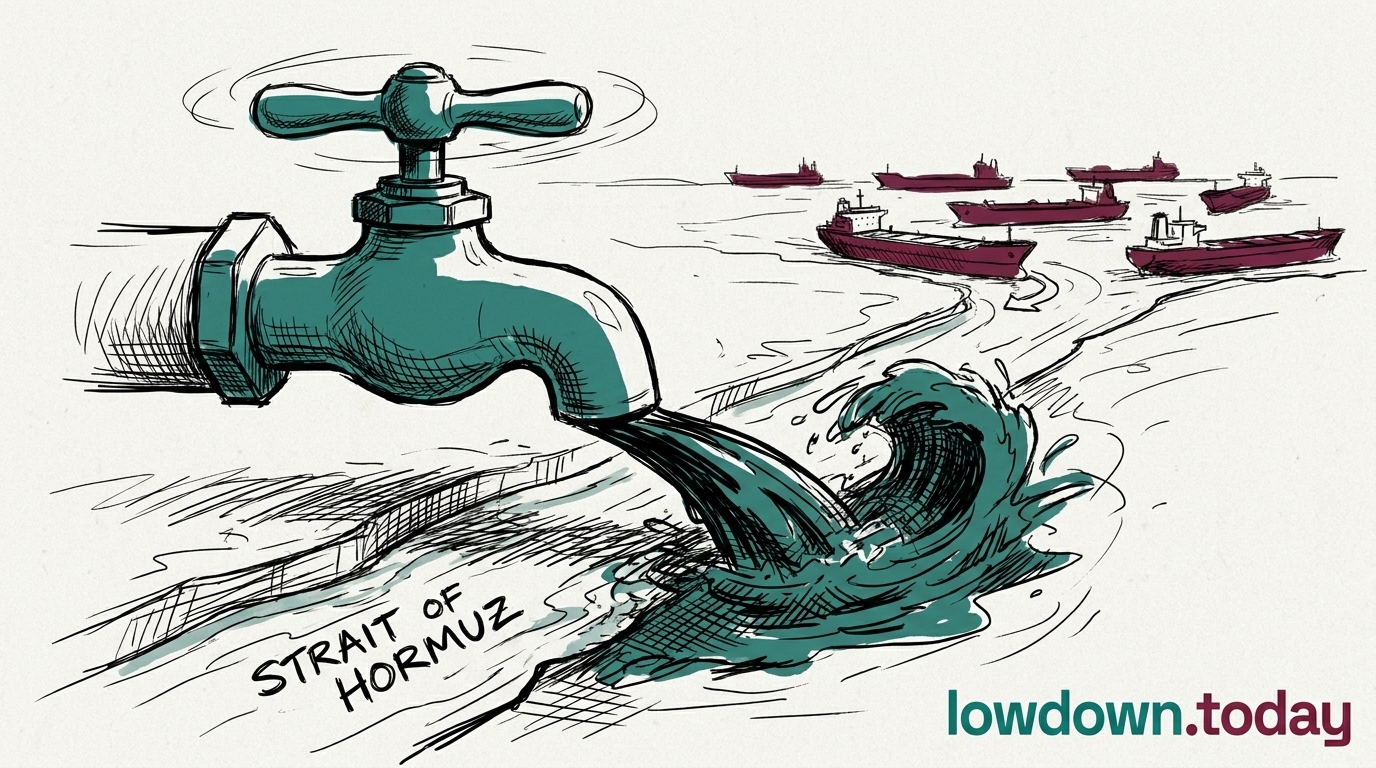
Iran delivered a written three-phase Ceasefire text to Washington through Pakistan on Monday 27 April, Axios first reported 1. Phase 1 freezes hostilities and binds guarantees against further attacks on Iran and Lebanon. Phase 2 rewrites the legal framework over the Strait of Hormuz and demands Iranian compensation. Phase 3, nuclear, is explicitly deferred.

White House spokesperson Olivia Wales restated the inverse US position the same day: enrichment suspended for at least a decade and Iran's 60% uranium stockpile handed over before talks proceed 2. "The United States will never allow Iran to have a nuclear weapon," Wales told Axios. Pakistan Army chief Asim Munir had walked Tehran's first three-to-five-year enrichment offer to Islamabad on 16 April ; the monitoring duration moved two years between then and now, yet the architecture did not.

Iran asks Washington to start with hostilities; Washington asks Iran to start with uranium. Phase 3 cannot be split from Phase 1 without one side conceding the order, and neither has. The third channel attempt in two weeks collapsed when Trump cancelled the Witkoff and Kushner Islamabad flight ; the Pakistani route is what survived. The Iranian text has now been delivered in writing; the US position remains rhetorical. OFAC and the White House have authorised no signed Iran instrument in 59 days.

Deep Analysis

In plain English

Iran sent a written peace proposal to Washington on 27 April, delivered through Pakistan as a go-between. The plan has three stages: first, stop the fighting; second, sort out who controls the Strait of Hormuz (the main shipping channel); third, tackle the nuclear question later. The US rejected this order. Washington says Iran must hand over its stockpile of enriched uranium and pause nuclear work before any talks begin. Iran says it will not do that without a guarantee that the attacks stop first. Think of it like two neighbours in a dispute: one says 'stop throwing rocks, then we'll talk'; the other says 'give me your rocks first, then we'll talk'. Both positions are now written down and sitting with the same Pakistani mediator, but 59 days into the war neither side has budged on which step comes first.

Deep Analysis
Root Causes

The sequencing inversion has a structural cause: Iran's surviving civilian government cannot accept uranium removal as a precondition without the IRGC veto.

Mojtaba Khamenei communicates via handwritten envelopes; the IRGC, which controls Iran's nuclear programme since the February strikes decapitated the civilian command chain, treats the 440.9 kg of 60%-enriched uranium as its primary remaining deterrent. Surrendering it before any security guarantee would eliminate Iran's only leverage in a war it is losing militarily but not economically.

Washington's nuclear-first position has a parallel structural driver: OFAC's Hengli Petrochemical designation and Iran's internet blackout (1,440 cumulative hours by Day 59) confirm the administration is applying maximum-pressure logic simultaneously with the ceasefire track.

Maximum pressure and sequenced diplomacy are institutionally incompatible: the first requires Iran to feel pain to the point of capitulation; the second requires Iran to feel secure enough to make concessions. Running both tracks simultaneously has produced the contradiction visible in the Trump/Leavitt public-line gap.

What could happen next?
  • Consequence

    Pakistan now holds both sides' written floor positions simultaneously, giving Islamabad institutional leverage it has not held since the 2013 Geneva interim nuclear talks, when Oman played the equivalent role.

    Immediate · 0.85
  • Risk

    If the US rejects the three-phase text without a counter-offer, Iran's civilian Foreign Ministry loses standing to the IRGC hardliners who argued the Pakistani channel would produce nothing.

    Short term · 0.78
  • Opportunity

    Phase 1 alone, if agreed, would freeze hostilities and allow Hormuz transits to resume, cutting Brent by an estimated $15-20 per barrel within a week of announcement, per Gulf Research Centre modelling from 2019 Hormuz crisis simulations.

    Short term · 0.72
  • Precedent

    Iran routing a written text through Pakistan rather than Oman establishes Islamabad as the primary mediating channel for the first time, potentially displacing Muscat's decades-long backchannel role.

    Medium term · 0.68
First Reported In

Update #81 · Iran writes Phase 3; Trump posts Phase 1

Axios· 27 Apr 2026
Read original
Causes and effects
This Event
Iran files three-phase deal; nuclear last
Both floor positions now sit in writing on the same day, routed through the same mediator, with their sequencing inverted; the disagreement is no longer about substance but about which clause comes first.
Different Perspectives
Lloyd's of London war-risk underwriters
Lloyd's kept its Hormuz war-risk designation unchanged at $10-14 million per voyage even as Brent spiked 7%, holding the split from futures that has run since late May. Underwriters require a Security Council resolution or government certification, not a presidential phone call.
Gulf Cooperation Council states
Gulf states, having written to the IMO rejecting Iran's Hormuz transit authority, watched a fresh missile exchange land on Kuwaiti soil. Riyadh and Abu Dhabi remain caught between US security guarantees and Iranian fire, with no Gulf state co-belligerent except Kuwait.
China
China
Beijing stayed out of the diplomatic rupture, sending no envoy and offering no public position on the suspended talks. China keeps its bilateral energy corridor with Tehran while declining the exposure of a mediating role Trump barred it from anyway.
Kuwait
Kuwait
Kuwait's air defences engaged two Iranian ballistic missiles aimed at US forces late on 31 May, the second interception in days after invoking Article 51. Repeated strikes test whether Kuwait's politics can sustain hosting US forces as a de facto co-belligerent.
Lebanon and Hezbollah
Lebanon announced a partial ceasefire under which Hezbollah pledged to stop attacking Israel, the concrete output of Trump's call. Beirut heads to Washington on 3 June with Israeli forces still inside the south, testing whether the truce survives contact.
Israel under Netanyahu
Netanyahu stood down the planned Beirut operation under Trump's pressure but kept his ground advance running toward the Zaharani river, the deepest incursion in 25 years, and disputed Trump's claim that troops had turned around. Israel signalled the halt is tactical, not a wind-down.