Taif Agreement
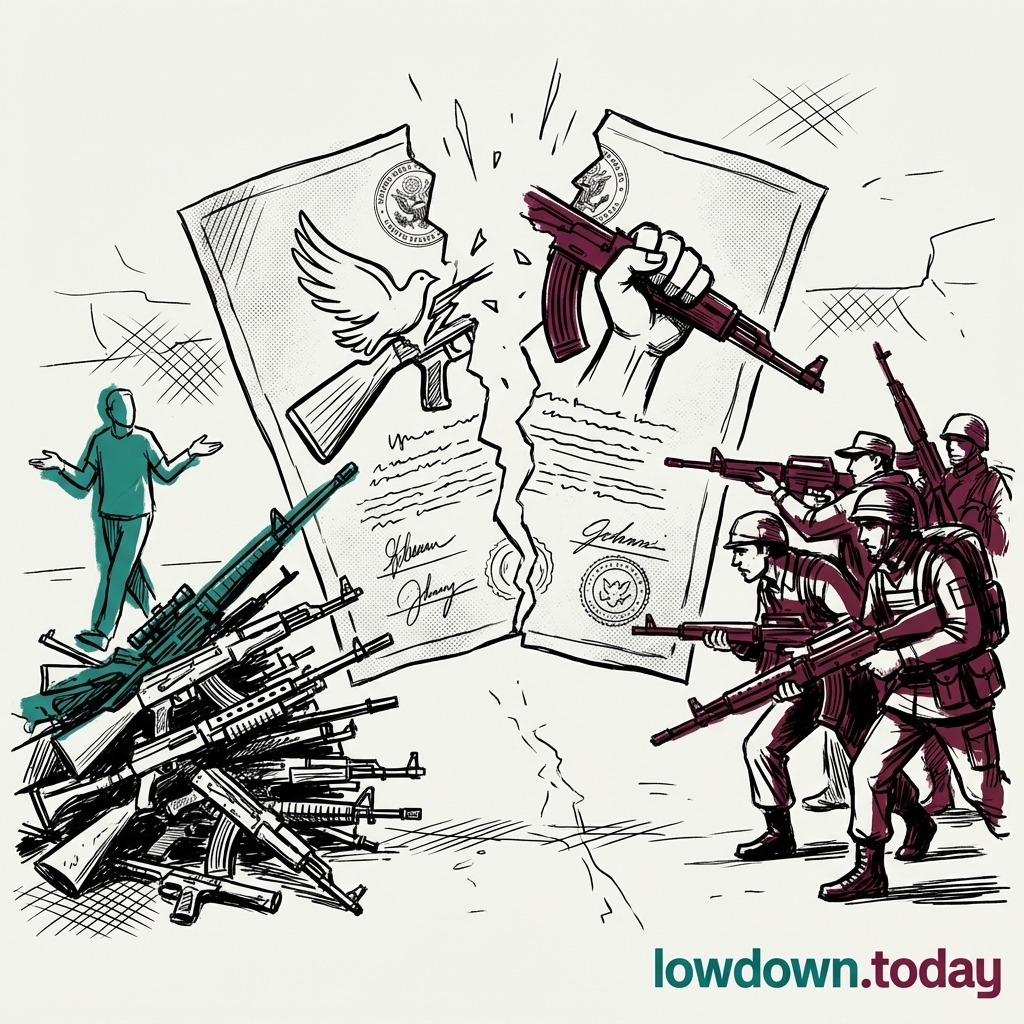
1989 agreement that ended the Lebanese Civil War; required all militias to disarm but exempted Hezbollah as 'national resistance' against Israeli occupation — an exemption that shaped Lebanese politics for 36 years until revoked by Cabinet on 3 March 2026
Last refreshed: 2 October 2026 · Appears in 2 active topics
Did a peace deal accidentally arm Hezbollah for thirty years?
Timeline for Taif Agreement
Mentioned in: Hezbollah kills Lebanon deal in hours
Iran Conflict 2026Mentioned in: Lebanon opens a track in Washington
Iran Conflict 2026Mentioned in: Lebanon truce collapses, dozens killed in days
Iran Conflict 2026Mentioned in: Lebanon talks open as the line moves
Iran Conflict 2026Mentioned in: Rubio hosts first Israel-Lebanon talks since 1993
Iran Conflict 2026Background
The Taif Agreement, signed in October 1989 in Taif, Saudi Arabia, ended the fifteen-year Lebanese Civil War by redistributing political power among Lebanon's sectarian communities and mandating the dissolution of all militias. Hezbollah was explicitly exempted from the disarmament requirement on the grounds that it constituted a "national resistance" against Israeli occupation, a carve-out that defined Lebanese politics for the next three decades.
The agreement's core tension surfaced in March 2026 when Lebanon's emergency Cabinet formally revoked Hezbollah's armed exemption, ordering the group to disarm and arresting any IRGC-linked personnel found on Lebanese territory. President Joseph Aoun went further, calling for direct talks with Israel and signalling a break with the resistance axis that the Taif exemption had long legitimised.
The practical collapse of the exemption was confirmed when dozens of IRGC Quds Force officers fled Beirut, dissolving a four-decade Iranian presence that had operated under the political cover the Taif carve-out provided. Taif now stands as both the legal instrument that enabled Hezbollah's armed status and the framework within which Lebanon is dismantling it.
What is the Taif Agreement?
Why was Hezbollah exempt from disarmament under the Taif Agreement?
Did Lebanon revoke Hezbollah's armed status?
When was the Taif Agreement signed?

