Skip to content
Briefings are running a touch slower this week while we rebuild the foundations.See roadmap
Iran Conflict 2026
11APR

Trump signs nothing, posts three demands

2 min read
11:03UTC

President Trump ended his second Situation Room final determination on Friday 29 May without a signature, then posted three public conditions Iran rejected within hours.

ConflictDeveloping
Key takeaway

The MOU stays unsigned; public demands from both sides have narrowed the diplomatic corridor.

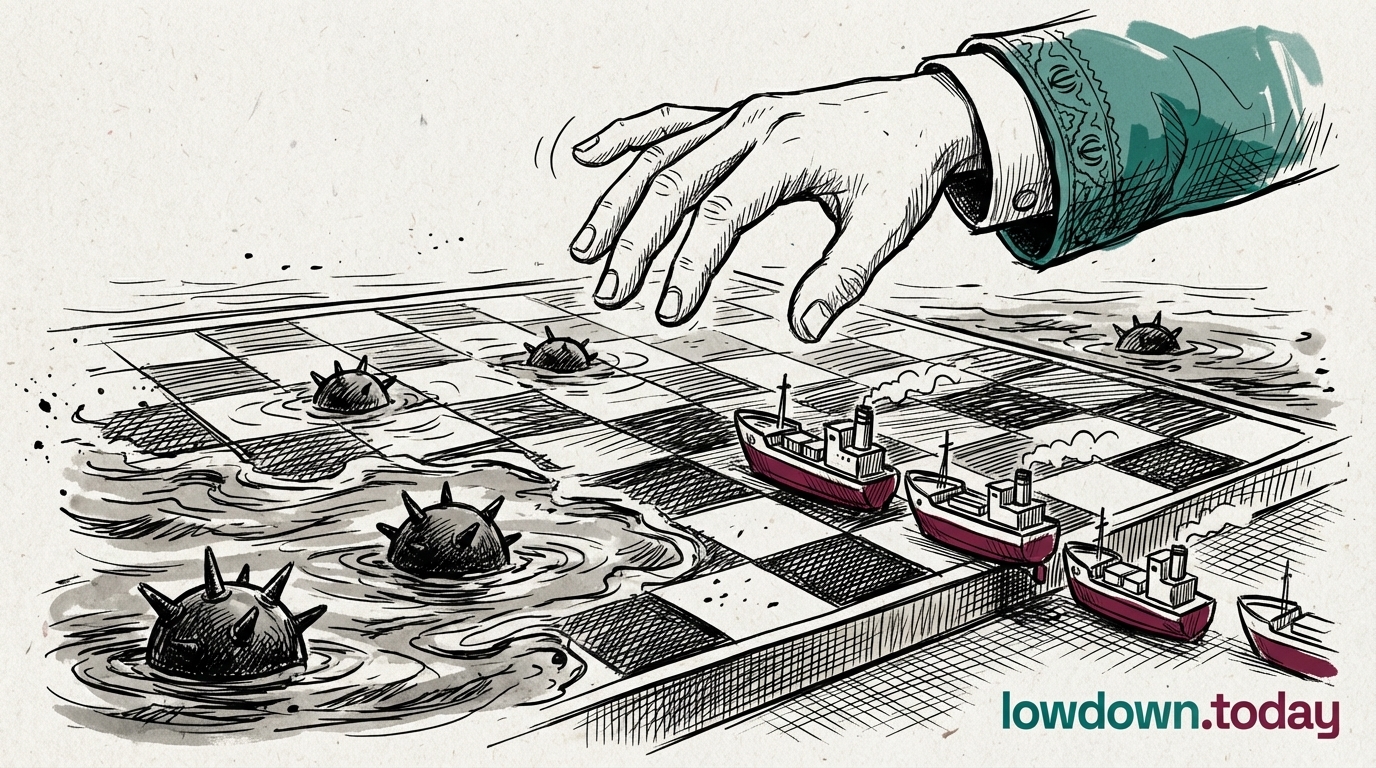
President Donald Trump convened a second White House Situation Room meeting on Friday 29 May, billed as his final determination on the tentative 60-day memorandum of understanding (MOU). After two hours he signed nothing, then posted that Iran must "never have a Nuclear Weapon or Bomb", that the Strait of Hormuz open "immediately, no tolls", and that Iranian mines clear within 30 days 1.

Iran's foreign ministry replied that there were "no negotiations" on its nuclear programme, and Fars News, an IRGC-linked Iranian agency, called the conditions a contradiction of the draft 60-day framework the two sides have circled for weeks.

Trump claimed in his Friday post that the deal was largely settled, while CENTCOM that same weekend put a Hellfire missile through a cargo ship's engine and a suspected mine drifted into Omani waters. His forces moved from waving ships off course to disabling one by munition. The posted demands are words; the missile and the mine are what his forces and the strait actually did.

Iran's rejection tracks the Supreme National Security Council line of 29 May, which framed the unsigned MOU as a 10-point Iranian victory with enrichment recognised . Neither side can move publicly without appearing to concede first.

Deep Analysis

In plain English

Trump held a second high-level meeting to decide whether to sign a deal that would reopen the Strait of Hormuz, a narrow waterway through which roughly one-fifth of the world's oil flows. He walked out without signing, then posted three demands on social media: Iran must give up nuclear weapons permanently, open the strait immediately with no fees, and clear its mines within 30 days. Iran's foreign ministry spokesperson rejected the nuclear demand within hours, stating the programme is off the table. Both sides have now stated, publicly, positions they cannot back down from without losing face at home. That public gap is why markets are nervous: a deal that everyone hoped was close now looks further away.

Deep Analysis
Root Causes

Iran's SNSC requires any text to recognise the right to enrich uranium on Iranian soil, because domestic legitimacy since 2015 has been built on that premise. Trump requires visible nuclear forswearing, because his domestic base framed the war as a disarmament campaign from day one. Those two requirements are structurally incompatible on a single page.

Neither side can move without a domestic narrative shift. Iran cannot trade away enrichment recognition without SNSC internal fracture. Trump cannot accept a text that omits nuclear forswearing without his base reading it as Obama-era capitulation.

What could happen next?
  • Risk

    A deal-collapse reprice from $92 Brent has no floor: the entire $20 monthly fall was deal-optimism premium, not fundamentals-driven.

    Short term · Assessed
  • Consequence

    The House War Powers vote rescheduled to 2 June arrives after the operative period it was meant to govern, leaving the executive unconstrained for a third consecutive deadline.

    Immediate · Assessed
  • Risk

    Pakistan's role as sole remaining diplomatic channel becomes structurally fragile if Trump publicly expands his three conditions, as Islamabad cannot relay terms Khamenei has publicly pre-rejected.

    Short term · Assessed
First Reported In

Update #113 · Trump signs nothing as a Hellfire hits a hull

Washington Post· 31 May 2026
Read original
Different Perspectives
Iran human rights monitors (Amnesty International, Iran HRM, Hengaw)
Monitors documented 30 women held on capital moharebeh charges in a basement prison ward, Benyamin Naqdi's death sentence with a forced-confession broadcast, and 39 political executions since February. Iran's security courts have processed protest cases at uninterrupted wartime tempo regardless of the diplomatic track.
Lloyd's of London (war-risk underwriters)
Lloyd's held its Hormuz war-risk designation at $10-14 million per voyage while Brent fell 19%, maintaining a structural divergence from futures pricing. Underwriters require a UN Security Council resolution or government certification letter, not diplomatic optimism, before de-listing the strait.
Oman (Sultan Haitham's government)
Muscat issued a mine alert in its own territorial waters while denying any Hormuz toll plan after US Treasury threatened sanctions. A suspected mine in Omani waters on the same weekend as US financial pressure forces Muscat to demonstrate sovereignty without appearing to choose sides.
China (PRC)
China (PRC)
Beijing sent scholars rather than its defence minister to Shangri-La for the second year running and addressed Taiwan and multilateralism without mentioning Iran. China maintains its bilateral energy corridor protection with Tehran while refusing the diplomatic exposure of a public position at multilateral forums.
Iran Supreme National Security Council
The SNSC framed the unsigned MOU as a 10-point Iranian victory with enrichment already recognised, and the foreign ministry rejected Trump's nuclear conditions within hours. Tehran treats each unsigned day as validation that Iran has retained its stockpile without surrendering it.
Trump administration (CENTCOM/White House)
Trump posted three non-negotiable public conditions while CENTCOM disabled a commercial ship and Hegseth threatened resumed strikes from Singapore. The administration treats the unsigned MOU as leverage to extract maximum Iranian concessions before any ceasefire instrument is committed to paper.