Skip to content
Briefings are running a touch slower this week while we rebuild the foundations.See roadmap
Iran Conflict 2026
30MAY

Iran and US publish two different deals

3 min read
10:17UTC

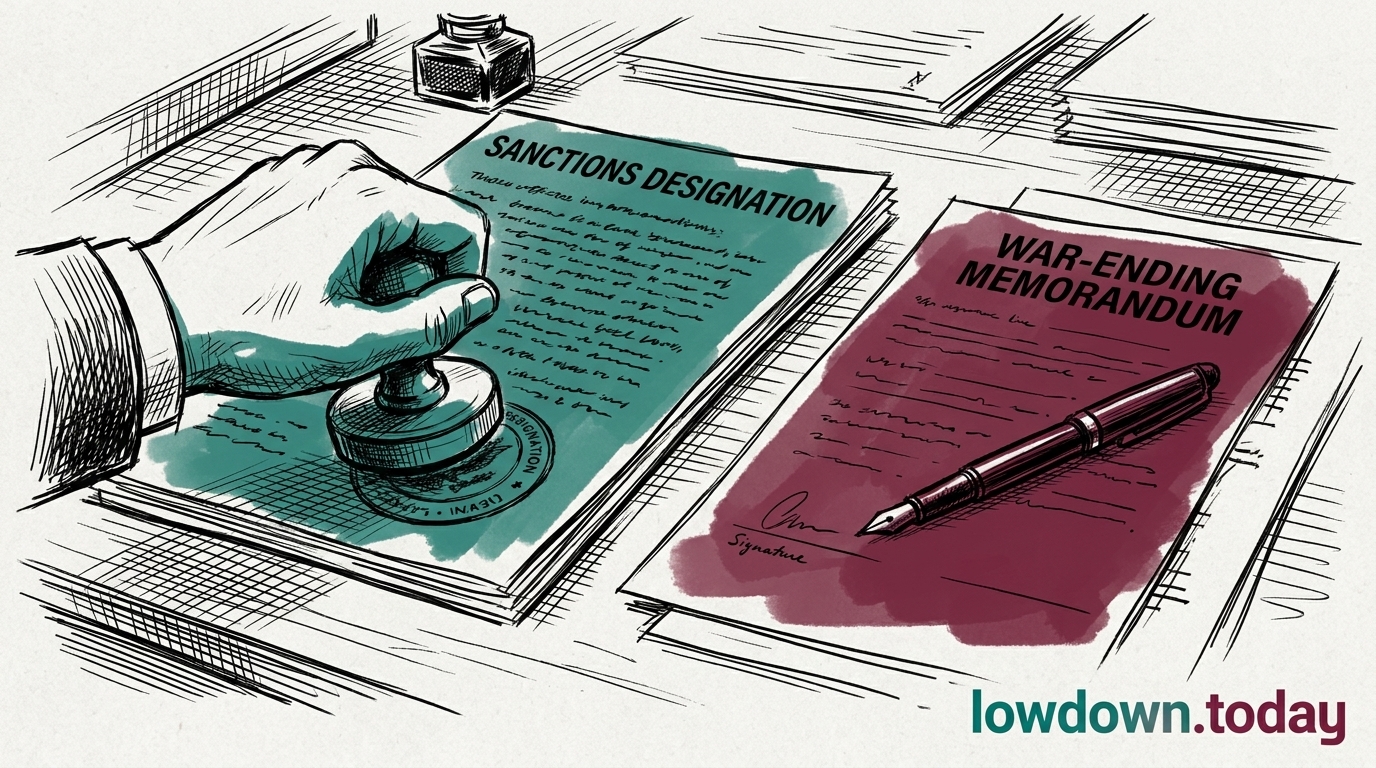
Iran's security council framed the unsigned memorandum as a 10-point Iranian victory including enrichment rights, while the US text demands Iran surrender its enriched uranium first.

ConflictDeveloping
Key takeaway

Iran's security council published a victory text the US version directly contradicts, leaving the uranium item unresolved.

Iran's Supreme National Security Council, the SNSC, the body that co-ordinates Iran's defence and foreign policy under the Supreme Leader, issued a statement framing the unsigned war-ending memorandum as a 10-point Iranian victory, including a recognised right to enrich uranium and a US non-aggression guarantee. 1 The deputy secretary, Ali Bagheri Kani, told Euronews in Farsi on 27 May that Iran's stockpile of Highly Enriched Uranium, HEU, the weapons-usable material at the core of the dispute, is "not on the agenda". 2 The US text lists HEU disposal as the first priority of the 60-day window.

Tehran and Washington are now publishing incompatible versions of the same accord, an advance on the earlier three-party contradiction over nuclear terms : a formal SNSC document that sells the deal domestically as enrichment recognised and sanctions lifted, the mirror image of what Washington describes. Trump told reporters he was "not in a rush" and wanted "a couple of days" before signing. 3

Trump has barred Russia and China from holding the uranium and named no replacement custodian , so the one item both texts must resolve has no agreed location. The deadlock is structural: Trump needs uranium removal to satisfy his domestic constituency, and Khamenei needs enrichment recognised to justify 90 days of war, so each side requires its own script. A reader inside either government can now point to an official version that says the opposite of the other's, and a deal cannot be signed off two contradictory texts without one side conceding in public.

Deep Analysis

In plain English

Both Iran and the United States say they are close to an agreement to stop fighting and reopen the Strait of Hormuz. But on 29 May each government published a different description of what they think the deal says. Iran's Supreme National Security Council (its top security body) called it a ten-point Iranian victory that includes the right to keep enriching uranium. The US text says Iran's highly enriched uranium (the most dangerous kind, usable in a weapon) must be dealt with first, as the number-one priority. A deal cannot be signed if the two sides are publicly describing it in opposite ways. One of them has to accept the other's version, or they have to agree on new language that neither government has to openly take back. That is what Pakistan is now trying to arrange as the sole mediator.

Deep Analysis
Root Causes

Trump's decision to bar Russia and China as HEU custodians on 27 May removed the one sequencing bridge between the US Phase 1 demand and Iran's Phase 2 deferral. Without a named third-country custodian, the HEU disposal clause has no operational content: both sides can notionally agree that HEU must be addressed without agreeing where it goes or when. That ambiguity allows each government to claim its text is operative.

The SNSC's institutional role amplifies the contradiction. Unlike Araghchi's foreign ministry, the SNSC answers directly to the Supreme Leader and publishes with his implicit authority.

A statement framing enrichment as 'recognised' in a ten-point victory document cannot be quietly withdrawn without the Supreme Leader's visible endorsement of a different text. Mojtaba Khamenei's 21 May directive converting the HEU stockpile into a sovereignty asset set the floor that the SNSC document formalises.

What could happen next?
  • Risk

    The SNSC's published ten-point framing binds the Supreme Leader to an enrichment-recognised outcome, making any final Iranian concession on HEU disposal a public climb-down that hardline bloc can weaponise domestically.

  • Consequence

    Trump's barring of Russia and China as custodians leaves the HEU clause with no operational content, enabling both sides to agree in principle while indefinitely deferring the mechanism.

First Reported In

Update #112 · Treasury opens a second Iran sanctions front

CNN Arabic· 30 May 2026
Read original
Different Perspectives
Qatar
Qatar
Qatar holds approximately $12 billion in frozen Iranian assets that Tehran named as the precondition for any Hormuz reopening sequence; with Oman sidelined and no agreed HEU custodian, the asset-routing architecture that any deal requires has no operational channel and no neutral financial intermediary to run it through.
Hengaw and Iranian civilian population
Iranians face an internet capped at 40 per cent by hardware their president cannot dismantle, field killings that leave no court record, and judicial executions running in parallel; Hengaw, based in Norway, is the primary remaining monitor of a repression system the IRGC is deliberately moving beyond auditable records. The real toll is higher than any single monitor's count.
China
China
China supplied deep-packet-inspection hardware that caps Iran's internet at 40 per cent and enables an instant on-demand blackout, and was barred by Trump as a potential HEU custodian on 27 May. Beijing gains from Iran's continued non-alignment with the West while the DPI sale extends Chinese surveillance-technology exports as a geopolitical instrument.
Pakistan
Pakistan
Foreign Minister Ishaq Dar met Rubio in Washington on 29 May, formally inheriting the role of sole active mediator after Oman's forced withdrawal. Pakistan lacks Oman's banking infrastructure for frozen-asset routing and carries its own regional stakes, making it a less structurally neutral broker for the Qatar-held $12 billion sequencing.
Kuwait
Kuwait
Kuwait invoked Article 51 of the UN Charter after absorbing an Iranian ballistic-missile strike on Ali Al Salem Air Base on 28 May, becoming the first Gulf state to make a formal individual self-defence claim in the war. The invocation creates a legal record enabling a future bilateral defence-pact activation without yet triggering it.
Oman
Oman
Oman denied any Hormuz toll plan within hours of Bessent's 28 May threat, absorbing a sanctions warning from the country it has brokered for since 1981. The rapid capitulation preserved the channel formally, but Tehran now knows Washington will threaten its own mediator, which changes Muscat's calculus on how far it can lean into any joint-management architecture.