Skip to content
Briefings are running a touch slower this week while we rebuild the foundations.See roadmap
Iran Conflict 2026
10APR

UAE quits OPEC effective 1 May

4 min read
08:05UTC

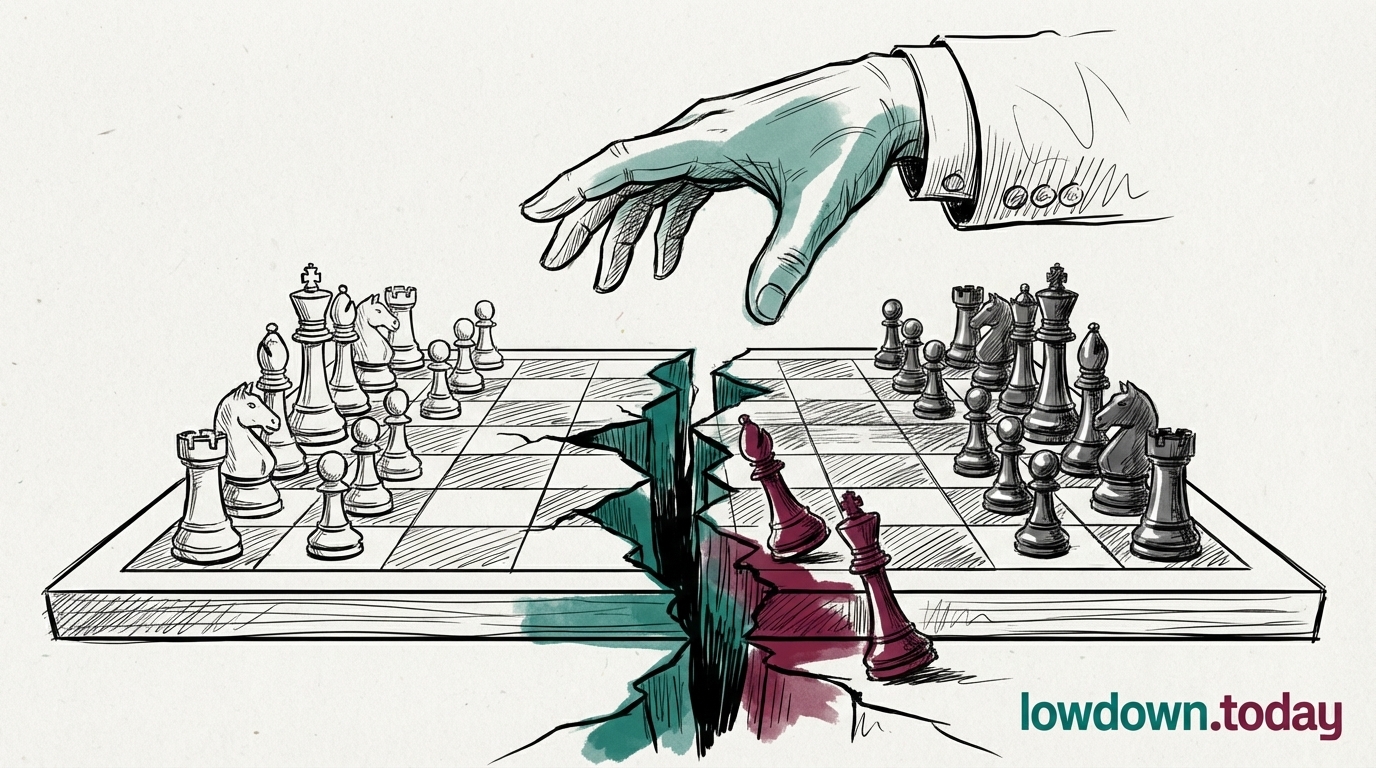
Suhail Mohamed al-Mazrouei announced Abu Dhabi's exit on 28 April without consulting Riyadh or any other GCC member, citing Hormuz blockage and Gulf inaction over Iranian attacks.

ConflictDeveloping
Key takeaway

The UAE chose 1 May to exit OPEC, the same Friday Washington's War Powers Resolution clock expires.

United Arab Emirates Energy Minister Suhail Mohamed al-Mazrouei announced on Tuesday 28 April 2026 that the UAE will leave OPEC (Organization of Petroleum Exporting Countries) and OPEC+ effective Friday 1 May 2026, without consulting Saudi Arabia or any other Gulf Cooperation Council member. Al-Mazrouei cited the inability to export freely through the Strait of Hormuz and disappointment with Gulf allies' response to Iranian military action in the strait. Reuters, Bloomberg, CNBC, NPR, Al Jazeera, The National and Dawn independently confirmed the announcement.

The exit takes effect at 00:01 GMT on the same calendar day the War Powers Resolution 60-day clock expires at 12:01 EDT in Washington. OPEC+ pairs OPEC members with Russia and aligned non-OPEC producers; the UAE's departure removes its third-largest producer, behind only Saudi Arabia and Iraq. Abu Dhabi has been pushing Riyadh for higher quotas for years, but the catalysing agent is the war: Hormuz transits sat at 9 vessels on 24 April per Windward , a fraction of the 50-plus daily baseline that gave Emirati cargoes free passage. Al-Mazrouei chose 28 April to announce and 1 May to take effect, the same Friday Iran's foreign minister Abbas Araghchi told Vladimir Putin in St Petersburg that Tehran would gate any Hormuz reopening through its own conditions .

The break will be priced into every cargo loaded after Friday. Vienna's next ministerial sits without an Emirati seat for the first time since OPEC seated the UAE in 1967, and Saudi Arabia loses its long-running quota counterweight inside the bloc. Russia, the largest non-OPEC producer in OPEC+, becomes the second-largest voice in a smaller coalition, shifting the balance of any post-war production cut towards Moscow. Abu Dhabi can lift output above its previous 3.0 mb/d ceiling without a Vienna vote once the strait reopens, freeing roughly 1.0 mb/d of barrels the bloc had held under quota. The 2018 Qatar exit was political, refocused on LNG, and absorbed without spare-capacity dispute. This one is structural, denominated in barrels Abu Dhabi has been waiting to ship.

OPEC loses a moderating voice inside its quota debate at the very moment the bloc's collective slack barrels remain trapped behind the closed strait. European insurance underwriters writing post-war Hormuz cover lose a Gulf-state OPEC anchor in their sovereign-risk models. The structural premium will not unwind on a ceasefire alone.

Deep Analysis

In plain English

OPEC is a club of major oil-producing countries that agree to limit how much oil they each produce. By keeping production capped, they keep oil prices higher than they would be if everyone pumped as much as they wanted. The UAE has just quit the club. That means it can now produce and sell as much oil as it likes, without OPEC's permission. In the short term this is rattling oil markets because it signals the club is breaking apart, and a weaker OPEC means less predictable oil prices. The UAE made the move because Iran has been blocking the main shipping route for Gulf oil, and other Gulf countries in the club have not done anything about it.

Deep Analysis
Root Causes

Abu Dhabi has been building toward production capacity of 5 mb/d by 2030 under the ADNOC Expansion Plan signed in 2022. At current quota allocations, the UAE would be constrained to roughly 3.0 mb/d, leaving over 30% of its capital investment idle. The Hormuz blockage, which has prevented UAE exports from reaching their post-quota ceiling anyway, has now created a political moment to formalise a break that the economics of ADNOC's investment programme have made structurally necessary.

The GCC's failure to mount a collective response to Iranian military action in the Strait exposed a second structural vulnerability: Saudi Arabia's implicit security guarantee to smaller Gulf states has eroded following fifteen months of Saudi-Iran normalisation diplomacy. Abu Dhabi read the absence of GCC condemnation as evidence that Riyadh placed the normalisation framework above Gulf solidarity, removing the political incentive to maintain OPEC unity as a gesture of intra-GCC cohesion.

What could happen next?
  • Consequence

    Saudi Arabia faces a binary choice between retaliating with a production increase that crashes prices (punishing the UAE) or accepting the exit and negotiating a bilateral side agreement on market share, with either path weakening OPEC's institutional authority.

    Short term · 0.8
  • Risk

    Iraq, OPEC's second-largest producer after the UAE exit, has a history of informal overproduction and may now treat UAE departure as political cover to lift its own output without formal withdrawal.

    Medium term · 0.7
  • Precedent

    The first Gulf-state exit citing a security event rather than a political grievance sets a precedent that any member facing force-majeure export disruption can exit without consulting the bloc, undermining the cartel's collective-discipline model.

    Long term · 0.75
First Reported In

Update #83 · UAE quits OPEC, war signs nothing

Dawn· 29 Apr 2026
Read original
Causes and effects
This Event
UAE quits OPEC effective 1 May
OPEC has not lost a Gulf member since Qatar's 2019 exit, and the UAE leaves with roughly 1.0 mb/d of stranded spare capacity locked under bloc quotas. The withdrawal takes effect on the same calendar day the War Powers Resolution 60-day clock expires at 12:01 EDT, breaking a quota-management architecture Saudi Arabia built around an Emirati seat that has held since 1967.
Different Perspectives
Lloyd's of London
Lloyd's of London
The Joint War Committee left Hormuz war-risk premiums at $10-14 million per voyage on 25 May, declining to move on Brent's 5% fall. The JWC's protocol requires a UN Security Council resolution or bilateral government certification letter before de-listing, and neither has arrived: a verbal understanding does not satisfy the formal condition the reinsurance market's treaty terms require.
Gulf Arab producers
Gulf Arab producers
Saudi Arabia and UAE depend on Hormuz for their own crude exports; Aramco CEO Nasser has warned no oil market recovery arrives until 2027 if the blockade continues past mid-June. Monday's $98.96 Brent settlement shortens nothing for Gulf producers without a signed instrument and a Pentagon mine-clearance timeline that runs up to six months post-ceasefire.
Qatar
Qatar
Qatar holds $12bn of frozen Iranian assets at the centre of the sequencing dispute but cannot release them without explicit US Treasury authorisation, given the original freeze was a US instrument. As the asset-holding state, Qatar's leverage is real but passive: it is the escrow holder, not the decision-maker, and any resolution requires US Treasury sign-off that Trump has withheld.
Pakistan
Pakistan
With both Prime Minister Sharif and army chief Munir simultaneously in Beijing on 25 May, Pakistan has for the first time consolidated its civilian and military mediation tracks under China's roof. Munir's direct Tehran-to-Beijing flight signals that the security and financial threads of the sequencing problem are now being worked in parallel rather than sequentially.
China
China
Beijing hosted Pakistan's principal mediators and Iran's China envoy Ghalibaf simultaneously on 25 May while its banking regulator capped new state-bank lending to five sanctioned refiners. China is simultaneously the most credible third-party underwriter of the $12bn sequencing and the state whose institutions face live OFAC secondary-sanctions exposure if the deadlock persists through GL V's expiry.
United States
United States
Trump posted on 24 May that the blockade holds until a deal is certified and signed, ruling out the informal MOU structure both sides had been building. The 'certified, and signed' condition is the first operational bar Trump has attached in 87 days, but it arrived without an executive instrument, maintaining the gap between posted ultimatum and signed US policy.