Skip to content
You can now search across every topic, entity and event.What's new
Iran Conflict 2026
27MAR

Five Gulf states reject Iran's sea route

3 min read
14:13UTC

Bahrain, Kuwait, Qatar, Saudi Arabia and the UAE wrote formally to the UN's maritime regulator around 21 May, telling commercial vessels not to use Iran's Hormuz transit route.

ConflictDeveloping
Key takeaway

Five Gulf states took Iran's Hormuz claim to the UN regulator; the mediator holding Iran's money signed it too.

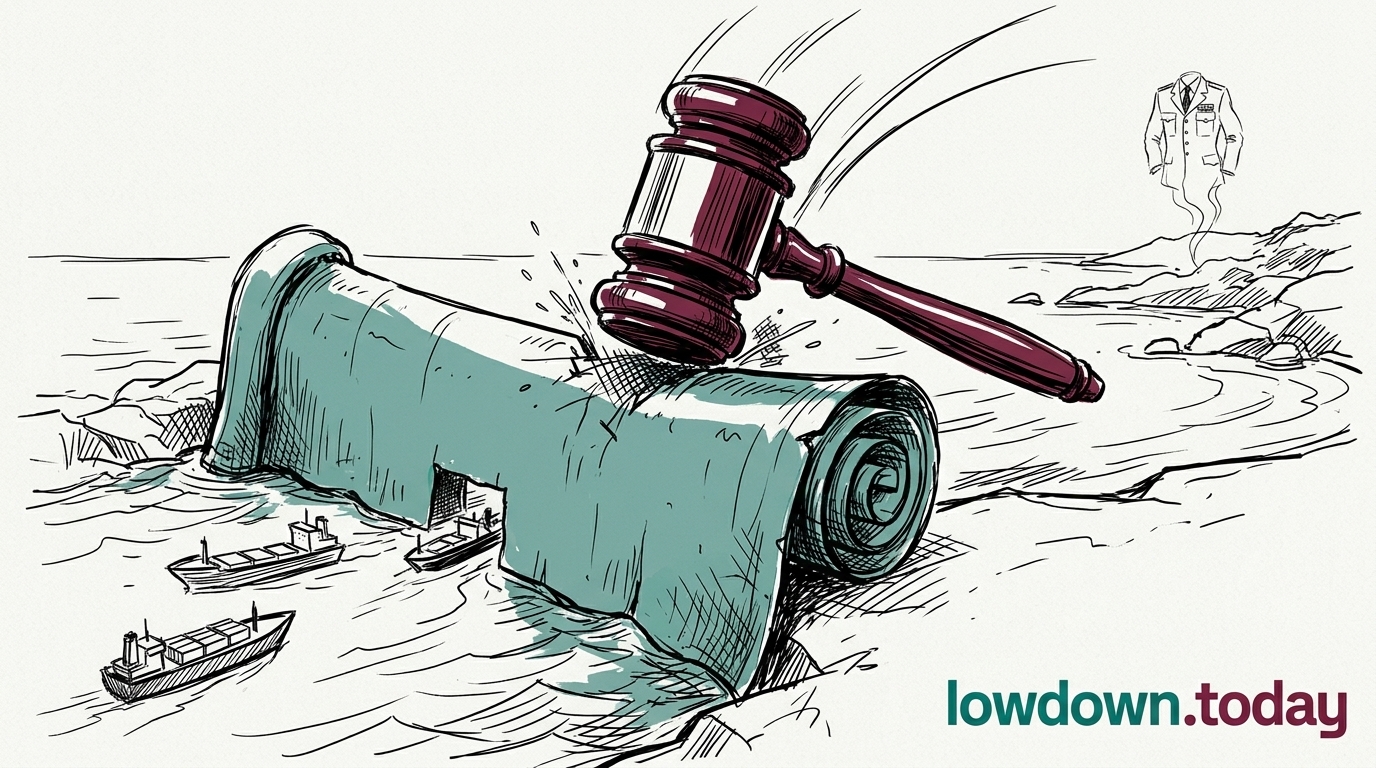
Bahrain, Kuwait, Qatar, Saudi Arabia and the United Arab Emirates (UAE), five Gulf states and not all six, wrote formally to the International Maritime Organization (IMO) around 21 May, telling commercial vessels not to engage Iran's transit route or cross the strait through it 1. The IMO is the United Nations agency that sets the safety and security rules for international shipping, which makes it the one forum where Iran's claim to police the waterway meets a body that can answer with rules of its own.

The letter directly answers Iran's Persian Gulf Strait Authority (PGSA), the state body that published controlled-zone coordinates on 20 May reaching into Emirati and Omani waters, and that backs them with the rial-only toll system the Majlis passed the same week . By taking the dispute to the IMO, The Gulf states convert a bilateral stand-off into a regulatory contest, betting that the first credible multilateral text usually holds and later claims negotiate against it.

Qatar signed the rejection while holding the $12 billion in frozen Iranian assets that Tehran has named as its precondition for reopening Hormuz, and while mediating the US-Iran talks. Three roles, and they pull against each other. The mediator Iran depends on is publicly rejecting Tehran's Hormuz doctrine and sitting on the money Tehran most wants released.

The original freeze was a US Treasury instrument, which leaves Doha as the escrow holder rather than the decision-maker. It cannot release the funds without a Washington order, which means the mediator cannot bridge the one gap Tehran cares most about until the United States acts first. That is why the sequencing dispute will not resolve itself, and why a signature on an IMO letter and a seat at the negotiating table can sit, awkwardly, in the same set of hands.

Deep Analysis

In plain English

Five Gulf countries, Bahrain, Kuwait, Qatar, Saudi Arabia, and the UAE, sent a formal letter to the International Maritime Organization (IMO), the United Nations body that governs international shipping. The letter told shipping companies not to use the transit route Iran had set up through the Strait of Hormuz, or pay the tolls Iran was demanding. Iran had created a new body called the Persian Gulf Strait Authority (PGSA) to control who passes through the strait and charge fees in Iranian currency (rials) to do so. The Gulf states were saying: ignore that, it is illegal under international law, and we will not recognise it. Qatar signed the rejection letter while simultaneously sitting in the middle of peace negotiations between the US and Iran, holding $12 billion in Iranian money that Tehran wants returned as part of any deal. Doha signed the IMO letter to build legal protection for itself if the diplomacy collapses, while keeping the mediation channel open if it succeeds.

Deep Analysis
Root Causes

Iran's PGSA authority exploits a specific gap in UNCLOS architecture. The convention guarantees "transit passage" through international straits in Article 38, but Iran never ratified UNCLOS.

Tehran's domestic maritime law, updated in 2024, claims jurisdiction over any vessel linked to a state that has sanctioned Iran, a category broad enough to cover virtually all Western-flagged commercial traffic. The IMO has no direct enforcement power over a non-UNCLOS state operating its own transit framework inside its claimed territorial water.

Qatar's contradictory position, signing the IMO rejection while brokering the talks that could make the PGSA obsolete, reflects the GCC's structural exposure. If the MOU negotiation fails, the IMO letter creates a legal record protecting Gulf states from liability for any future vessel incidents at the PGSA coordinates. If the MOU succeeds, the PGSA dissolves and the letter becomes moot. Qatar has hedged both outcomes.

What could happen next?
  • Precedent

    The five-state IMO letter creates the international legal record needed for any future UNCLOS arbitration or flag-state compensation claim arising from PGSA enforcement actions against non-compliant vessels.

    Medium term · Assessed
  • Risk

    If Iran reads Qatar's IMO signature as evidence that Doha is not a neutral mediator, Tehran could use it to walk back from the Doha channel and demand a different venue.

    Immediate · Suggested
  • Consequence

    The letter provides commercial cover for shipping companies to refuse PGSA registration without facing their own flag-state liability, lowering the compliance rate for the PGSA's transit authority.

    Short term · Assessed
First Reported In

Update #108 · US strikes Bandar Abbas as deal talk stalls

Bloomberg· 26 May 2026
Read original
Causes and effects
This Event
Five Gulf states reject Iran's sea route
The letter takes Iran's claim to control the strait to the one venue that issues binding shipping rules, and Qatar signed it while mediating the talks and holding the assets Iran wants released.
Different Perspectives
Oil traders
Oil traders
Sent Brent down 2.29 per cent to $98.38 a barrel on reports that mediation was reviving, moving the price on CENTCOM's quiet night rather than on Trump's same-day promise of a bigger operation with no deadline attached.
Iran
Iran
An Iranian official called the same mediation account completely misleading, denying it received any US proposal via Baghdad on the same day Iraq denied delivering one, leaving neither denial able to settle what actually passed between the two capitals.
Iraq
Iraq
Called groundless the New York Times account that its prime minister carried a US ceasefire proposal to Tehran, a denial that also protects Baghdad's effort to avoid becoming a party to a war fought by aircraft it does not control.
OHCHR
OHCHR
Recorded 17 civilian seafarer deaths since the war began, a population neither the Pentagon nor Iran's Health Ministry counts in its own tally, and called for urgent action on 6,000 crew stranded across roughly 400 vessels in the Strait of Hormuz.
Houthis
Houthis
Enforced the blockade on Saudi-linked shipping it declared on 20 July by hitting the NCC Masa and then an Aramco facility at Jazan, moving from radio warnings to strikes on land after four days without a confirmed hit.
Saudi Arabia
Saudi Arabia
Struck Houthi military sites near Hodeidah the same day the NCC Masa was hit, while its coalition spokesman insisted Hodeidah, Ras Issa and Salif all remain open to navigation. The distinction protects the ports Yemen's population depends on for food and fuel even while punishing the group behind the tanker strike.