Skip to content
Briefings are running a touch slower this week while we rebuild the foundations.See roadmap
Iran Conflict 2026
14MAR

Bunker busters hit Hormuz coastal forts

4 min read
06:20UTC

CENTCOM deployed the same 5,000-pound bombs that cracked Iran's nuclear mountain at Fordow — this time aimed at the anti-ship batteries that reduced Hormuz shipping to single-digit daily transits.

ConflictDeveloping
Key takeaway

Deploying nuclear-facility munitions against conventional coastal batteries signals CENTCOM treats Hormuz closure as an existential threat warranting maximum conventional response.

CENTCOM confirmed it used GBU-72 Advanced 5K Penetrator munitions — 5,000-pound deep-penetration bombs — against hardened Iranian anti-ship missile sites on the Hormuz coastline 1. CENTCOM stated the sites "posed a risk to international shipping." The GBU-72 is the weapon used against Iranian nuclear facilities at Fordow, Natanz, and Isfahan in June 2025 2. Its deployment against coastal positions indicates these sites are hardened into rock or buried underground — consistent with decades of Iranian investment in survivable shore-based anti-ship defences designed to withstand air attack and hold the strait under fire.

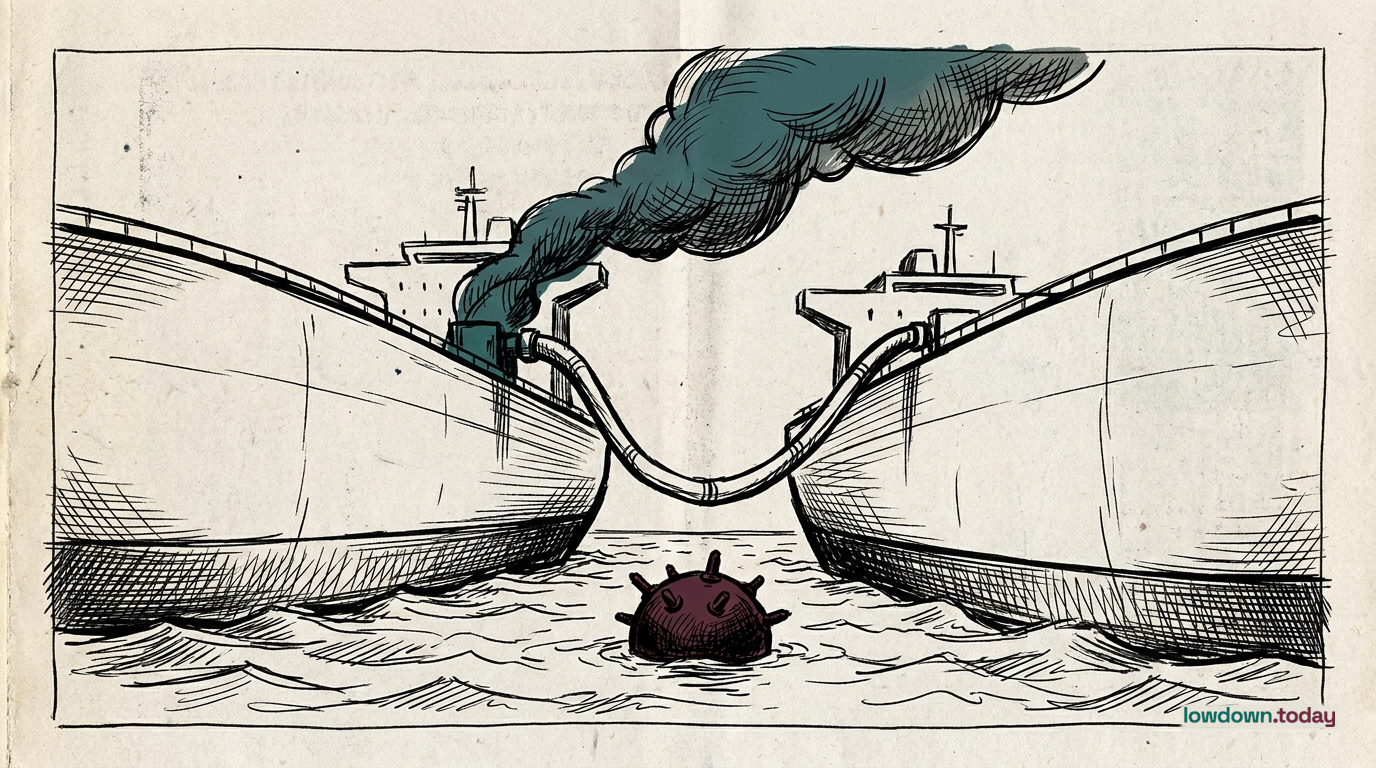
These are the batteries that turned Hormuz into what US Navy officials described as a "kill box" , where fire is pre-registered and concentrated across the narrowest shipping lanes. Daily commercial transits had fallen to single digits against a historical average of 138, with more than 300 ships stranded and 19 damaged since 28 February. Until now, CENTCOM's response to the blockade had been diplomatic — Trump called on five nations to provide escort warships ; all five declined . The GBU-72 strikes are the first direct military action aimed at dismantling the Iranian capability that created the de facto closure.

Whether this materially reopens the strait is unresolved. Defence Secretary Hegseth claimed two days earlier that Iran's missile volume is down 90% and drone launches down 95% , but that assessment sat alongside continued strikes on Gulf Energy infrastructure, including Tuesday's Ballistic missile attack on Ras Laffan. The IRGC spokesman's challenge to Trump — send American warships into The Gulf if Iran's military is truly destroyed — suggests Tehran does not consider its Hormuz capability eliminated. Treasury Secretary Bessent's acknowledgement that the US has been deliberately allowing Iranian oil tankers through the strait indicates Washington itself recognised the waterway remained under Iranian fire control. The GBU-72 strikes are designed to change that condition; whether they have done so will be tested by the first commercial vessel that attempts the transit.

Deep Analysis

In plain English

The GBU-72 is a 5,000-pound bomb engineered to penetrate deeply reinforced concrete before detonating — it is the specific weapon used to destroy Iran's underground nuclear facilities at Fordow, Natanz, and Isfahan. Using that same bomb against anti-ship missile batteries on Iran's coastline carries a deliberate message beyond the physical destruction it achieves. The Strait of Hormuz is approximately 21 miles wide at its narrowest point. About 20% of the world's traded oil passes through it daily. Iran has spent decades constructing an 'anti-access' strategy to threaten closure: fixed coastal missile batteries, fast attack boats, naval mines, and submarines. CENTCOM's strikes hit the fixed batteries — the most visible and targetable layer of that system — while signalling that it will bring its most powerful conventional weaponry to bear to keep the lane open.

Deep Analysis
Synthesis

The GBU-72's deployment against conventional coastal targets creates a signalling paradox the body does not address. The same weapon publicly presented as having eliminated Iran's nuclear programme is now being used against secondary military targets. If CENTCOM's nuclear mission was fully successful, Iran has lost its deterrence value and faces conventional strikes with its most powerful remaining weapons. If the nuclear mission was incomplete — as IAEA Director General Grossi's assessment suggests — Iran retains nuclear leverage while watching the US apply maximum conventional force to protect commercial shipping. The gap between these two readings of the same weapon's deployment may itself signal US uncertainty about the nuclear mission's completeness — an uncertainty Iran's own strategists will be assessing.

Root Causes

Iran's Hormuz strategy is built around 'anti-access/area-denial' (A2/AD) doctrine developed systematically since the early 2000s, incorporating layered threats: naval mines, fast attack craft, anti-ship cruise missiles (Noor/Qader series), and shore-launched ballistic missiles. Fixed coastal batteries represent the most accurate and highest-volume layer of this system but also the most targetable. Destroying them forces Iran to rely on mobile launchers and submarines — harder to pre-emptively neutralise but also lower in accuracy and reload rate, raising Iran's operational costs for effective strait closure without eliminating the threat.

Escalation

The selection of the GBU-72 when lighter munitions could destroy surface-mounted coastal batteries is deliberate message-sending, not operational necessity. Iran's military planners recognise this as the Fordow weapon. The implicit signal is that CENTCOM is prepared to apply identical force to any hardened Iranian military target, not exclusively nuclear sites — substantially expanding the implicit threat envelope.

What could happen next?
2 consequence1 risk1 precedent1 meaning
  • Consequence

    Destroying fixed coastal batteries displaces Iran's Hormuz threat to mobile launchers and submarines — harder to pre-emptively neutralise and requiring sustained US naval presence to manage.

    Immediate · Assessed
  • Risk

    Iran retains significant residual Hormuz closure capability through naval mines, fast attack craft, and mobile missile systems not addressed by the coastal battery strikes.

    Immediate · Assessed
  • Precedent

    CENTCOM has established that it will deploy its deepest-penetrating conventional munitions to protect commercial shipping lanes, expanding the GBU-72's defined mission profile beyond nuclear targets.

    Long term · Assessed
  • Consequence

    War-risk shipping insurance premiums add an estimated $3–7/barrel hidden delivered cost for major oil-importing nations, compounding visible crude price increases.

    Immediate · Suggested
  • Meaning

    Deploying Fordow-grade munitions against conventional military targets signals that CENTCOM treats Hormuz closure as an existential economic threat warranting the same weapons as nuclear-site destruction.

    Immediate · Assessed
First Reported In

Update #41 · South Pars struck; Iran hits Qatar's LNG

UPI· 19 Mar 2026
Read original
Causes and effects
This Event
Bunker busters hit Hormuz coastal forts
CENTCOM's first direct military action against the Iranian coastal defence network that choked Hormuz from 138 daily transits to single digits. Whether the strikes reopen the strait or merely degrade one layer of Iran's shore-based defences determines when more than 300 stranded commercial vessels can move.
Different Perspectives
Gulf shipping and insurance markets
With Hormuz and Bab el-Mandeb both hostile at once, war-risk underwriters face their first dual-chokepoint pricing problem; the rerouting hedge that absorbed one closure is gone for Israeli-linked hulls. Any deal that reopens Hormuz without a Houthi stand-down clause delivers only partial shipping relief.
Russia and China
Russia and China
Russia and China met IAEA chief Grossi jointly in Geneva on 5 June to coordinate an advance blocking position against Washington's censure resolution, the first documented instance of proactive pre-session obstruction rather than reactive post-vote dissent. Beijing's move came four days after OFAC designated Shanghai Qianye Energy under Iran energy sanctions.
Saudi Arabia
Saudi Arabia
Saudi Arabia was left out of the emergency $4.01 billion Patriot waiver Qatar received on 2 May as its own PAC-3 stocks ran near-empty from intercepting Iranian salvoes over Aramco facilities. Riyadh is on a standard 18-month FMS queue behind a production line booked through 2030, with no equivalent priority to Qatar's Al Udeid basing role.
Houthis (Ansar Allah)
The Houthis declared a complete ban on Israeli Red Sea navigation on 8 June and struck Jaffa, their first attack on Israeli territory since April, seven days after the Tasnim authorisation to activate other fronts including Bab el-Mandeb. The declaration put both chokepoints under hostile authority simultaneously.
Iran
Iran
Iran agreed the 9 June mutual halt after the Mahshahr exchange and coordinated with Russia and China to block Washington's IAEA censure resolution, using the Board as a second front while the bilateral pause held on the military one. Tehran's acceptance of the Lebanon carve-out contradicts the linkage position it stated on 1 June.
Benjamin Netanyahu and the IDF
Israel struck the Karun Petrochemical plant at Mahshahr on 8 June over Trump's explicit objection, then agreed a halt with Iran the following day scoped on Israeli terms with Lebanon carved out. Netanyahu's posture is that the IDF will not accept Iranian missile factories as off-limits regardless of US diplomatic timelines.