Skip to content
You can now search across every topic, entity and event.What's new
Iran Conflict 2026
19AUG

OFAC SDN round skips mainland refineries again

3 min read
18:42UTC

OFAC's 19 May SDN round designated over a dozen individuals across Gaza, Turkey, Spain, Belgium, Jordan and Iran and over two dozen entities across Hong Kong, the UAE, the Marshall Islands, Panama, Liberia, Nevis, China and the UK, naming vessels BRIGHT GOLD, FEADSHIP, LUNA LUSTER, MIDAS and QUANTUM STAR; zero mainland Chinese refineries were added.

ConflictDeveloping
Key takeaway

OFAC keeps sanctioning shells and tankers while leaving the Chinese refinery counterparties untouched.

The US Treasury's Office of Foreign Assets Control published its 19 May 2026 SDN list update naming over a dozen individuals across Gaza, Turkey, Spain, Belgium, Jordan and Iran, and over two dozen entities in Hong Kong, the UAE, the Marshall Islands, Panama, Liberia, Nevis, China and the UK. Designated vessels included BRIGHT GOLD, FEADSHIP, LUNA LUSTER, MIDAS and QUANTUM STAR, OFAC's Recent Actions notice showed 1. Zero mainland Chinese refineries were added, continuing the pattern from the 11, 12 and 15 May rounds.

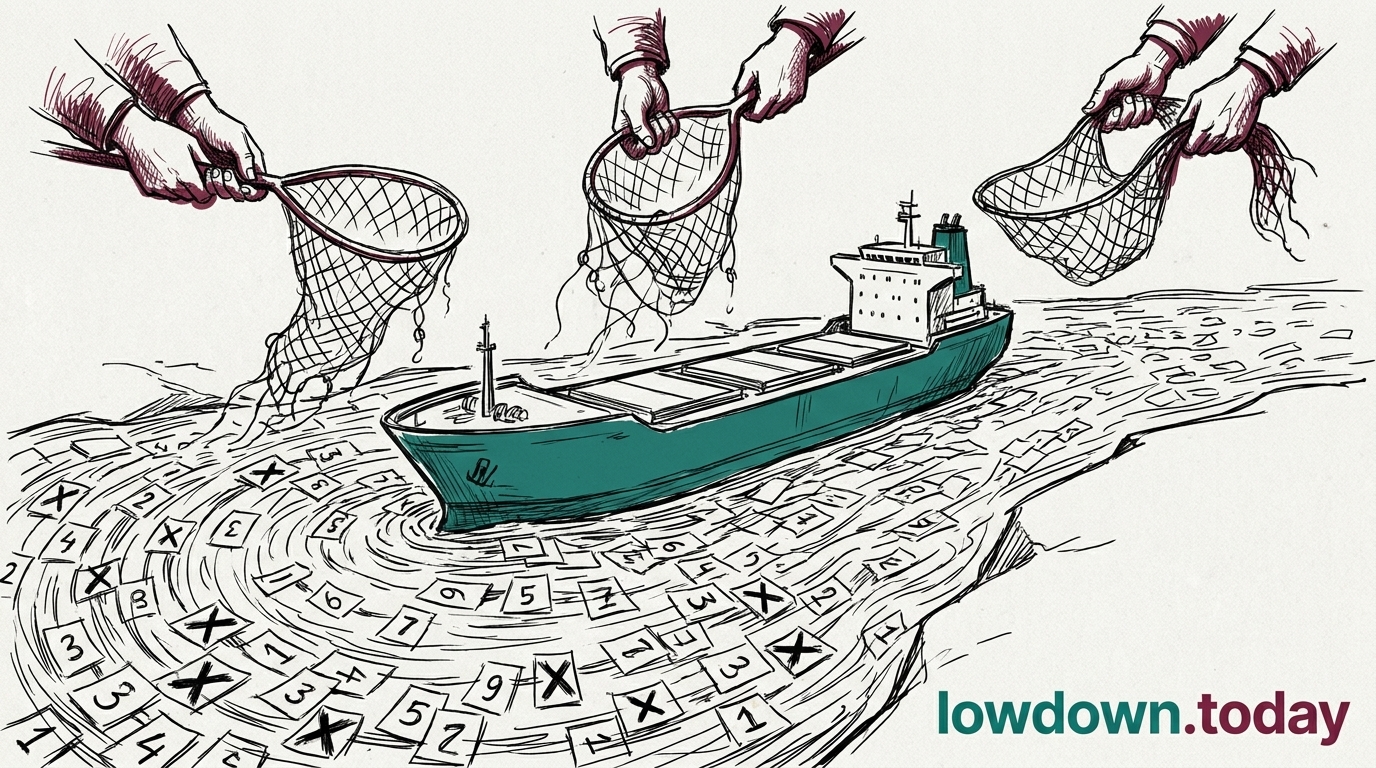
OFAC's choice of layers tells the structural story. The bureau had already used a 15 May round to designate twelve individuals and entities for routing IRGC oil to China, but targeted Hong Kong-registered shells rather than the mainland refineries actually processing the crude . The 19 May round repeats that geometry across a broader list of flag-of-convenience jurisdictions: Marshall Islands, Panama, Liberia, Nevis. These are the registries where named vessels like LUNA LUSTER and MIDAS are paperwork-resident; the cargo that those vessels carry, however, lands in mainland Chinese ports run by Sinopec and PetroChina subsidiaries, which OFAC's pattern continues to leave outside the sanctions perimeter.

The same morning Washington again declined to put a mainland Chinese refinery on the SDN list, Tehran promoted Speaker Mohammad Bagher Ghalibaf to special China envoy with cross-factional cover, which is the juxtaposition that matters. Iran is formalising the Beijing relationship at the same tempo Washington is structurally avoiding direct confrontation with it. The shell-and-vessel layer OFAC keeps designating absorbs the political pressure to act; the actual cargo flow, and the financial architecture behind it, remains unsanctioned by design.

Deep Analysis

In plain English

The US Treasury Department published a new list of people and companies it has sanctioned for helping Iran sell oil. The list includes several ships with names like BRIGHT GOLD and MIDAS, plus companies registered in Hong Kong, Panama and the Marshall Islands. Notably absent from the list: any Chinese oil refinery. China is the largest buyer of Iranian oil. The US has repeatedly sanctioned the middlemen the shell companies and ships that move the oil without targeting the Chinese refineries that are the actual end customers. That is because China passed a law in May 2026 saying Chinese companies cannot comply with foreign sanctions the Chinese government does not recognise, making direct refinery sanctions politically explosive.

Deep Analysis
Root Causes

The 19 May SDN round's structural avoidance of mainland refineries has a documented legal cause: China's MOFCOM Blocking Rules, enacted 2 May 2026, prohibit Chinese entities from complying with any foreign sanction that is not recognised under Chinese domestic law. Designating a MOFCOM-protected refinery would immediately trigger a Chinese retaliatory measure against US entities operating in China a consequence the Trump administration has deferred since the Beijing summit.

A second driver is the gap between OFAC's extraterritorial reach and the practical enforcement ceiling. OFAC can freeze US-dollar-denominated assets and block dollar-clearing correspondent relationships, but the 19 May designated vessels include several registered in jurisdictions Marshall Islands, Nevis, Liberia that have not co-enforced prior OFAC rounds. Without local-law enforcement, the designations constrain dollar-clearing access but leave physical vessel operations intact.

Escalation

The 19 May SDN round represents financial-system pressure at the intermediate layer, not a strategic escalation. The pattern of refinery avoidance is now a documented structural feature rather than a tactical choice, limiting the round's escalatory significance.

What could happen next?
  • Consequence

    Four consecutive OFAC rounds avoiding MOFCOM-protected mainland refineries has established a de facto Iran-China oil corridor with effective US tolerance, regardless of the administration's stated maximum-pressure posture.

    Immediate · 0.82
  • Risk

    Shell-layer designation without refinery designation creates a regenerating intermediate layer: new shells register in Nevis or Liberia within weeks at minimal cost, maintaining the same oil-routing function.

    Short term · 0.78
  • Precedent

    OFAC's structural avoidance of MOFCOM-protected entities will constrain every future US administration's Iran sanctions toolkit: the carve-out has been demonstrated, and China will defend it in any subsequent sanctions negotiation.

    Long term · 0.7
First Reported In

Update #102 · Iran signs Hormuz toll; Trump posts a cancelled strike

Haaretz· 19 May 2026
Read original
Causes and effects
Different Perspectives
UK Maritime Trade Operations
UKMTO logged six armed men boarding a tanker 136 nautical miles east of Al Mukalla on 20 August and redirecting it toward Somalia. A vessel steered toward the Somali coast reads as an attempted seizure, a distinct hazard from the stand-off strikes the same lane has seen before.
Mohammad Bagher Ghalibaf
Iran's Majlis speaker received Iraq's Hormuz carve-out request in Baghdad on 19 August, a request that treats passage as Tehran's to grant. Ghalibaf's authority over that grant sits alongside the Revolutionary Guard's separate transit rules, which have moved independently of Iran's foreign ministry before.
Haibat al-Halbousi
Haibat al-Halbousi
Iraq's parliament speaker asked Iran for special consideration on Iraqi Hormuz oil exports during Ghalibaf's 19 August Baghdad visit. Iraq presses the request from a weak position: Iran's central bank is simultaneously demanding Baghdad release Iranian reserves parked in Iraqi accounts.
Federal Department of Economic Affairs, Education and Research
Switzerland's economics ministry updated the Article 21 forms governing lawful Iran money transfers on 19 August, with only the revised forms accepted from 26 August. Bern operates one of the few remaining legal Iran payment channels and has just set a hard cutover on its control point.
Motegi Toshimitsu
Motegi Toshimitsu
Japan's foreign minister said in Muscat on 20 August that Tokyo wants closer coordination with Oman on safe Hormuz and Bab el-Mandeb passage. Japan has no naval presence of its own in the strait, so it is routing the ask through the state negotiating with Iran instead.
Badr bin Hamad Al Busaidi
Oman's foreign minister joined Japan's in Muscat on 20 August to call for intensified coordination on Hormuz and Bab el-Mandeb navigation. Oman also runs the mediation track with Tehran, so the appeal travels through the same channel as the negotiation.