Skip to content
You can now search across every topic, entity and event.What's new
Iran Conflict 2026
12AUG

IRGC strikes GFS Galaxy, shuts Hormuz

3 min read
14:52UTC

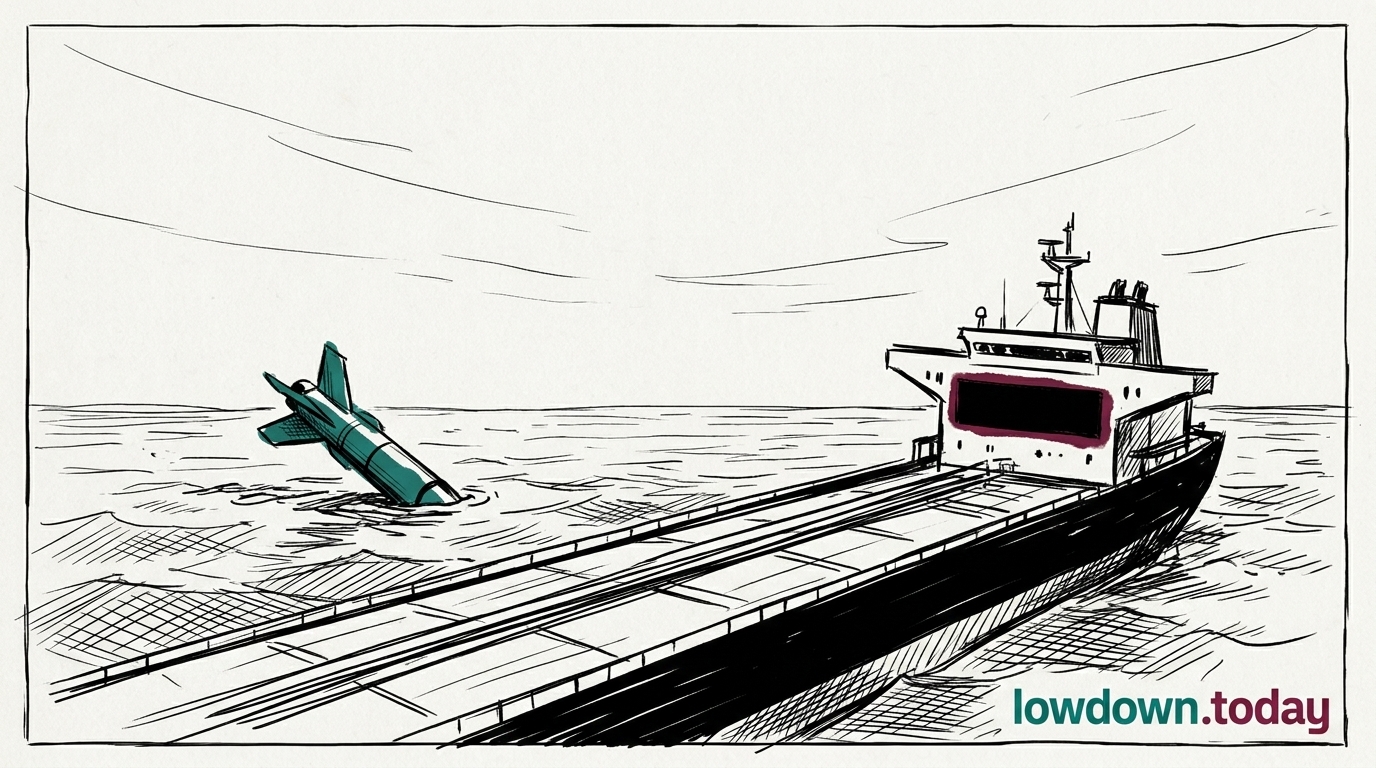
The IRGC Navy struck the container ship GFS Galaxy in the Strait of Hormuz early on 12 July, left one of eleven Indian crew missing and declared the waterway closed until further notice.

ConflictDeveloping
Key takeaway

Iran declared Hormuz closed after striking the GFS Galaxy; insurers, not warships, keep the lane empty.

Early on 12 July the Islamic Revolutionary Guard Corps (IRGC) Navy, the naval arm of Iran's ideological military force, attacked the Cyprus-flagged container ship GFS Galaxy in the Strait of Hormuz and left its engine room heavily damaged, according to Gulf wire coverage 1. Ten of the eleven Indian crew were rescued; one remains missing 2. The IRGC Navy then declared the strait, the 33km channel carrying about a fifth of the world's seaborne oil, closed until further notice.

The Persian Gulf Strait Authority (PGSA), the Iranian body that asserts control over Hormuz passage, posted on X that transit was currently not possible, blaming recent illegal movements of US forces 3. Both statements reached us through Iranian state media relayed by English aggregators, not direct Farsi primary sources.

Nine days earlier Muscat and Tehran had agreed to jointly steward Hormuz traffic as daily transits fell to two ; the 12 July closure overrides that quiet accommodation and operationalises the Hormuz leverage Russia's Dmitry Medvedev likened to a nuclear weapon at Ali Khamenei's funeral . It also hardens the corridor's first live strike, the IRGC hit on the Qatari carrier Al Rekayyat a week earlier , from a one-off punishment into a standing prohibition. What empties the lane is the insurance market, not the Iranian navy: war-risk underwriters and the International Group of P&I Clubs, which held their Hormuz war-risk exclusion through that earlier strike , price a contested legal status as harshly as a lawful blockade, so a declaration Tehran cannot lawfully impose still keeps cargoes off the water.

English-language wires name one struck vessel, the GFS Galaxy; Al Jazeera Arabic's readout of the CENTCOM response counts three commercial vessels attacked in the strait 4. Neither outlet has reconciled the two counts, and a translation difference does not explain the gap. No English-language primary source has confirmed the higher figure.

Deep Analysis

In plain English

The IRGC (Islamic Revolutionary Guard Corps, an elite branch of Iran's military separate from its regular navy) attacked a commercial container ship called the GFS Galaxy, which flies the flag of Cyprus, as it passed through the Strait of Hormuz, the narrow waterway between Iran and Oman that a large share of the world's seaborne oil and gas passes through. The attack badly damaged the ship's engine room. Iran then declared the whole strait closed until further notice, on 12 July. Of the 11 Indian crew members aboard, ten were rescued but one remains missing. Iran's own maritime authority, the Persian Gulf Strait Authority, publicly confirmed that ships could not currently get through, a rare case of Iran's government stating outright that it was blocking a major international shipping route.

Deep Analysis
Root Causes

Iran signed the 1982 UN Convention on the Law of the Sea but never ratified it, so the convention's Part III guarantee of transit passage through international straits does not bind Tehran as treaty law. Iran instead applies its own maritime security statute, which reserves the right to inspect or exclude vessels it links to hostile states.

That gap between the customary practice most flag states still observe and Iran's domestic statute is what turns a closure declaration into something more than rhetoric: there is no binding instrument Iran is violating by making the claim, only a customary norm it is choosing to disregard.

First Reported In

Update #153 · Iran declares Hormuz closed; US says open

Gulf News· 13 Jul 2026
Read original
Different Perspectives
Anwar Gargash, UAE presidential diplomatic adviser
Gargash warned the region cannot stay trapped between "neither war nor peace", naming the stalemate itself as unsustainable for a Gulf state hosting US forces and absorbing the shipping-risk cost without being party to either the strike decisions or the corridor talks.
Shipping and insurance underwriters
War-risk premiums are still set against an active blockade and a fatal Bab el-Mandeb attack with an unresolved vessel identity. A disabling strike and a diplomatic "advanced" claim pulling in opposite directions gives underwriters no single signal to reprice cover against.
Pakistan and Qatar (Oman corridor mediators)
Pakistan's defence minister said matters are "shaping up in favor of peace" on Hormuz and a Qatari spokesperson called the Iran-Oman reopening talks advanced. Both are publicly ahead of Tehran's own security council, which has just disowned the deal's significance.
United States Central Command / President Trump
CENTCOM confirmed a helicopter strike disabled a container ship that tried to evade the blockade, and Trump said the US "totally controls" the Strait of Hormuz. Washington is treating evasion of the blockade as grounds for disabling fire rather than the redirection tactic CENTCOM used through July.
Mohsen Rezaei, Iran's Supreme National Security Council
Rezaei told China's ambassador Hormuz reopens only when the US ends the war and unblocks Iran's funds, and that the Oman transit deal "will have no impact" on that decision. He is drawing a hard line between the technical corridor track and the political settlement his council controls.
Yemen's internationally recognised government and affected communities
SABA reported at least 17 soldiers killed at Saudi-backed camps in eastern Yemen as tanker use of Bab el-Mandeb fell. The fighting adds civilian and supply risks to a route ships use when Hormuz is unsafe.