Skip to content
You can now search across every topic, entity and event.What's new
Iran Conflict 2026
7AUG

Brent-Dubai EFS over $6, TD3C at WS458

4 min read
12:08UTC

The Brent-Dubai Exchange of Futures for Swaps sat above $6 per barrel through 4-8 May while VLCC freight from the Middle East Gulf to China hit WS458.75 on 11 May.

ConflictDeveloping
Key takeaway

Hormuz cost-of-disruption is priced live in the EFS and the TD3C; both have to compress together.

The Brent-Dubai EFS (glossed once: Exchange of Futures for Swaps, the standard spread instrument between the two crude benchmarks) sat above $6 per barrel through 4 to 8 May 2026, against a pre-Iran-conflict baseline below $2 per barrel 1. The freight leg confirms it. TD3C (the 270,000-tonne VLCC route from the Middle East Gulf to China) was assessed at WS458.75 on 11 May 2026, a round-trip TCE of $462,102 per day, up roughly 50 WS points week-on-week from the previous Monday's WS408.13 and $407,437 per day 2. The Baltic Dirty Tanker Index reached an all-time high above 1,900 points, +120 per cent year-on-year.

Hormuz transit remained physically disrupted weeks after the 17 April ceasefire. Mine clearance and port infrastructure repair were unfinished, and Iran ran the strait as a bilateral state-to-state passage system through mid-May , codified publicly by Foreign Minister Abbas Araghchi. The US Navy's Operation Project Freedom, announced on 4 May to escort merchant traffic out of The Gulf, drew Iranian warnings that the mission breached the ceasefire. A 5 May exchange of fire pushed Brent back to $114.44 per barrel intraday before the market settled. The war mechanics belong to a different topic; the spread and the freight spike sit here.

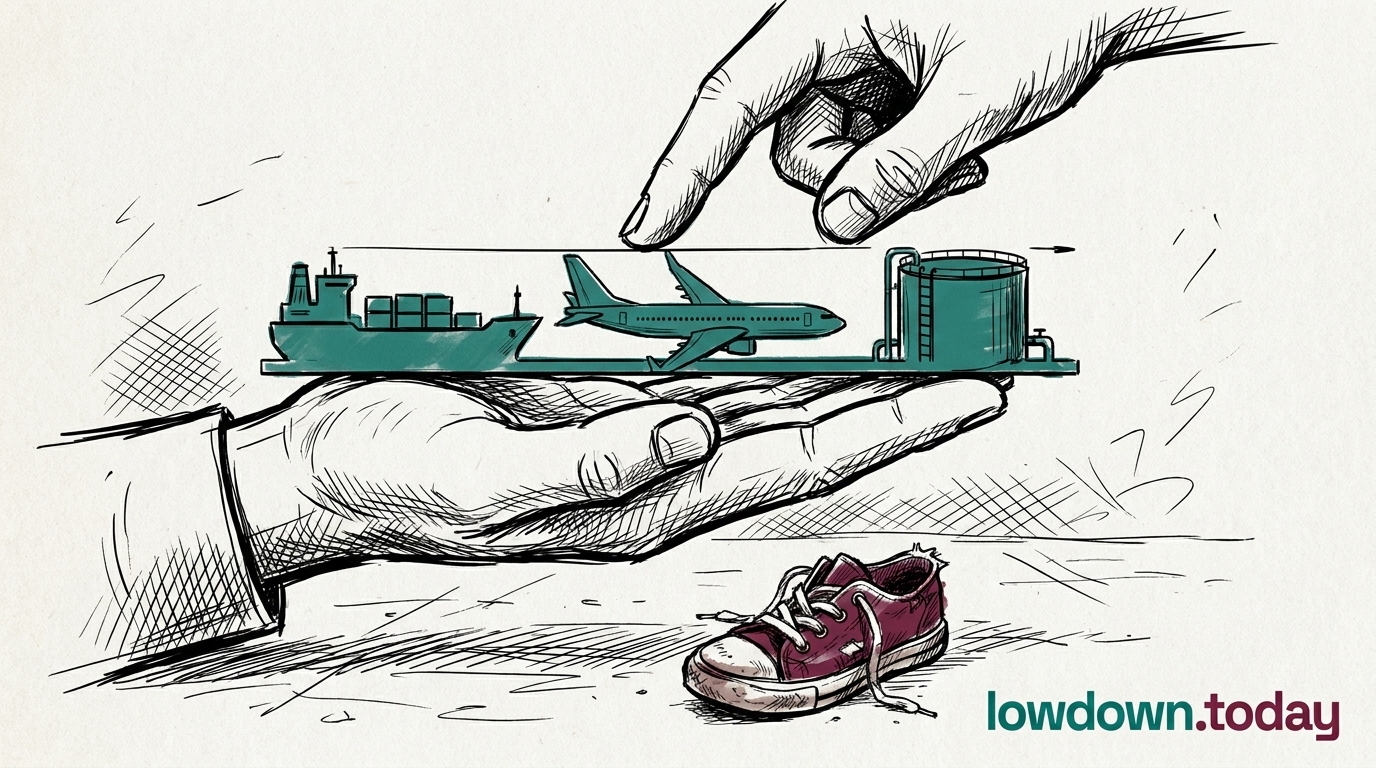
The EFS-TD3C relationship is the cleanest live measurement of the cost of disruption. EFS above $6 implies a $4 to $5 per barrel freight increment per tonne is being priced into Gulf crude bound for Asia; the WS458 print confirms the freight leg. Until both compress together, the conflict premium is in the system regardless of nominal ceasefire status. Med sour grades pick up the marginal Asia-bound demand, and Brent prices accordingly.

Underneath the spread sits a quieter demand-side leg. Vessels rerouting around the Cape of Good Hope are reportedly burning an extra 1,000 to 1,400 tonnes of bunker per trip, and roughly 50 VLCCs already rerouted since late February imply 50,000 to 70,000 tonnes of incremental marine distillate demand. Against an ARA gasoil base of 13.56 million barrels, that is 3 to 4 per cent of total stock, and largely absent from mainstream coverage that frames the draw as a refinery-supply problem.


Deep Analysis

In plain English

The Brent-Dubai spread measures the price gap between European crude oil (Brent) and Middle Eastern crude oil (Dubai). Normally they trade close to each other. Since Iran closed the Strait of Hormuz to some shipping earlier in 2026, Gulf crude has been harder to move, so Middle Eastern oil has become cheaper relative to European oil and the gap has widened. The tanker freight index (TD3C) tells us how much it costs to ship a large oil tanker from the Persian Gulf to China. With Hormuz still only partially open, tankers have to travel the long way around Africa, which takes longer and costs more. Those shipping costs are near record levels, reinforcing why the price gap between Brent and Dubai crude has stayed high.

Deep Analysis
Root Causes

Two independent structural drivers lift the Brent-Dubai EFS above $6/bbl. VLCCs rerouting around the Cape of Good Hope burn roughly 1,000-1,400 additional tonnes of bunker per trip versus the Suez route, adding $1.5-2.5m to voyage costs on a standard 270kt cargo. That cost must be absorbed into the freight rate or the FOB price, which widens the spread between Atlantic delivered prices (Brent-linked) and Gulf FOB prices (Dubai-linked).

Hormuz mine clearance requires specialised vessels and takes weeks; until it completes, every cargo transiting the strait carries a residual risk not present on Atlantic routes. Insurance underwriters are pricing that residual risk into war-risk premiums, which flow directly into Gulf crude freight cost.

What could happen next?
  • Consequence

    Med sour crude grades (Urals, Saharan Blend, CPC Blend) attract a substitution premium as Asian buyers unable to source Gulf crude redirect to Atlantic grades, squeezing NWE refinery margins on sour-crude diets.

    Immediate · 0.8
  • Risk

    The Brent net-long speculative position (+58,259 contracts per CFTC) faces an abrupt reversion risk if Hormuz mine-clearance news lands unexpectedly, compressing the EFS from $6+ toward $3-4/bbl within days.

    Short term · 0.75
  • Consequence

    VLCC second-hand values at decade highs and Baltic Dirty Tanker Index at all-time high (+120% year-on-year) signal a sustained tanker shortage that will persist even after Hormuz reopens, as Cape rerouting remains an insurance-driven preference for some operators.

    Medium term · 0.65
First Reported In

Update #1 · GL 134B out, Rotterdam dark, OPEC+ pending

OilPrice.com / CNBC· 18 May 2026
Read original
Causes and effects
This Event
Brent-Dubai EFS over $6, TD3C at WS458
The Atlantic-Asia crude spread and the freight cost of moving Gulf barrels east are dislocated at the same time, leaving Med sour grades to pick up Asia-bound marginal demand.
Different Perspectives
Turkiye
Turkiye
Erdogan followed the Pakistani delegation to Jeddah for an instrument that has not been signed. Ankara's entry widens Saudi Arabia's defence architecture beyond the existing Pakistan pact, adding a second non-Gulf military partner mid-conflict.
Oman
Oman
Muscat is the corridor's broker but has published nothing about the arrangement Fars describes on its behalf. The account leaves Oman administering outbound traffic only, a narrower role than the shared route its mediation has rested on since 1979.
Pakistan
Pakistan
Islamabad sent Sharif, Munir and Dar to Jeddah to widen a defence commitment it has honoured in cheaper registers since March, when Dar invoked the Saudi mutual defence pact. Jeddah tests whether that hedge becomes a binding trilateral instrument with Turkiye.
United States
United States
Washington rejected the Majlis Hormuz bill outright while CENTCOM's own tally kept climbing to 49 vessels redirected since 14 July. Both instruments tightened in the same week Trump promised the strait would reopen soon.
Iran
Iran
Iran's foreign ministry is selling a phased Hormuz corridor through Oman and denying any percentage cargo tariff, while its own Majlis is legislating fines to 20% and a bar on Israeli-linked cargo. The two accounts, from the same government, do not agree with each other.
Saudi Arabia
Saudi Arabia
Riyadh published a target forecast, not an attribution, for the campaign it says the Najran strike previewed. That keeps an Article 51 case available while it formalises a trilateral defence architecture with Pakistan and Turkiye.



