Skip to content
Welcome, thoughtbot's Giant Robots listeners!Start here
Iran Conflict 2026
24JUN

Brent-Dubai EFS over $6, TD3C at WS458

4 min read
09:14UTC

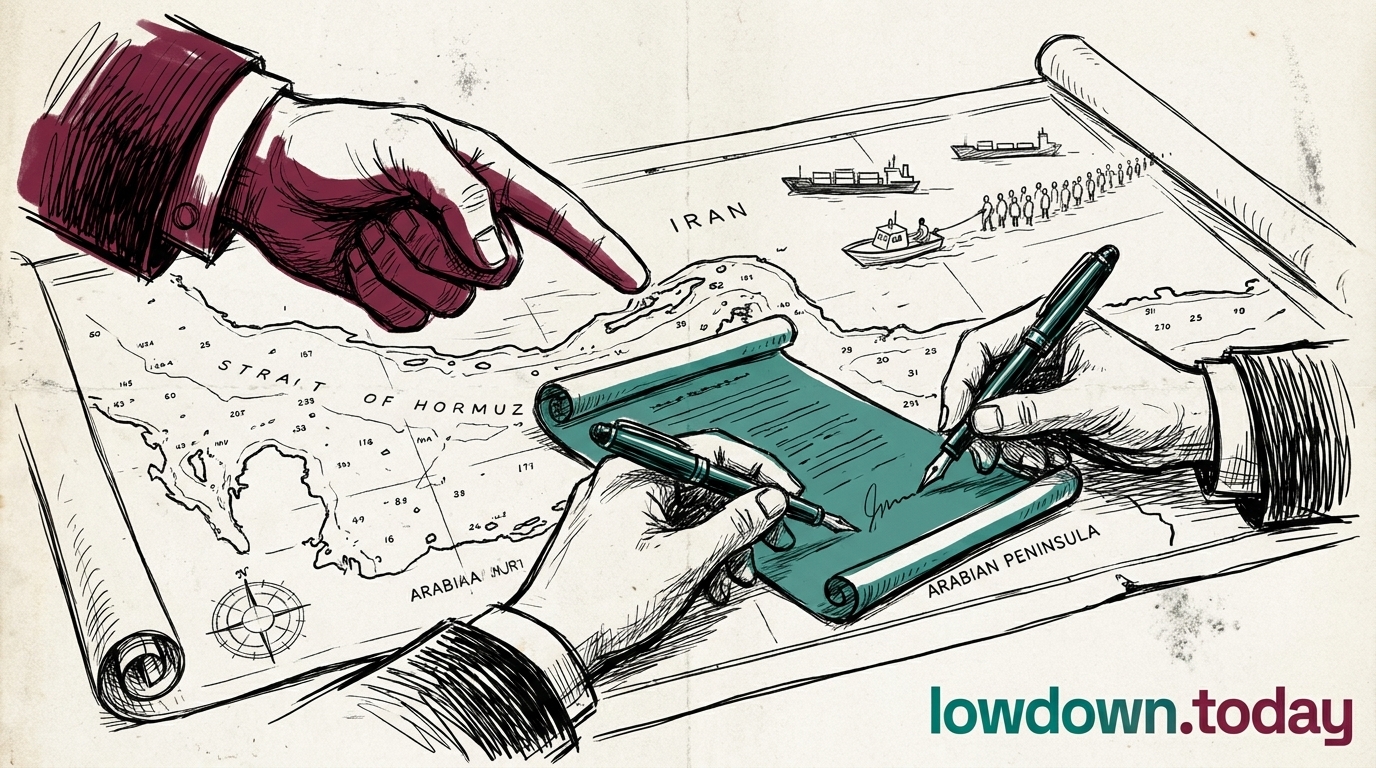
The Brent-Dubai Exchange of Futures for Swaps sat above $6 per barrel through 4-8 May while VLCC freight from the Middle East Gulf to China hit WS458.75 on 11 May.

ConflictDeveloping
Key takeaway

Hormuz cost-of-disruption is priced live in the EFS and the TD3C; both have to compress together.

The Brent-Dubai EFS (glossed once: Exchange of Futures for Swaps, the standard spread instrument between the two crude benchmarks) sat above $6 per barrel through 4 to 8 May 2026, against a pre-Iran-conflict baseline below $2 per barrel⁠1. The freight leg confirms it. TD3C (the 270,000-tonne VLCC route from the Middle East Gulf to China) was assessed at WS458.75 on 11 May 2026, a round-trip TCE of $462,102 per day, up roughly 50 WS points week-on-week from the previous Monday's WS408.13 and $407,437 per day⁠2. The Baltic Dirty Tanker Index reached an all-time high above 1,900 points, +120 per cent year-on-year.

Hormuz transit remained physically disrupted weeks after the 17 April ceasefire. Mine clearance and port infrastructure repair were unfinished, and Iran ran the strait as a bilateral state-to-state passage system through mid-May, codified publicly by Foreign Minister Abbas Araghchi. The US Navy's Operation Project Freedom, announced on 4 May to escort merchant traffic out of The Gulf, drew Iranian warnings that the mission breached the ceasefire. A 5 May exchange of fire pushed Brent back to $114.44 per barrel intraday before the market settled. The war mechanics belong to a different topic; the spread and the freight spike sit here.

The EFS-TD3C relationship is the cleanest live measurement of the cost of disruption. EFS above $6 implies a $4 to $5 per barrel freight increment per tonne is being priced into Gulf crude bound for Asia; the WS458 print confirms the freight leg. Until both compress together, the conflict premium is in the system regardless of nominal ceasefire status. Med sour grades pick up the marginal Asia-bound demand, and Brent prices accordingly.

Underneath the spread sits a quieter demand-side leg. Vessels rerouting around the Cape of Good Hope are reportedly burning an extra 1,000 to 1,400 tonnes of bunker per trip, and roughly 50 VLCCs already rerouted since late February imply 50,000 to 70,000 tonnes of incremental marine distillate demand. Against an ARA gasoil base of 13.56 million barrels, that is 3 to 4 per cent of total stock, and largely absent from mainstream coverage that frames the draw as a refinery-supply problem.

Deep Analysis

In plain English

The Brent-Dubai spread measures the price gap between European crude oil (Brent) and Middle Eastern crude oil (Dubai). Normally they trade close to each other. Since Iran closed the strait of Hormuz to some shipping earlier in 2026, Gulf crude has been harder to move, so Middle Eastern oil has become cheaper relative to European oil and the gap has widened. The tanker freight index (TD3C) tells us how much it costs to ship a large oil tanker from The Persian Gulf to China. With Hormuz still only partially open, tankers have to travel the long way around Africa, which takes longer and costs more. Those shipping costs are near record levels, reinforcing why the price gap between Brent and Dubai crude has stayed high.

Deep Analysis
Root Causes

Two independent structural drivers lift the Brent-Dubai EFS above $6/bbl. VLCCs rerouting around the Cape of Good Hope burn roughly 1,000-1,400 additional tonnes of bunker per trip versus the Suez route, adding $1.5-2.5m to voyage costs on a standard 270kt cargo. That cost must be absorbed into the freight rate or the FOB price, which widens the spread between Atlantic delivered prices (Brent-linked) and Gulf FOB prices (Dubai-linked).

Hormuz mine clearance requires specialised vessels and takes weeks; until it completes, every cargo transiting the strait carries a residual risk not present on Atlantic routes. Insurance underwriters are pricing that residual risk into war-risk premiums, which flow directly into Gulf crude freight cost.

What could happen next?
  • Consequence

    Med sour crude grades (Urals, Saharan Blend, CPC Blend) attract a substitution premium as Asian buyers unable to source Gulf crude redirect to Atlantic grades, squeezing NWE refinery margins on sour-crude diets.

    Immediate · 0.8
  • Risk

    The Brent net-long speculative position (+58,259 contracts per CFTC) faces an abrupt reversion risk if Hormuz mine-clearance news lands unexpectedly, compressing the EFS from $6+ toward $3-4/bbl within days.

    Short term · 0.75
  • Consequence

    VLCC second-hand values at decade highs and Baltic Dirty Tanker Index at all-time high (+120% year-on-year) signal a sustained tanker shortage that will persist even after Hormuz reopens, as Cape rerouting remains an insurance-driven preference for some operators.

    Medium term · 0.65
First Reported In

Update #1 · GL 134B out, Rotterdam dark, OPEC+ pending

OilPrice.com / CNBC· 18 May 2026
Read original →
Causes and effects
This Event
Brent-Dubai EFS over $6, TD3C at WS458
The Atlantic-Asia crude spread and the freight cost of moving Gulf barrels east are dislocated at the same time, leaving Med sour grades to pick up Asia-bound marginal demand.
Different Perspectives
Office for Budget Responsibility
The OBR's 28 October forecast assumed $82 oil for 2026 and 2027, from market prices for the ten working days to 19 August, and blamed dearer wholesale energy on the war without naming Iran. It expects CPI inflation close to 4% in early 2027 even at that price.
Hengaw, Kurdish rights group
Hengaw reported the 3 November hangings of Amirhossein Maleki and Amirhossein Ebrahimi in Isfahan, saying Ebrahimi was tortured into confessing and that nine of 12 people sentenced to death in the case have now been hanged. Iran's judiciary holds that the defendants killed members of the security forces.
FINTRAC, Canada's financial intelligence unit
FINTRAC worked with the US Treasury on the 6 November designation of eight money services businesses in British Columbia, Ontario and Quebec. Treasury says the businesses still operate, some under new names, so closing them falls to Ottawa.
Abdul Qadir al-Dakhil, Governor of Nineveh
Al-Dakhil cancelled three Mosul International Airport contracts on 7 November over alleged links to armed groups, after meeting Prime Minister Ali al-Zaidi in Baghdad. He named no group or company, and said the contracts will go to international companies.
Kuwait
Kuwait
Kuwait condemned the Houthi missile fired towards the Madinah region on 5 November and restated its support for Saudi Arabia, the Qatar News Agency reported. Its state tanker company, Kuwait Oil Tankers Company, is among the Gulf state fleets on Iran's expanded Hormuz list.
Scott Bessent, US Treasury Secretary
Treasury designated an alleged Chandigarh false-flag network on 4 November and eight Canadian exchangers on 6 November, while State sanctioned alleged MANPADS intermediaries. None of the actions touches an oil buyer; they target the paper, cash and procurement around Iran's trade.

Written with AI from Lowdown's published reporting. Not individually reviewed by an editor. Editorial standards.
