Skip to content
You can now search across every topic, entity and event.What's new
Iran Conflict 2026
17JUN

US threatens Oman, its oldest Iran link

4 min read
09:37UTC

Scott Bessent warned Oman on 28 May the US would target any actor facilitating Hormuz tolls, and Muscat backed down within the day, leaving Pakistan as the sole active mediator.

ConflictDeveloping
Key takeaway

Washington threatened the Oman channel it has used to reach Tehran since 1981, leaving Pakistan to broker alone.

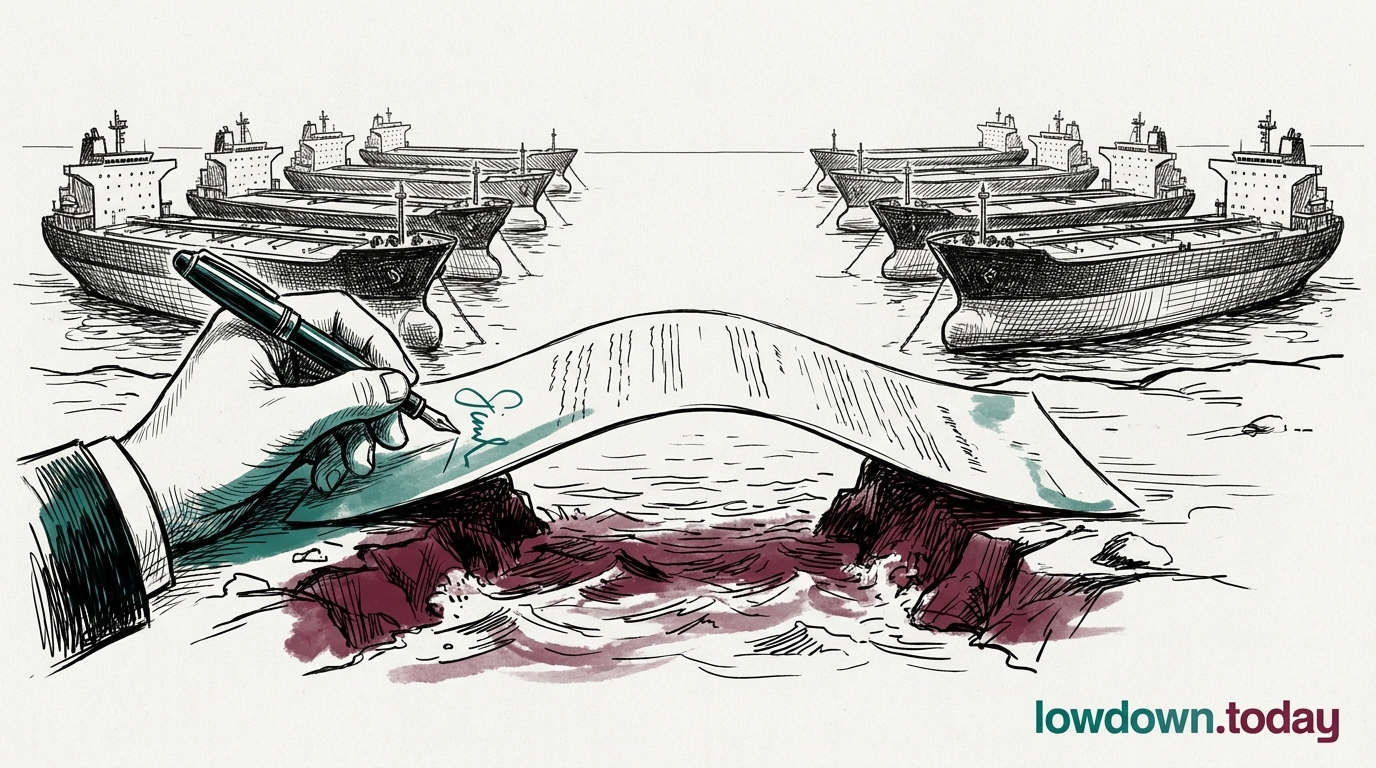
US Treasury Secretary Scott Bessent warned Oman on 28 May that Washington would "aggressively target any actors involved, directly or indirectly, in facilitating tolls for the strait". 1 Trump reportedly threatened to "blow them up" after Iranian state media said Tehran and Muscat would jointly manage Strait of Hormuz traffic. 2 Oman is the Gulf sultanate that brokered the secret Muscat channel behind the 2015 nuclear deal and has carried messages between Washington and Tehran since the 1981 hostage settlement. Muscat brokers; it does not threaten US interests.

Oman backed down within the day, its ambassador assuring Washington there was no toll plan. The threat still landed on the architecture any deal depends on. Tehran has demanded the release of roughly $12bn in Qatar-held frozen assets before any Hormuz sequence , and Rubio had already called the tolls a "deal-killer" . Threatening the neutral broker over the same tolls leaves Pakistan, whose foreign minister Ishaq Dar met US Secretary of State Marco Rubio in Washington on 29 May, as the sole active mediator. 3

The Muscat channel does not regenerate on demand. Oman's value was precisely its neutrality: it carried messages no formal channel could, and the quiet talks it hosted between 2013 and 2015 enabled a nuclear agreement Western formal diplomacy could not reach directly. A private toll warning may be leverage rather than rupture, and Oman's quick denial proves it worked. The cost is that the maximum-pressure logic now treats a 45-year backchannel as a sanctions target, and Pakistan, a broker with its own regional stakes, inherits a role Oman performed without them.


Deep Analysis

In plain English

Oman is a small Gulf country that has quietly acted as a go-between for the US and Iran since the 1980s. Both sides trust Oman because it talks to everyone and picks no sides publicly. Iranian state media reported on 27-28 May that Iran and Oman might jointly run traffic through the Strait of Hormuz, where one-fifth of the world's oil travels. US Treasury Secretary Scott Bessent warned Oman on 28 May that America would punish anyone helping Iran collect tolls on ships passing through the Strait. Trump reportedly also threatened to 'blow up' Oman. Oman immediately denied any toll plan. By losing Oman's trust, Washington pushed the role of intermediary onto Pakistan, which has less financial infrastructure to handle the kind of deal that requires a trusted bank channel.

Deep Analysis
Root Causes

Oman's exposure on 28 May was structural rather than diplomatic carelessness. Iranian state media's broadcast of a joint Tehran-Muscat Hormuz management plan forced the sultanate into a publicly visible position it had likely maintained privately since IRNA first reported a draft bilateral transit protocol with Oman in April 2026.

The underlying driver is geographic: Oman's territorial waters cover the southern half of the 33-kilometre strait under UNCLOS, meaning any Iranian toll scheme that routes through Omani waters sits partially outside CENTCOM's enforcement geometry.

Bessent's threat reflects a specific Washington anxiety: that Oman's UNCLOS position could be used to legitimise Iranian toll collection as a joint sovereign act rather than a unilateral Iranian imposition, which would complicate the legal basis for CENTCOM interdictions. The threat was aimed at collapsing that legal architecture before it could be formalized.

What could happen next?
  • Risk

    Pakistan lacks the banking infrastructure and UNCLOS territorial position that made Oman useful for frozen-asset routing; sole-mediator elevation increases Islamabad's exposure to Iranian demands it cannot operationally satisfy.

  • Consequence

    Oman's public denial of the joint-management plan removes the one legal framework that could have grounded Iranian toll collection in a bilateral sovereign act rather than a unilateral Iranian imposition.

First Reported In

Update #112 · Treasury opens a second Iran sanctions front

Al Jazeera· 30 May 2026
Read original
Different Perspectives
Lloyd's Market Association
War-risk underwriters price the Houthis' Red Sea attacks because the group announces its targets in advance, but the unclaimed Damietta drone gives insurers a hit with no author to price against. An attack nobody claims costs shipping more than one that is claimed, since premiums are set against a known pattern, not raw damage.
US Central Command
US Central Command
CENTCOM has announced no strike on Iran since resuming bombing on 30 July within hours of an IRGC salvo on Jordan, and centcom.mil did not respond to requests to confirm any pause. The command has gone quiet before while a larger operation was being weighed, so silence alone proves nothing about what it has or has not done.
Hengaw
Hengaw
Hengaw recorded at least 67 executions in Iran during July, of which the state acknowledged only eight, and reported the 1 August execution of protest detainee Arvin Kheirkhahan at Shahrud with no advance notice to his family. A family's first notice of a death sentence is now usually the instruction to collect a body.
Egypt
Egypt
Egypt's government asked media on 2 August to report the Damietta attack accurately, named no author, and said no findings will be published before its own investigation concludes. Cairo holds the debris and jurisdiction over an attack on its own soil, and naming a culprit now would pull it into a dispute it has avoided for five months.
Iran's Foreign Ministry
Araghchi called the Hormuz talks with Oman final-stage on 2 August, four days after his own deputy rejected Oman's lane proposal, and denied the Damietta drone strike as an Israeli false flag while two Iranian officials privately claimed it for Tehran. Iran's public position now contradicts itself on both files at once.
Bahrain and Kuwait
Bahrain and Kuwait
Bahraini and Kuwaiti aircraft flew their own strikes on Iranian depots in July with Emirati air cover behind them, and Ynetnews reports some Gulf capitals wanted the 2 August strike to proceed rather than stop. States that have already taken fire see a closing window on Iranian weakness, not a reason to pause.



