Skip to content
You can now search across every topic, entity and event.What's new
Iran Conflict 2026
17JUN

Iran demands $12bn freed before Hormuz

4 min read
09:37UTC

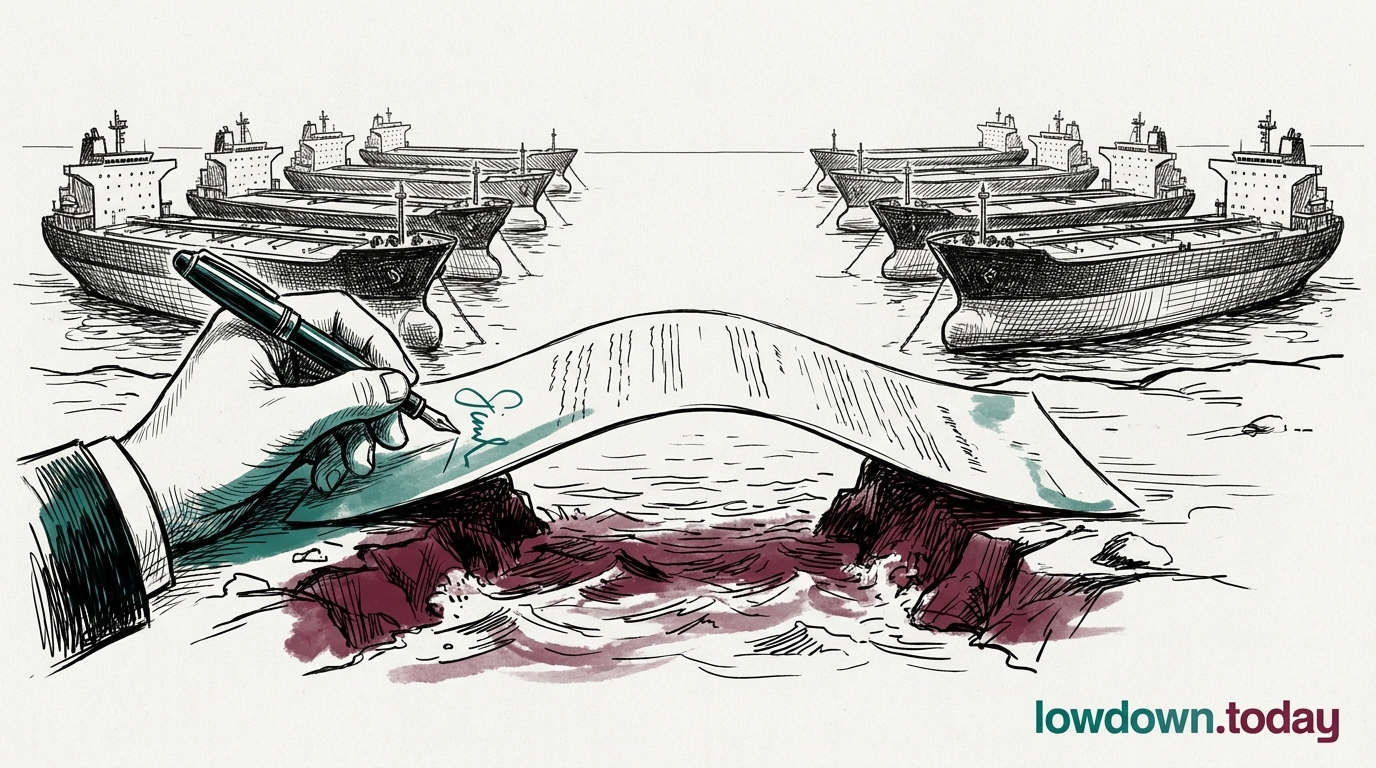
Iran told mediators on Sunday it wants $12bn frozen in Qatar released before it reopens Hormuz or moves on nuclear questions. Washington wants the strait open first. Neither will move first.

ConflictDeveloping
Key takeaway

Both sides agree on the deal's shape but not on who acts first, and that gap holds.

On Sunday 24 May, Iran told mediators it wants $12bn in Iranian assets frozen in Qatar released before any reopening of the Strait of Hormuz or steps on its nuclear programme, relayed via Iran International citing the IRGC-aligned outlet Tasnim 1. Tehran said it would not let asset release be handed to "vague and illusory promises." Washington's counter runs the other way: the cash unfreezes only after Hormuz reopens.

This one clause blocks an agreement whose broad principles both sides say are settled. Donald Trump had cast the deal as all but done , and accounts of its terms had varied between the parties ; the $12bn demand is the concrete obstacle those optimistic readings had glossed over. Iran's Foreign Ministry put it plainly through spokesman Esmaeil Baghaei: the two sides had reached agreement on "a large portion of the issues," but "an agreement is not imminent" 2.

Tehran and Washington divide over the order of operations rather than the principle. Since the US left the 2015 nuclear deal in 2018, Tehran has treated American commitments as reversible, so it will not surrender an operational lever like the strait before the money lands. Washington will not release $12bn it cannot claw back before seeing a concession it can verify. Each side asks the other to move first.

That is the same failure mode that stalled arms-control talks through the 1980s: agreement on the ends, deadlock on the verifiable order of concessions. It also explains how a deal can be described as close and stuck at once. The futures market is pricing the sequence resolving soon; the posture on the ground has not changed. The demand itself is sourced to Iranian state-adjacent media, so the precise figure carries Tehran's framing, though US-official accounts corroborate that a sequencing gap is what remains.


Deep Analysis

In plain English

Iran has told the negotiators trying to end the war that before it agrees to reopen the Strait of Hormuz, it wants $12 billion of its own money back. The US Treasury froze those funds years ago through sanctions. The US says Iran has to open the strait first, then the money gets released. Iran refuses: it made concessions in the 2015 nuclear deal and received nothing when the US cancelled that deal in 2018. Tehran's foreign ministry spokesman Esmaeil Baghaei confirmed on 25 May that a deal is not imminent because of this standoff over which side moves first.

Deep Analysis
Root Causes

The sequencing deadlock has one structural cause: neither party has a credible commitment mechanism. The US cannot sign a treaty without Senate ratification (impossible in the current political configuration), and executive orders can be revoked by the same president who signed them within 24 hours. Iran's side cannot credibly commit to Hormuz reopening without IRGC commander endorsement, which requires Khamenei Council sign-off that has not been publicly confirmed.

The $12bn demand operationalises Iran's distrust of US reversibility. Qatar holds the funds in an escrow structure agreed under the 2023 Algiers-inspired channel, but Qatar cannot release them without both US Treasury authorisation (given the original freeze was a US instrument) and Iran's formal acceptance of the transfer mechanism. The US authorisation is the sticking point: Trump's posted position is that authorisation follows Hormuz reopening, not precedes it.

What could happen next?
  • Consequence

    The sequencing deadlock means any MOU structure, however broadly agreed, cannot generate a signed Phase 1 instrument until the $12bn mechanism resolves, which requires a US Treasury authorisation Trump has not issued.

    Immediate · Assessed
  • Risk

    If Pakistan or Qatar broker a face-saving formula under which $6bn of the $12bn is released in tranches tied to Hormuz reopening milestones, Iran's Khamenei Council would need to approve a phased asset release, a domestic political hurdle with no precedent since 1981.

    Short term · Suggested
  • Precedent

    A successful Iran asset-release via Qatar, routed outside US re-freeze authority, would establish the template for sanctioned states negotiating asset releases in future conflicts.

    Long term · Suggested
First Reported In

Update #107 · Two markets, two prices on one Iran deal

Al Jazeera· 25 May 2026
Read original
Different Perspectives
Lloyd's Market Association
War-risk underwriters price the Houthis' Red Sea attacks because the group announces its targets in advance, but the unclaimed Damietta drone gives insurers a hit with no author to price against. An attack nobody claims costs shipping more than one that is claimed, since premiums are set against a known pattern, not raw damage.
US Central Command
US Central Command
CENTCOM has announced no strike on Iran since resuming bombing on 30 July within hours of an IRGC salvo on Jordan, and centcom.mil did not respond to requests to confirm any pause. The command has gone quiet before while a larger operation was being weighed, so silence alone proves nothing about what it has or has not done.
Hengaw
Hengaw
Hengaw recorded at least 67 executions in Iran during July, of which the state acknowledged only eight, and reported the 1 August execution of protest detainee Arvin Kheirkhahan at Shahrud with no advance notice to his family. A family's first notice of a death sentence is now usually the instruction to collect a body.
Egypt
Egypt
Egypt's government asked media on 2 August to report the Damietta attack accurately, named no author, and said no findings will be published before its own investigation concludes. Cairo holds the debris and jurisdiction over an attack on its own soil, and naming a culprit now would pull it into a dispute it has avoided for five months.
Iran's Foreign Ministry
Araghchi called the Hormuz talks with Oman final-stage on 2 August, four days after his own deputy rejected Oman's lane proposal, and denied the Damietta drone strike as an Israeli false flag while two Iranian officials privately claimed it for Tehran. Iran's public position now contradicts itself on both files at once.
Bahrain and Kuwait
Bahrain and Kuwait
Bahraini and Kuwaiti aircraft flew their own strikes on Iranian depots in July with Emirati air cover behind them, and Ynetnews reports some Gulf capitals wanted the 2 August strike to proceed rather than stop. States that have already taken fire see a closing window on Iranian weakness, not a reason to pause.



