Skip to content
You can now search across every topic, entity and event.What's new
Iran Conflict 2026
17JUN

Iran defers nuclear talks past ceasefire

3 min read
09:37UTC

Pakistan delivered Iran's revised ceasefire proposal to Washington on 28 April; nuclear talks now sit in a post-war Phase 3, and Marco Rubio called the offer 'better than we thought'.

ConflictDeveloping
Key takeaway

Iran routed a two-phase ceasefire through Pakistan; Rubio called the offer 'better than we thought'.

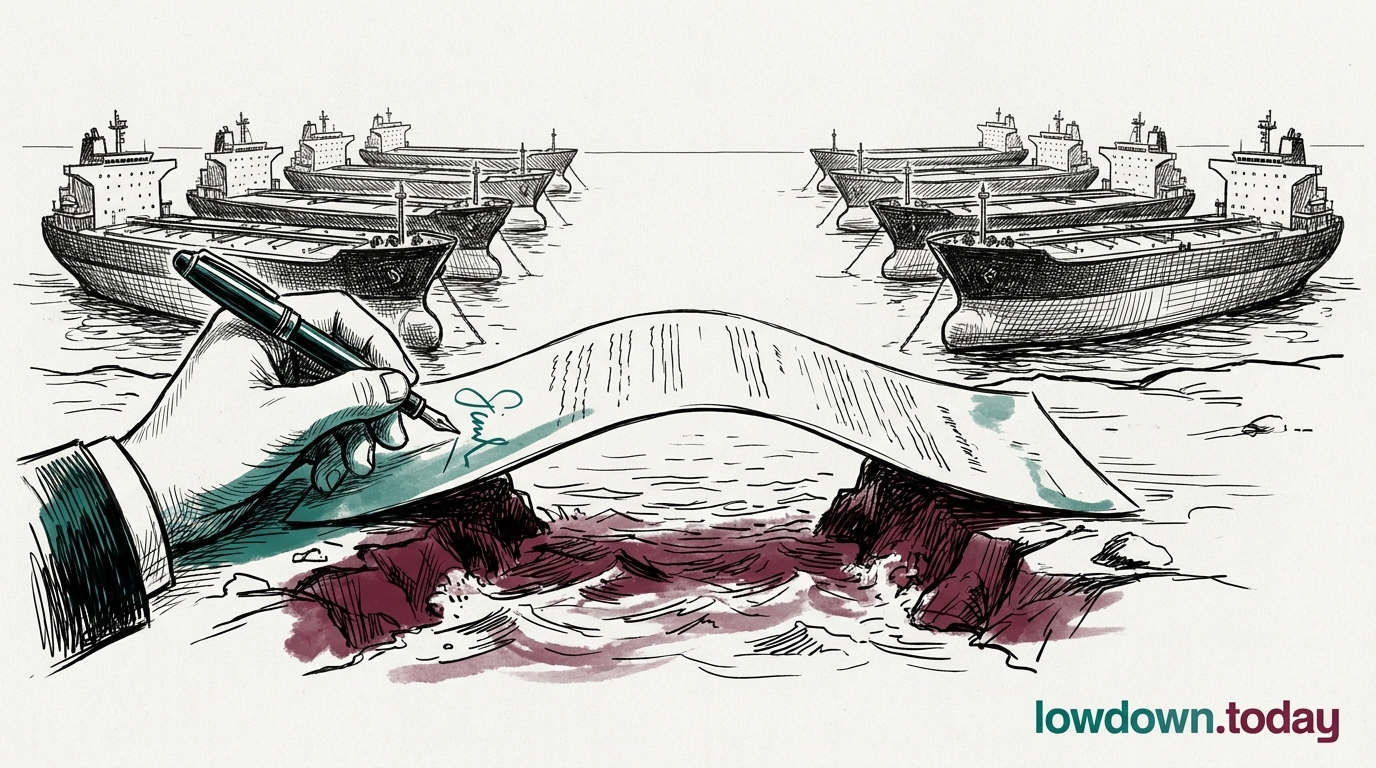
Pakistan delivered Iran's revised two-phase ceasefire proposal to Washington on 28 April 2026. Phase 1 calls for full cessation of hostilities and binding guarantees against renewed attacks on Iran and Lebanon; Phase 2 covers Strait of Hormuz management and security. Nuclear talks are deferred entirely to a post-war Phase 3, a substantive change from the three-phase document Pakistan carried on 27 April which placed nuclear sequencing as a pre-ceasefire condition. Al Jazeera confirmed the text via the Pakistani government channel.

Marco Rubio, the US Secretary of State, called the offer 'better than we thought' but raised verification concerns. The assessment is the most positive US public signal yet on a ceasefire text, and arrives 24 hours before the War Powers Resolution (WPR) 60-day clock expires . Iranian Foreign Minister Abbas Araghchi ran a three-day shuttle through Islamabad twice, Muscat, and St Petersburg, where he met Vladimir Putin at the Boris Yeltsin Library . Donald Trump rejected the earlier three-phase version on Truth Social; the cancelled Steve Witkoff and Jared Kushner Pakistan trip leaves Pakistan as the sole active mediator, displacing Oman's bilateral track that ran the early war.

Deferring nuclear talks to the post-war period is the same procedural move JCPOA (Joint Comprehensive Plan of Action) negotiators used in 2013 to break a sequencing impasse: settle the politics first, settle the verification later. The 2013 framework had a P5+1 structure to carry the verification weight; this proposal has Pakistan and one Truth Social rejection. Phase 1's binding guarantees against renewed attacks on Lebanon expand the geographic scope of the ceasefire beyond Iran itself, recognising Hezbollah's operational entanglement with Iranian command. The verification gap Rubio flagged is the procedural lever Washington can use to slow the text without rejecting it, particularly if Senator Lisa Murkowski's AUMF lands on Congress.gov before the deadline and forces the executive into adversarial-text territory.

The revised text now sits at the State Department alongside a 60-day US signing column that has remained empty throughout the conflict.


Deep Analysis

In plain English

Pakistan handed a written ceasefire proposal from Tehran to Washington on 28 April, acting as the go-between because Iran and the United States have no direct diplomatic channel. Iran's offer has two stages. First: stop the fighting and give Iran guarantees that neither the US nor Israel will attack again. Second, once the war is over: figure out the Hormuz shipping rules. The most controversial issue, Iran's nuclear programme, has been moved entirely off the table for now. Secretary of State Marco Rubio called this version better than the previous one, the most positive thing Washington has said publicly about any Iranian proposal since the war began on 28 February.

Deep Analysis
Root Causes

Pakistan's emergence as the sole active mediating channel after the Witkoff-Kushner trip cancellation reflects a structural asymmetry in the diplomatic architecture: Islamabad has civilian and military buy-in on the Iranian side that no Western interlocutor has achieved. Army Chief Asim Munir's April meetings secured Iranian agreement in principle to outside nuclear monitoring. The Foreign Ministry channel through Araghchi runs in parallel, not subordinate to, the IRGC's operational posture.

The revision from three phases to two reflects Iranian domestic politics as much as diplomatic flexibility. The three-phase structure that Pakistan carried on 27 April included nuclear sequencing as a pre-war condition, a position that the IRGC hardline faction, led by Ahmad Vahidi, had publicly endorsed.

Dropping nuclear sequencing to a post-war track removes a point of IRGC-Foreign Ministry alignment, suggesting Araghchi won an internal argument about what is negotiable without Khamenei's written position moving.

What could happen next?
  • Opportunity

    Rubio's positive public signal creates the first credible diplomatic window for a signed ceasefire instrument before the War Powers Resolution deadline at 12:01 EDT on 1 May, which would remove the WPR's legally awkward teeth before they need to be applied.

    Immediate · 0.65
  • Risk

    Pakistan's role as sole mediating channel is structurally fragile: Islamabad has no enforcement mechanism if either party rejects the next text, and the cancellation of the Witkoff-Kushner trip means there is no US-side backup channel if Pakistan's mediation stalls.

    Short term · 0.8
  • Consequence

    Deferring nuclear talks to the post-war period leaves Iran's 440.9 kg of 60% enriched uranium unaddressed under any ceasefire text, which means European signatories to a potential peace framework would need to accept a nuclear ambiguity clause with no IAEA verification scheduled.

    Medium term · 0.75
First Reported In

Update #83 · UAE quits OPEC, war signs nothing

Al Jazeera· 29 Apr 2026
Read original
Different Perspectives
Lloyd's Market Association
War-risk underwriters price the Houthis' Red Sea attacks because the group announces its targets in advance, but the unclaimed Damietta drone gives insurers a hit with no author to price against. An attack nobody claims costs shipping more than one that is claimed, since premiums are set against a known pattern, not raw damage.
US Central Command
US Central Command
CENTCOM has announced no strike on Iran since resuming bombing on 30 July within hours of an IRGC salvo on Jordan, and centcom.mil did not respond to requests to confirm any pause. The command has gone quiet before while a larger operation was being weighed, so silence alone proves nothing about what it has or has not done.
Hengaw
Hengaw
Hengaw recorded at least 67 executions in Iran during July, of which the state acknowledged only eight, and reported the 1 August execution of protest detainee Arvin Kheirkhahan at Shahrud with no advance notice to his family. A family's first notice of a death sentence is now usually the instruction to collect a body.
Egypt
Egypt
Egypt's government asked media on 2 August to report the Damietta attack accurately, named no author, and said no findings will be published before its own investigation concludes. Cairo holds the debris and jurisdiction over an attack on its own soil, and naming a culprit now would pull it into a dispute it has avoided for five months.
Iran's Foreign Ministry
Araghchi called the Hormuz talks with Oman final-stage on 2 August, four days after his own deputy rejected Oman's lane proposal, and denied the Damietta drone strike as an Israeli false flag while two Iranian officials privately claimed it for Tehran. Iran's public position now contradicts itself on both files at once.
Bahrain and Kuwait
Bahrain and Kuwait
Bahraini and Kuwaiti aircraft flew their own strikes on Iranian depots in July with Emirati air cover behind them, and Ynetnews reports some Gulf capitals wanted the 2 August strike to proceed rather than stop. States that have already taken fire see a closing window on Iranian weakness, not a reason to pause.



