Skip to content
You can now search across every topic, entity and event.What's new
Iran Conflict 2026
11JUN

Treasury hits first Chinese oil firm

4 min read
09:17UTC

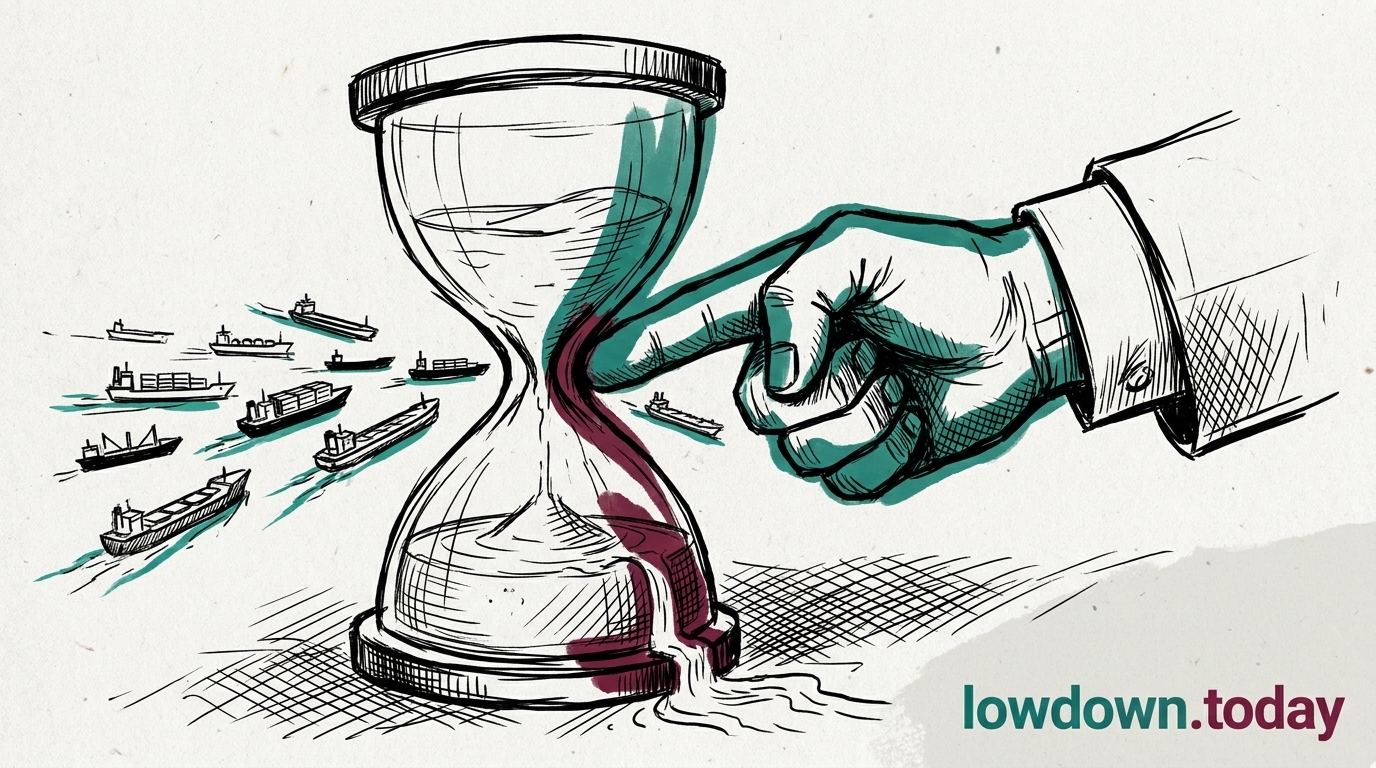
OFAC designated Shanghai Qianye Energy and six LPG tankers under EO 13902 on 5 June, the first mainland-China firm hit under Iran energy sanctions this war, the same week Beijing was pitched as a uranium custodian.

ConflictDeveloping
Key takeaway

Treasury escalated against China the same week Washington was selling China as a uranium custodian.

The Treasury's Office of Foreign Assets Control (OFAC), the bureau that administers US sanctions, designated an Iranian liquefied petroleum gas (LPG) smuggling and shadow-banking network on 5 June under Executive Order (EO) 13902 1. The round named six LPG tankers, front companies in the United Arab Emirates and Tehran, and Shanghai Qianye Energy Co Ltd, the first mainland China-domiciled company designated under Iran energy sanctions in the 2026 war.

Earlier rounds in this war hit only UAE shells, Marshall Islands paper and a crypto ring. The 2 June designation named four Iranian crypto exchanges ; across 4 to 5 June OFAC moved only on Cuba . The 5 June round breaks that pattern by reaching a mainland Chinese corporate for the first time. EO 13902 bites because it reaches any firm that clears dollars through US banks, so the designation strips Shanghai Qianye's access to dollar settlement and signals to Chinese refiners that the UAE laundering route is now exposed.

The timing sets a signature against an assertion. President Donald Trump has called a deal "95% done" and the uranium "entombed", yet The White House produced no Iran instrument across 5 to 6 June while OFAC burned a Chinese supply node the same week Moscow and Beijing were being pitched as uranium custodians, and the day before the St Petersburg forum. Iran's seaborne crude exports already sit below 300,000 barrels a day , with $5.8bn lost since April, yet Treasury still chose to tighten. A signed enforcement act lands harder than a verbal claim that talks are going well.

Deep Analysis

In plain English

The US Treasury runs an office called OFAC, which publishes a blacklist of companies and people that Americans, and anyone using the US financial system, are barred from doing business with. Being listed cuts a company off from dollar payments, which are necessary for almost all international trade. On 5 June OFAC added a Chinese energy company, Shanghai Qianye Energy Co Ltd, to that list. This is the first mainland Chinese firm hit under Iran energy sanctions since the current conflict began. The company was accused of helping Iran sell liquefied petroleum gas, a fuel used for heating and cooking, through a network of front companies in the UAE and Tehran. The decision matters beyond one company. China is Iran's largest trading partner, and Chinese buyers have kept Iranian oil and gas flowing despite earlier sanctions. Hitting a Shanghai-registered company signals Washington is willing to pressure Beijing's commercial interests directly, moving beyond the UAE shells and Marshall Islands vehicles it had designated until this point. It happened the same week the US was floating Russia and China as possible safekeepers for Iran's uranium stockpile, creating an odd diplomatic contradiction.

Deep Analysis
Root Causes

The June 2026 designation of Shanghai Qianye reflects two converging structural realities. First, OFAC's Economic Fury campaign has worked systematically outward from the most legally defensible targets (IRGC-linked crypto exchanges, Marshall Islands shells, UAE fronts) toward increasingly sensitive ones. Mainland Chinese corporates sat at the edge of that radius for months, held back by the diplomatic cost of confronting Beijing directly.

Second, the action-versus-rhetoric gap identified in this briefing's lead (the President's verbal deal optimism versus OFAC's enforcement calendar) is itself structurally generated: OFAC operates on its own legal authority under the executive orders and cannot be easily paused by verbal White House signals.

The 5 June round was therefore not a deliberate White House counter-message to Trump's 'deal nearly done' statements; it reflects the bureaucratic independence of sanctions enforcement from presidential rhetoric.

What could happen next?
  • Risk

    Beijing may invoke China's Blocking Statute (Order No. 1 of 2021) in response, which would bar Chinese firms from complying with the OFAC designation and set up a direct US-China enforcement confrontation over Iranian energy trade.

    Short term · Suggested
  • Consequence

    Chinese LPG and crude buyers routing through UAE fronts face elevated due-diligence costs and potential secondary-sanctions exposure, narrowing the dollar-clearing corridor Iran depends on.

    Immediate · Assessed
  • Precedent

    The mainland Chinese designation breaks the 2023-2025 pattern of restraint on Chinese corporates and signals that OFAC's Economic Fury campaign has no geographic ceiling short of a formal diplomatic decision to grant Beijing a carve-out.

    Medium term · Assessed
First Reported In

Update #120 · The deal's last 5% is uranium nobody can find

US Treasury· 7 Jun 2026
Read original
Different Perspectives
Hormuz shipping and insurance market
Kpler, Lloyd's List and S&P Global each independently put Strait of Hormuz transits at a seventh to a sixth of pre-war levels, against CENTCOM's own position that the strait remains open for transit. War-risk premiums rose from 0.25% to 3-10% of hull value in mid-July and have held steady since.
Pakistan (with China)
Iran's interior minister met Pakistan's army chief in Islamabad on 25 July, his second visit in ten days, with China separately pushing the same track; Islamabad's stated precondition, a halt to Gulf attacks, broke within hours when the Houthis struck Yanbu and Jazan. The channel inherits Baghdad's opening without yet fixing what broke it.
Saudi Arabia
Saudi Arabia
Saudi Arabia absorbed Houthi strikes on Aramco-linked sites at Jazan and Yanbu on 25 July without confirming them, while holding a 30-year civil nuclear agreement Trump made conditional on joining the Abraham Accords two days after signing it. Riyadh is fighting on one front while being asked to concede on another.
Iran (state security leadership)
Iran's security chief said strikes continue until the enemy's "total surrender", and no IRNA, Tasnim or Fars report carries any stand-down language to match Washington's pause. Tehran reads the halt as "strategic decision-making fatigue", not a restraint it needs to reciprocate.
Washington (Pentagon and White House)
A Defense Department source called the bombing halt "on a hold", Pentagon spokesman Sean Parnell insisted the US "retains a deep arsenal of capabilities", and the White House credited "successful sanctions" and thirteen days of strikes for the same pause. Three explanations from one government suggest none of them is the whole one.
Oil traders
Oil traders
Sent Brent down 2.29 per cent to $98.38 a barrel on reports that mediation was reviving, moving the price on CENTCOM's quiet night rather than on Trump's same-day promise of a bigger operation with no deadline attached.