Skip to content
Briefings are running a touch slower this week while we rebuild the foundations.See roadmap
Iran Conflict 2026
4JUN

Iran hangs Turkish national, toll rises

4 min read
11:25UTC

Iran executed Turkish citizen Gholamreza Khani Shakarab on spying charges and six more across three days; NATO member Ankara said nothing about the killing of its own national.

ConflictDeveloping
Key takeaway

Iran's executions kept pace through the Doha talks, untouched by the diplomacy running abroad.

Iran executed Gholamreza Khani Shakarab, a Turkish national, on Tuesday 26 May on charges of spying for Israel, the Norway-based Kurdish rights monitor Hengaw reported 1. His death resolves the imminent-execution flag carried since 21 May and makes him the third foreign national executed since 20 May. Ankara, a NATO member that shares a long border with Iran, has not publicly protested the killing of its own citizen.

The same window logged a cluster. Hengaw documented Saman Ebrahimi and Ali Shahbazi at Kermanshah, Amirabbas Shokri at Rasht, and Abdolghader Rasouli, a Kurdish prisoner, at Mahabad on 26 May, with Majid Shirzadi executed at Hamedan on Wednesday 27 May 2. Kurdish trader Qazi Kavani was shot dead by Iranian forces near Sardasht on Monday 25 May.

The pace tracks an Amnesty International register that passed 200 executions for the year . That run includes Esma Zarei, hanged at Ardabil after giving birth in custody , and Abbas Akbari Feyzabadi at Isfahan . The killings cluster in the Kurdish west and fall heavily on minority prisoners, the population with the least voice in any deal struck in Doha.

The enforcement tempo did not bend to the diplomatic track. While the war cabinet talked ceasefire abroad, the gallows kept their schedule at home, which reads as Tehran signalling that negotiation buys no leniency for the people inside its prisons.

Deep Analysis

In plain English

Iran executed Gholamreza Khani Shakarab, a Turkish citizen, on 26 May 2026, on charges of spying for Israel. This made him the third foreign national executed in Iran since 20 May. The same week, a human rights group called Hengaw documented five further deaths: four men hanged at prisons across Iran and a Kurdish trader shot by Iranian border forces near the Iraqi border. What makes the Shakarab case notable beyond the execution itself is Turkey's response, or rather the absence of one. Turkey, a NATO member and a country that shares a long border with Iran, has been acting as a diplomatic go-between during the 2026 war. Turkey said nothing publicly after Iran killed one of its own citizens. Human rights organisations say this silence sends a signal: countries helping with peace talks may not be willing to raise individual human rights cases if doing so risks their mediating role.

What could happen next?
  • Precedent

    Turkey's silence after Shakarab's execution signals that mediating states will not invoke Vienna Convention consular rights when doing so risks their diplomatic channel, removing a practical deterrent on Iran executing nationals of mediating countries.

    Medium term · Assessed
  • Consequence

    Amnesty International's 2026 execution register passing 200 by 26 May, against 2,159 across all of 2025, means the wartime judicial acceleration is running at a pace that would reach the annual 2025 total by mid-July if current tempo holds.

    Short term · Suggested
  • Risk

    The Hengaw cluster of five executions and one border shooting across 25-27 May shows enforcement tempo did not slow during the Doha diplomatic round, which Iran-watchers at IHRNGO read as deliberate: the internal security apparatus operates on its own schedule regardless of the foreign ministry track.

    Immediate · Assessed
First Reported In

Update #109 · War Powers clock outlasts Congress by a day

Hengaw· 27 May 2026
Read original
Different Perspectives
China
China
Beijing's MOFCOM Blocking Rules constrain OFAC enforcement on the mainland; China has not corroborated Trump's verbal account of any bilateral summit, and the rial's failure to hold its Rubio bounce, combined with the IRGC's stablecoin rail closure, increases Chinese yuan-denominated oil-payment exposure through Hormuz.
Israel
Israel
IDF Chief Zamir said on 3 June there is no ceasefire for his forces even as Israel signed the Washington Lebanon framework requiring Hezbollah withdrawal south of the Litani; a UNIFIL peacekeeper was killed by mortar near Marjayoun on the same day, exposing the gap between the diplomatic framework and a ground advance that has not stopped.
Bahrain
Bahrain
The IRGC struck Bahrain on 3 June as its sirens sounded and its PAC-3 magazine neared exhaustion; excluded from Rubio's 2 May emergency resupply, Bahrain received a 50-round Federal Register notice on 1 June on an 18-month delivery timeline, meaning it is defending the US Fifth Fleet headquarters on the last rounds it has.
Qatar
Qatar
Qatar offered $6bn under OFAC Licence L-2 restrictions and sent Ghalibaf's delegation home empty-handed; the $6bn ceiling is a legal constraint, not a negotiating floor, and Rubio's no-sanctions-relief testimony means Qatar cannot revise it without White House action that has not been requested.
Kuwait
Kuwait
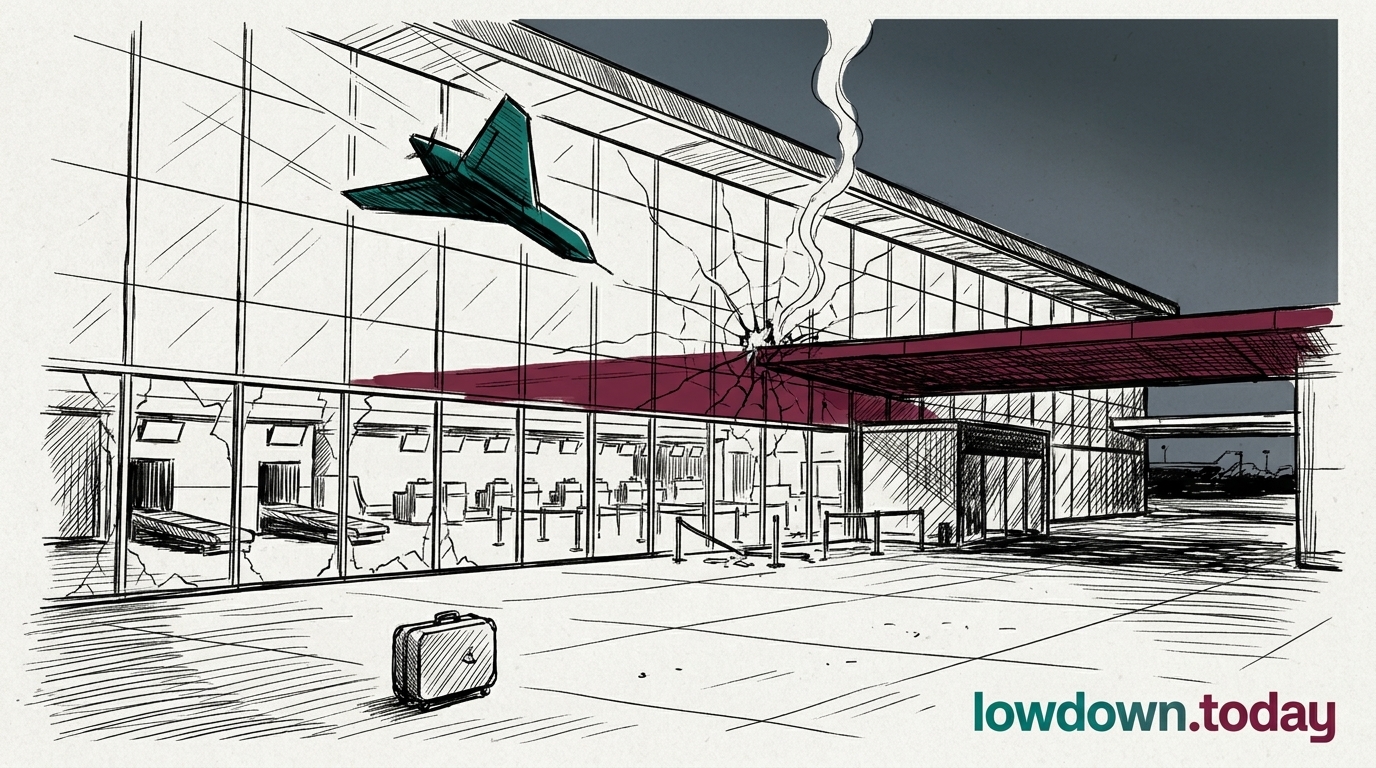
Kuwait expelled two Iranian diplomats within 24 hours of the airport strike, the strongest and fastest Kuwaiti diplomatic move of the conflict, while keeping the full mission in place to preserve a communication channel; it has now invoked Article 51 self-defence, filed a formal protest, and expelled diplomats, exhausting its formal toolkit short of full rupture.
United States
United States
Trump narrated a weekend deal while the channel Rubio described under oath, Khamenei's written-only couriers with a 3-to-5-day lag, cannot answer at that speed; CENTCOM called the airport strike deliberate, calculated and unjustified. The House 215-208 vote gave Congress its first on-record war-powers position against the deployment Trump has run without a signed instrument for 96 days.