Skip to content
Briefings are running a touch slower this week while we rebuild the foundations.See roadmap
Iran Conflict 2026
3JUN

IRGC toll booth live at Hormuz

4 min read
09:04UTC

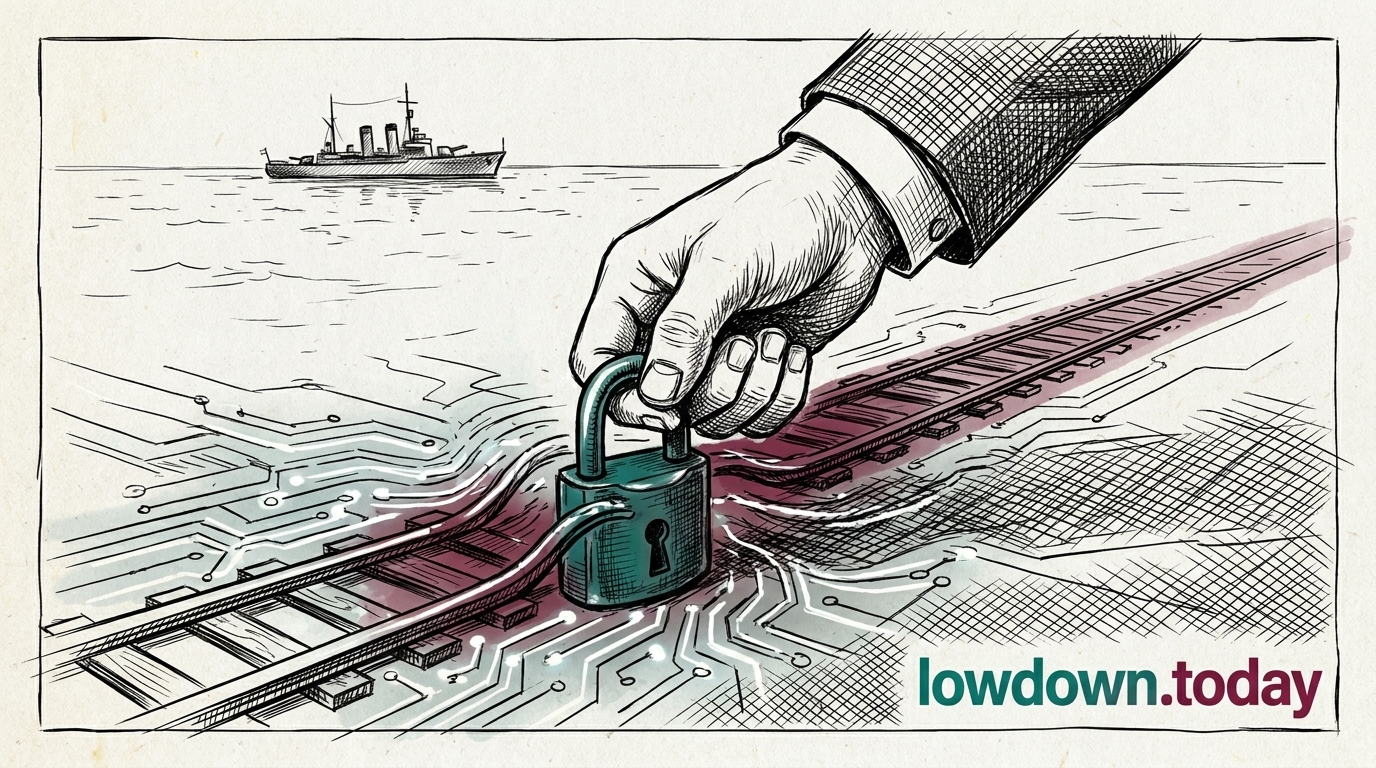
The IRGC has converted the world's most important oil chokepoint from a naval blockade into a revenue operation, charging up to $2 million per vessel — payable in cash, cryptocurrency, or barter.

ConflictDeveloping
Key takeaway

Iran has converted Hormuz from a binary blockade threat into a self-financing revenue stream immune to simple military countermeasure.

The IRGC's toll system on the strait of Hormuz is operational. Ships pass through a 5-mile channel between Larak and Qeshm islands — inside Iranian territorial waters — where IRGC personnel hail them on VHF radio, verify transponder data, and negotiate passage fees reaching $2 million per vessel 1. Payment is accepted in cash, cryptocurrency, or barter 2. Approximately 90 vessels transited with IRGC clearance in the first two weeks of March 3.

The system is a strategic adaptation. Iran's initial total blockade of Hormuz — through which roughly 20% of global oil transits daily — proved unsustainable under American air superiority. CENTCOM has destroyed 140 vessels; A-10 Warthogs and Apache helicopters hunt fast-attack craft at low altitude along the southern Iranian littoral . Rather than maintain a naval confrontation it was losing, Tehran shifted to selective access. Foreign Minister Araghchi stated the strait is 'closed only to ships belonging to our enemies' . The toll system is how that policy operates in practice.

The geography makes enforcement straightforward. The navigable channel at its narrowest runs through waters Iran has controlled since Britain withdrew from The Gulf in 1971. During the 1980–88 war with Iraq, Iran mined these same waters — a precedent the Defence Council cited on Sunday when it threatened to mine 'all access routes' if Iranian coasts or islands are attacked. But mining denies passage. The toll system monetises it. Revenue flows to the same IRGC provincial commands that patrol the strait, creating a self-financing enforcement loop: the chokepoint funds its own enforcers.

The result is a two-tier global shipping system. India, Pakistan, Iraq, Malaysia, and China are negotiating bilateral transit arrangements with Tehran ; Japan secured passage on 21 March. Nations aligned with the US face an effective embargo. With charter rates at $800,000 per day , more than 3,000 vessels stranded across the Middle East , and rerouting around the Cape of Good Hope adding weeks and millions per voyage, the IRGC's toll is a calculable cost of doing business. Brent Crude peaked at $126 per barrel four days ago . Iran has found a way to make the Hormuz Chokepoint not just militarily sustainable but profitable.


Deep Analysis

In plain English

Think of this as Iran running an unofficial — but operationally real — tollbooth in the world's most critical shipping lane. Every tanker wanting to pass through the Strait of Hormuz must now negotiate a fee directly with Iran's Revolutionary Guard, reportedly up to $2 million per ship. This means oil companies, shipping firms, and ultimately consumers are effectively paying Iran even while Western governments are at war with it. Japan has already paid once. Countries whose ships refuse are blocked. The fees are being paid in cash, cryptocurrency, or goods — making them nearly impossible to sanction.

Deep Analysis
Synthesis

The toll system occupies a deliberate legal grey zone: it is not a formal blockade (which would be an unambiguous act of war under international law) but it is not lawful transit regulation either. This ambiguity is Iran's primary strategic asset — it constrains US response options while generating revenue. Critically, IRGC provincial commands receiving independent toll income become financially self-sustaining nodes with their own institutional interest in prolonging chokepoint control, potentially fragmenting Iran's negotiating posture and making any central deal harder to enforce on the ground.

Root Causes

Iran's shift from threatened total blockade to selective toll collection reflects a rational adaptation under air supremacy conditions. A total blockade would invite immediate US naval intervention under established rules of engagement; selective transit control under the cover of claimed territorial waters creates legal ambiguity that complicates US response options. The revenue dimension generates institutional incentives within IRGC provincial commands to maintain the system independently of Tehran's central direction.

What could happen next?
1 consequence2 risk1 meaning1 precedent
  • Consequence

    Shipping companies must now factor $1-2 million per voyage in IRGC tolls into Hormuz route economics, with costs passed through to freight rates and consumers.

    Immediate · Assessed
  • Risk

    Vessels that decline IRGC clearance face seizure or exclusion — creating a compliance dynamic that entrenches the toll system regardless of diplomatic progress.

    Short term · Assessed
  • Meaning

    IRGC provincial commands with independent toll revenue streams may become autonomous negotiating entities, fragmenting Iran's diplomatic coherence and complicating any central deal.

    Medium term · Suggested
  • Risk

    Toll income creates an institutional IRGC interest in prolonging conflict — commanders financially benefit from continued chokepoint control regardless of Tehran's strategic calculus.

    Medium term · Suggested
  • Precedent

    If normalised, IRGC toll collection establishes that a sanctioned state under active military pressure can generate hard-currency revenue from global trade through legal-grey-zone maritime control.

    Long term · Assessed
First Reported In

Update #46 · Trump delays strikes; oil crashes to $99

Economist Intelligence· 24 Mar 2026
Read original
Different Perspectives
Lloyd's of London underwriters
Lloyd's held its Hormuz war-risk rate at $10-14 million per voyage; underwriters need a UN Security Council resolution or formal PGSA de-listing before repricing, not a Senate testimony. The PGSA remains on the SDN list under EO 13224, so any vessel transiting a nominally reopened strait still deals with a sanctioned counterparty.
Saudi Arabia and Gulf states
Brent crude at $95-97 on 2-3 June reflects Gulf producers benefiting from the conflict premium; a genuine Hormuz deal would likely cut that premium by $10-15 per barrel. Riyadh's $87 per barrel budget breakeven means the current price is comfortable, reducing the Gulf's urgency to push for a rapid settlement.
China
China
OFAC's Nobitex designation leaves China's informal bilateral currency-swap lines with Iran as the CBI's remaining rial-defence mechanism; Chinese financial institutions face secondary-sanctions risk if they interact with successor wallets. Beijing's MOFCOM Blocking Rules protect mainland refineries from direct designation but do not shield informal swap-line counterparties.
Lebanon / Hezbollah
Lebanon / Hezbollah
Lebanon's Washington delegation demanded full Israeli withdrawal and the return of 1.2 million displaced; Hezbollah deployed an FPV drone that killed an Israeli soldier at Yohmor while talks ran, demonstrating it can impose costs even at Israel's deepest penetration point. Lebanon's government cannot deliver the Hezbollah disarmament guarantee Israel demands.
Israel / Benjamin Netanyahu
Israeli forces seized Beaufort Castle above the Litani on 1-2 June and advanced to within 10 km of the Zaharani river while ceasefire delegations sat in Washington; the advance ran entirely outside the Beirut-only truce Netanyahu accepted on 1 June. Each kilometre taken raises Israel's withdrawal price before any permanent text is signed.
Iran: Foreign Ministry and domestic population
Araghchi rang six capitals in 48 hours to reopen talks the SNSC had suspended, calling the IRGC line 'speculation'; at home, 37 political prisoners were executed since 19 March while students marched in Tehran, Mashhad and Hamadan. The diplomatic thaw has not eased the state's wartime repression tempo.



