Skip to content
Briefings are running a touch slower this week while we rebuild the foundations.See roadmap
Iran Conflict 2026
23MAR

Tanker rates quadruple to $800k per day

4 min read
05:40UTC

Charter rates for crude tankers have quadrupled and war-risk premiums now exceed $6 million per voyage — costs that did not exist four weeks ago and cascade through every barrel reaching global markets.

ConflictDeveloping
Key takeaway

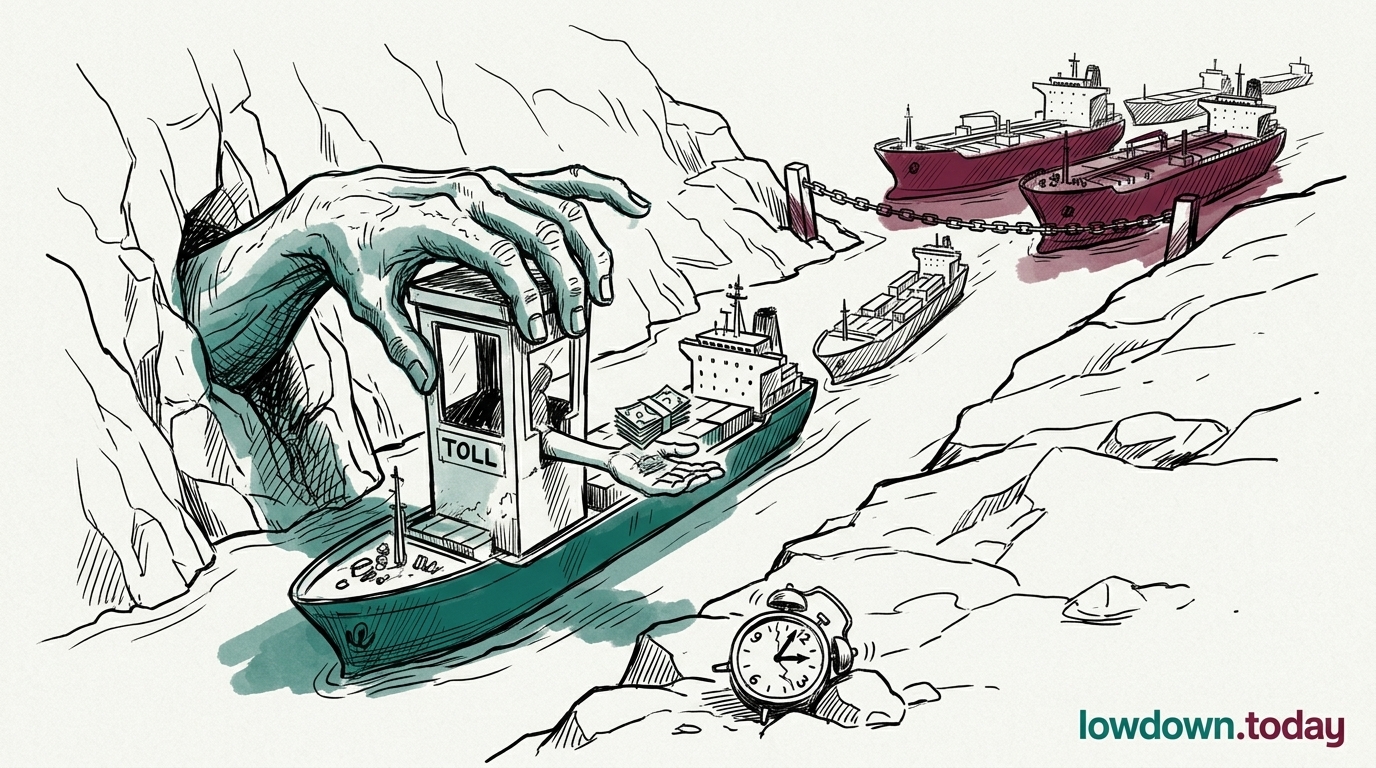
Iran's $2 million toll is cheaper than Western war-risk premiums, making IRGC compliance commercially rational.

Charter rates for very large crude carriers have quadrupled to $800,000 per day — up from roughly $200,000 before the strait of Hormuz closure 1. War-risk premiums on each VLCC voyage NOW run between $3.6 million and $6 million, costs that did not exist four weeks ago 2. A single round trip from The Gulf to East Asia NOW carries $5–7 million in additional costs before a barrel of crude is loaded.

The rate spike reflects a market pricing in sustained disruption with no visible end. The IEA documented the largest supply disruption in history — 8 million barrels per day lost from global output — while more than 3,000 vessels remain stranded across Middle Eastern waterways . For ships still willing to transit, the IRGC's new toll system extracts up to $2 million per passage through Iran-affiliated intermediaries, layering a quasi-sovereign fee on top of commercial charter rates and insurance premiums that have themselves multiplied. The last comparable charter rate shock — a brief doubling after the September 2019 strikes on Saudi Aramco's Abqaiq processing facility — lasted days. This disruption is three weeks old and intensifying.

The costs compound through the supply chain and arrive at the consumer. Bloomberg reported a record $14.20-per-barrel premium on spot physical crude over next-month futures — the widest backwardation on record — meaning refiners are bidding against each other for oil that can physically reach them NOW, regardless of what futures markets price next month. American households pay an additional $300 million per day at the pump compared to pre-war levels, with national petrol prices at $3.88 per gallon and California above $5 . Oxford Economics assessed that Brent at $140 per barrel triggers a mild global recession at negative 0.7% GDP 3. Brent peaked at $126 this week. The gap between current spot prices and that threshold is $14–26, depending on whether physical or futures prices are used as the baseline — and Goldman Sachs's Daan Struyven has warned that Brent could exceed its 2008 all-time record of $147.50 if Hormuz flows remain depressed for 60 days .

Deep Analysis

In plain English

Shipping companies currently face two options: pay Iran $2 million per voyage for IRGC-cleared passage, or pay Western insurers between $3.6 million and $6 million in war-risk premiums for the same voyage. At current rates, Iran's toll is the cheaper choice. This creates a situation where the commercial logic of global trade inadvertently funds IRGC operations — no coalition statement changes that arithmetic. Charter rates — what companies pay to hire a tanker — have also quadrupled. Every dollar of added shipping cost eventually appears in consumer prices for fuel, plastics, fertilisers, and goods made from petrochemicals. The disruption reaches far beyond petrol pumps.

Deep Analysis
Synthesis

The body lists the IRGC toll ($2 million) and war-risk premiums ($3.6–6 million) separately but does not draw the comparison: paying Iran is already cheaper than paying Western insurers. This price inversion transforms the toll from extortion into the commercially rational choice for any operator prioritising voyage economics. No coalition statement or diplomatic pressure reverses that calculation without either military resolution or direct insurance market intervention — a policy lever no government has publicly addressed.

Root Causes

The International Group of P&I Clubs — a London-centred cartel covering roughly 90% of global shipping tonnage — holds a structural monopoly on war-risk cover. When the Group prices out of a route or invokes war exclusion clauses, no alternative insurer exists at scale. This concentration means a single coordinated market decision by Lloyd's syndicates can effectively close a corridor to Western commercial shipping, creating leverage Iran cannot manufacture through military means alone.

Escalation

The rate structure itself creates de-escalation pressure on Western governments irrespective of political positions. Charterers paying $800,000 per day face financial ruin within weeks; pressure on Washington and London to either achieve military resolution or acquiesce to the toll system will intensify independently of diplomatic timelines.

What could happen next?
  • Consequence

    Operators choosing to pay the IRGC toll to avoid war-risk premiums are effectively circumventing Western sanctions architecture, creating an enforcement gap that undermines the broader sanctions regime.

    Immediate · Assessed
  • Risk

    If P&I Clubs invoke war exclusion clauses en masse, vessels lose cover entirely and cannot legally operate in most ports, producing a hard stop to global energy trade that no government has a ready mechanism to prevent.

    Short term · Suggested
  • Precedent

    The IRGC toll-collection model, if it survives this conflict, establishes a template for state actors to monetise chokepoint control without crossing military escalation thresholds that would trigger direct retaliation.

    Long term · Suggested
  • Meaning

    Qatar's exclusive Hormuz dependency for LNG exports means European gas prices face a second shock wave if tanker disruption extends beyond weeks, compounding the crude price impact already documented.

    Short term · Assessed
First Reported In

Update #45 · Ultimatum expires; Iran tolls Hormuz at $2m

Lloyd's List· 23 Mar 2026
Read original
Different Perspectives
Gulf shipping and insurance markets
With Hormuz and Bab el-Mandeb both hostile at once, war-risk underwriters face their first dual-chokepoint pricing problem; the rerouting hedge that absorbed one closure is gone for Israeli-linked hulls. Any deal that reopens Hormuz without a Houthi stand-down clause delivers only partial shipping relief.
Russia and China
Russia and China
Russia and China met IAEA chief Grossi jointly in Geneva on 5 June to coordinate an advance blocking position against Washington's censure resolution, the first documented instance of proactive pre-session obstruction rather than reactive post-vote dissent. Beijing's move came four days after OFAC designated Shanghai Qianye Energy under Iran energy sanctions.
Saudi Arabia
Saudi Arabia
Saudi Arabia was left out of the emergency $4.01 billion Patriot waiver Qatar received on 2 May as its own PAC-3 stocks ran near-empty from intercepting Iranian salvoes over Aramco facilities. Riyadh is on a standard 18-month FMS queue behind a production line booked through 2030, with no equivalent priority to Qatar's Al Udeid basing role.
Houthis (Ansar Allah)
The Houthis declared a complete ban on Israeli Red Sea navigation on 8 June and struck Jaffa, their first attack on Israeli territory since April, seven days after the Tasnim authorisation to activate other fronts including Bab el-Mandeb. The declaration put both chokepoints under hostile authority simultaneously.
Iran
Iran
Iran agreed the 9 June mutual halt after the Mahshahr exchange and coordinated with Russia and China to block Washington's IAEA censure resolution, using the Board as a second front while the bilateral pause held on the military one. Tehran's acceptance of the Lebanon carve-out contradicts the linkage position it stated on 1 June.
Benjamin Netanyahu and the IDF
Israel struck the Karun Petrochemical plant at Mahshahr on 8 June over Trump's explicit objection, then agreed a halt with Iran the following day scoped on Israeli terms with Lebanon carved out. Netanyahu's posture is that the IDF will not accept Iranian missile factories as off-limits regardless of US diplomatic timelines.