Skip to content
Briefings are running a touch slower this week while we rebuild the foundations.See roadmap
Iran Conflict 2026
22MAY

Khamenei orders the uranium to stay

4 min read
11:08UTC

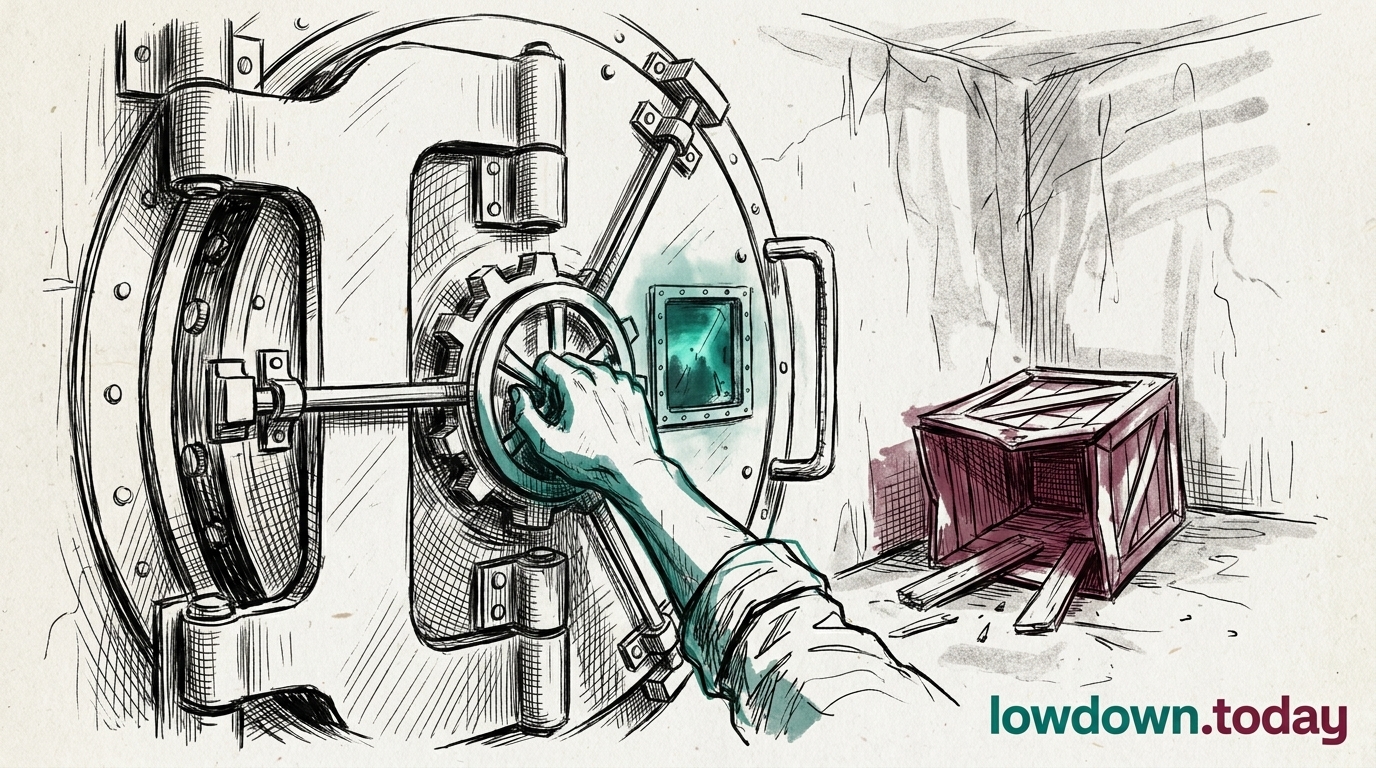
Mojtaba Khamenei reversed Iran's pre-war offer to export half its 60%-enriched stockpile on 21 May, ordering the material to remain inside the country and breaking Trump's private assurance to Netanyahu that any settlement would ship the HEU out.

ConflictDeveloping
Key takeaway

Khamenei's directive converts the 60%-enriched stockpile from negotiable deal asset into permanent sovereignty claim.

Supreme Leader Mojtaba Khamenei, appointed by the Assembly of Experts on 7 March after Israeli strikes killed his father, ordered on Thursday 21 May that Iran's 60%-enriched uranium stockpile must remain inside the country, two senior Iranian sources told Reuters 1. The rationale offered through those sources: exporting the material would leave Iran more vulnerable to future US and Israeli strikes. Before the war, during quiet talks with the Trump administration, Tehran had signalled willingness to ship half of the stockpile out as a confidence-building step . Thursday's directive reverses that offer, and breaks what Israeli officials told Reuters was Donald Trump's private assurance to Benjamin Netanyahu that any settlement would require all of Iran's highly enriched uranium (HEU, uranium enriched above 20% U-235; 60% sits roughly two-thirds of the way to weapons-grade) to leave the country.

The International Atomic Energy Agency (IAEA) estimated 440.9 kg of 60%-enriched material at the time of the June 2025 strikes. The Bulletin of Atomic Scientists put the figure nearer 540 kg at the Isfahan tunnel complex, built from pre-war production rates the IAEA can no longer verify. Former Israeli intelligence officials told Haaretz last weekend that the strike campaign left Iran's nuclear capacity structurally intact . The stockpile survived; the directive now declares it will not move.

An Iranian official denied the order to Al Jazeera's Ali Hashem, calling the Reuters story "propaganda by enemies of the agreement" while conceding that Iran would "independently reduce enrichment levels within the framework" 2. The denial and the directive describe the same operational outcome: the material stays inside Iran. Iranian sources have floated dilution under IAEA supervision as a compromise, but the Majlis voted 221-0 on 11 April to suspend all IAEA cooperation. Any supervised dilution would first require Tehran to reinstate the access its own parliament has just revoked.

The doctrinal lineage matters here. Ali Khamenei's 2003 fatwa against nuclear weapons has been the IRGC's standard public proof for two decades that Iran does not seek the bomb. The 2026 inversion turns the same instrument: vulnerability to repeat strikes, not renunciation of weaponisation, becomes the reason the material stays. The trajectory resembles North Korea's 2009 reactor restart after the Six-Party Talks collapse, when material that had been a negotiating chip became permanent regime property and no subsequent process recovered it.

Deep Analysis

In plain English

Iran has been holding a large stockpile of uranium that has been partially purified; not to bomb-grade, but closer to it than normal reactor fuel. Before the 2025 war began, Iran had quietly suggested it might be willing to send some of that material out of the country as a goodwill gesture. That offer was the centrepiece of any possible deal with the US. On 21 May, Iran's new Supreme Leader, Mojtaba Khamenei, ordered that the uranium stays inside Iran. No exports, no transfers. He cited the US-Israeli strikes as proof that having the material abroad would leave Iran defenceless against future attacks. For a deal to happen, the US and Israel had both privately insisted the uranium had to leave Iranian soil. Khamenei has now ruled that out. An Iranian official tried to soften the announcement by saying Iran would reduce enrichment on its own terms, but the bottom line is the same: the material that was the main bargaining chip in any settlement is now off the table.

Deep Analysis
Root Causes

Mojtaba Khamenei's legitimacy deficit sits behind the directive's timing and force. He lacks the *marja* theological credentials Article 109 of the Iranian constitution requires for the Supreme Leader position. His power base is the IRGC, not the clerical establishment; at least eight Assembly of Experts members boycotted the 7 March appointment citing IRGC pressure.

A Supreme Leader whose institutional authority rests on IRGC backing rather than clerical consensus cannot afford to be seen agreeing to export the one material asset the IRGC treats as its deterrence architecture. The directive is therefore partly a consolidation instrument: Khamenei aligns himself with the IRGC's strategic position to shore up the domestic legitimacy the *marja* deficit denies him.

The June 2025 strike campaign removed the IAEA's verification presence while failing to destroy the stockpile. That combination; no inspectors, surviving material; produces the specific structural condition that makes retention attractive: Iran can assert it holds 540 kg (Bulletin of Atomic Scientists estimate) while the US must price the risk without being able to verify.

The directive capitalises on that asymmetry. Operation Midnight Hammer collapsed the Isfahan tunnel entrances in June 2025 but left the stockpile intact underground; the Bulletin of Atomic Scientists estimated 540 kg survived at that site, and Khamenei's 21 May directive claims that surviving material as untouchable sovereign property.

What could happen next?
  • Consequence

    US-Iran diplomacy loses its central tradeable item. Any settlement framework that required Iranian HEU export; which the Trump administration had privately committed to Netanyahu; must now be rebuilt around domestic dilution or IAEA-supervised downblending, both of which require Iranian access reinstatement the Majlis's 221-0 vote has blocked.

    Short term · Assessed
  • Risk

    Netanyahu's domestic coalition faces a credibility test. Trump's private assurance that HEU would leave Iran was a condition Netanyahu sold to Likud's right flank. If the directive holds, Netanyahu must either publicly accept a weakened settlement or push for resumed strikes; a decision that lands inside a coalition that gave him the mandate on the export condition.

    Short term · Assessed
  • Precedent

    The Khomeini fatwa parallel suggests the directive will be treated as irreversible by subsequent Iranian administrations. If the precedent holds, the HEU export route closes permanently regardless of which government sits in Tehran.

    Long term · Suggested
First Reported In

Update #105 · Khamenei keeps the uranium; House pulls the vote

Reuters· 22 May 2026
Read original
Different Perspectives
Islamabad (Pakistan Armed Forces and Foreign Ministry)
Munir's cancellation reflects Islamabad's assessment that no bridging formula survives the collision of Khamenei's uranium directive, Rubio's Hormuz red line, and the sequencing gap simultaneously; Naqvi's relay role signals continued Pakistani engagement without a mandate to close any of the three gaps.
Lloyd's of London war-risk market
Published PGSA coordinates give underwriters the cartographic input to model tanker route exposure inside the claimed zone; OFAC's Sunday GL V ruling determines whether Hengli-Singapore dollar-clearing routes carry secondary-sanctions risk from Monday, adding a compliance layer to the existing kinetic war-risk premium.
Hengaw Human Rights Organisation
Zaleh's trial lasted 'only a few minutes' before a conviction on PDKI membership charges at Naqadeh; the pattern of solitary detention, coerced confession, and minutes-long hearing is consistent with wartime political-charge architecture the organisation has documented across the Kurdish northwest.
Gulf Arab states (UAE, Bahrain, Kuwait)
The UAE has not published counter-coordinates to the PGSA's Hormuz zone map, leaving Emirati silence as the maritime-law response to Iran's charted boundary claim. Abu Dhabi's published position now defaults by omission toward implied acceptance of the zone's cartographic fact.
Beijing's Ministry of Commerce
MOFCOM's blocking order covers Hengli and four other designated refineries on the mainland but does not extend to the dollar-clearing layer in Singapore, making Sunday's GL V expiry the first live test of whether Beijing's sanctions-defiance architecture reaches the place where dollars settle.
The White House
The White House
Trump's verbal track on Iran has produced no signed Iran-specific presidential instrument across 84 days; both financial-sector EOs signed on 19 May are unrelated to Hormuz or the IRGC. Rubio's public naming of the Hormuz toll architecture as a deal-killer is the administration's most concrete new position this week.