Skip to content
Welcome, thoughtbot's Giant Robots listeners!Start here
Iran Conflict 2026
17MAY

Iran reads MOU; reply window to 9 May

4 min read
10:45UTC

Foreign Ministry spokesman Esmaeil Baqaei said on 7 May Tehran was 'still considering' the seven-point US Memorandum of Understanding delivered through Pakistan, with a written reply window that expires on 9 May.

ConflictDeveloping
Key takeaway

Tehran's reply to a seven-point US text routed through Islamabad must arrive in writing by 9 May.

Esmaeil Baqaei, Iran's Foreign Ministry spokesman, said on 7 May that Tehran was "still considering" the US Memorandum of Understanding (MoU) delivered through Pakistan and would relay its response to Pakistani mediators once complete⁠1. Pakistani Foreign Ministry spokesman Tahir Andrabi said: "We remain positive, we remain optimistic, and we hope the settlement will be soon rather than later." The US set a two-day window for a written response from delivery; that window expires on 9 May.

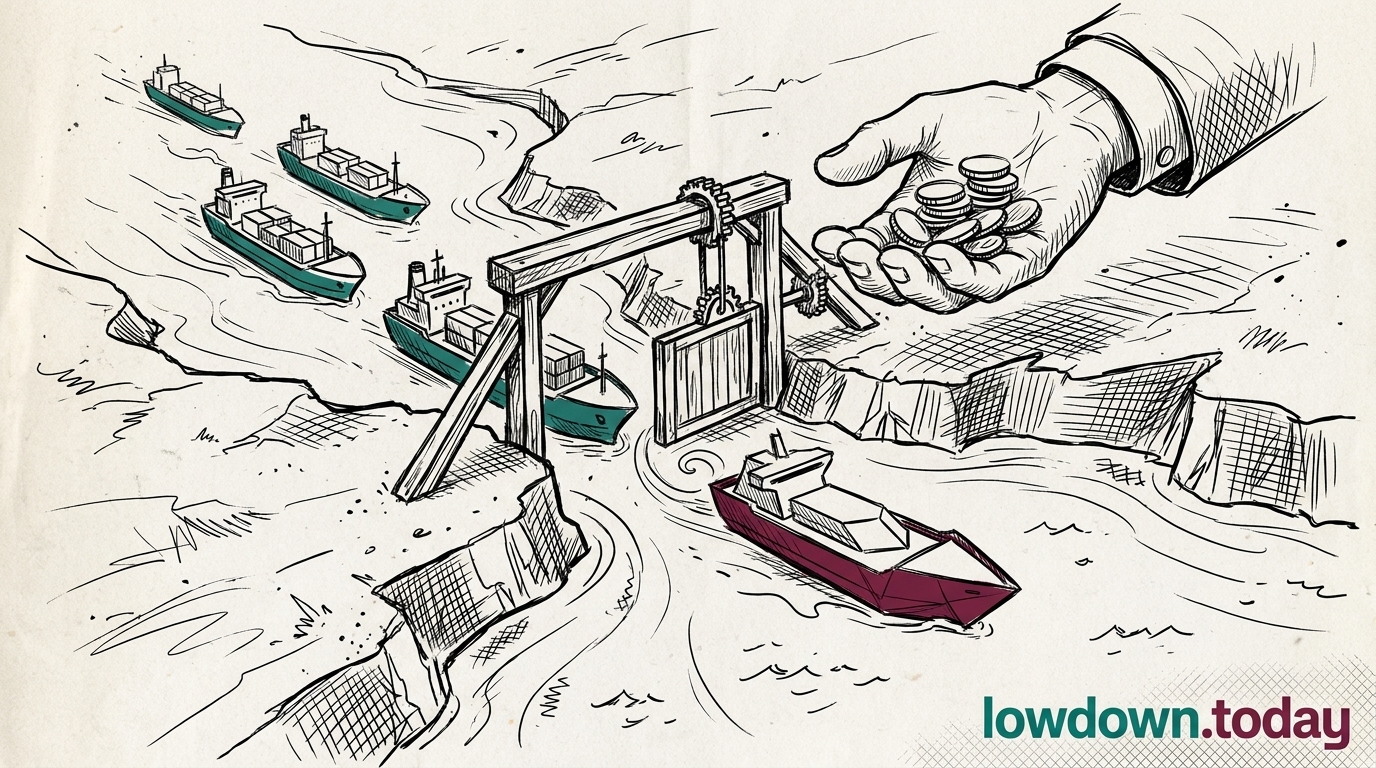
The Nation (Pakistan) detailed the seven points of the document on 7 May⁠2. They are: a 12-year enrichment moratorium, transfer of Iran's highly-enriched uranium (HEU) to the United States, US sanctions lifting, release of Iran's frozen overseas assets, Hormuz reopening that ends the PGSA toll system once the agreement is signed, extension of the 16 April Lebanon ceasefire, and a 30-day window for full agreement negotiations after signing.

The routing matters as much as the contents. Pakistani Foreign Minister Ishaq Dar's office passed the document to Abbas Araghchi's ministry rather than across a State Department table, the channel Marco Rubio had been working before he rejected Hormuz-first sequencing on 1 May. Trump's decision to route a paper that begins with Hormuz reopening through Islamabad, rather than through Foggy Bottom, produced the document on Baqaei's desk.

The sequencing inverts what Rubio rejected. By putting Hormuz reopening alongside HEU transfer in the same paper, the MOU asks Iran to give up two distinct leverages at once. The Pakistani route lets Trump accept that frame without it appearing on State Department letterhead, while binding Iran to surrender the chokepoint in the same instrument that releases sanctions.

The 9 May expiry is a political deadline more than a legal one. Iran can transmit a counter-text rather than a yes or no, and the IRGC's missile-and-boat strike on US destroyers has already complicated Araghchi's room for manoeuvre. The Foreign Ministry's authority over the IRGC ends at Article 110 of the Iranian constitution, which is why Baqaei's review can proceed in Tehran while the destroyers Project Freedom paused take fire two hundred miles south. Whether Iran's reply arrives before 9 May, and whether Ali Khamenei's office endorses it rather than just Araghchi's ministry, are the two questions the coming day will answer.

Deep Analysis

In plain English

The United States sent Iran a seven-point peace proposal, carried by Pakistan as a go-between, on 7 May. Iran's foreign ministry confirmed it had received the document and was reading it, with a deadline to reply of 9 May. The document asks Iran to stop collecting tolls on ships passing through the strait of Hormuz, hand over its highest-grade uranium to the US, and agree to a 12-year pause on uranium enrichment. In return, the US offers to lift its economic sanctions and release money Iran has held frozen abroad. Iran has not said yes or no yet.

Deep Analysis
Root Causes

the MOU asks Iran to surrender Hormuz transit control and its highly-enriched uranium stockpile simultaneously, in exchange for sanctions relief and frozen-asset release that require US domestic legislative steps Iran cannot verify in advance.

Iran has seen this reversibility asymmetry before. The 2018 US withdrawal from the JCPOA demonstrated that a US president can exit a nuclear agreement by executive action in a single day, while Iran spent months unwinding commitments it had complied with for three years. Tehran's hesitation reflects an accurate reading of that structural gap, not an unwillingness to deal.

What could happen next?
  • Risk

    If Iran's reply arrives as a counter-text rather than an acceptance, the 9 May deadline becomes the start of a further negotiating round rather than a resolution, and markets will price the continuation of the blockade.

    Immediate · 0.8
  • Consequence

    Khamenei's endorsement (or absence from) Iran's reply will be the single most diagnostic signal for whether the IRGC is bound by whatever the Foreign Ministry sends.

    Short term · 0.85
  • Risk

    The MOU's Lebanon ceasefire extension provision is the head most exposed by the IDF Dahiyeh strike (ID:3094); if the ceasefire collapses before 9 May, the seven-point structure loses one of its most politically salient deliverables.

    Immediate · 0.75
First Reported In

Update #91 · MOU in Tehran, missiles in the strait

Washington Times· 8 May 2026
Read original →
Different Perspectives
Wang Yi
Wang Yi
China's foreign minister and Djibouti's issued a joint communique on 21 October saying the war should not reach the Horn of Africa and stressing free navigation through Bab al-Mandeb. The text names neither Iran nor the Houthis, and Djibouti hosts China's only overseas military base, opposite the Yemeni coast.
Ministry of External Affairs
India's foreign ministry called the attacks on Saudi civilian and energy sites "unacceptable" on 22 October and said they must stop at once. An Indian died at Dammam, Indians were injured there and at Shaybah, and about 4,000 Umrah pilgrims remain stranded by one MP's count.
Iraq
Iraq
Iraq closed the al-Sheeb crossing with Iran to travellers and trucks from 21 October and said other crossings would close gradually. Unlike September's closure, which ended on a staged timetable, this one has none, and Iran's interior ministry said it received no notice.
Abdel Fattah el-Sisi
Egypt's president said on 21 October that Cairo's support would "defend Saudi territory, and does not include an attack on Yemen". Araghchi warned that Egyptian involvement would further complicate the situation, and Cairo's limit matches the one Ankara set on 8 October against attacking another state's soil.
UK Ministry of Defence
The MoD said on 20 October that RAF Typhoons over Saudi Arabia will not strike the Houthis, but extended tanker support to Saudi operations including against Houthi targets in Yemen. The tanker line sets no limit on strikes, so British aircraft may now refuel Saudi jets on bombing runs.
Turkey
Turkey
Ankara sent the Mecca Joint Defence Agreement to parliament around 20 October, and its published text treats an attack on one party as an attack on all. Article 16 brings it into force only on the last ratification, so the 5 October invocation in Riyadh could not yet bind Turkey.

Written with AI from Lowdown's published reporting. Not individually reviewed by an editor. Editorial standards.
