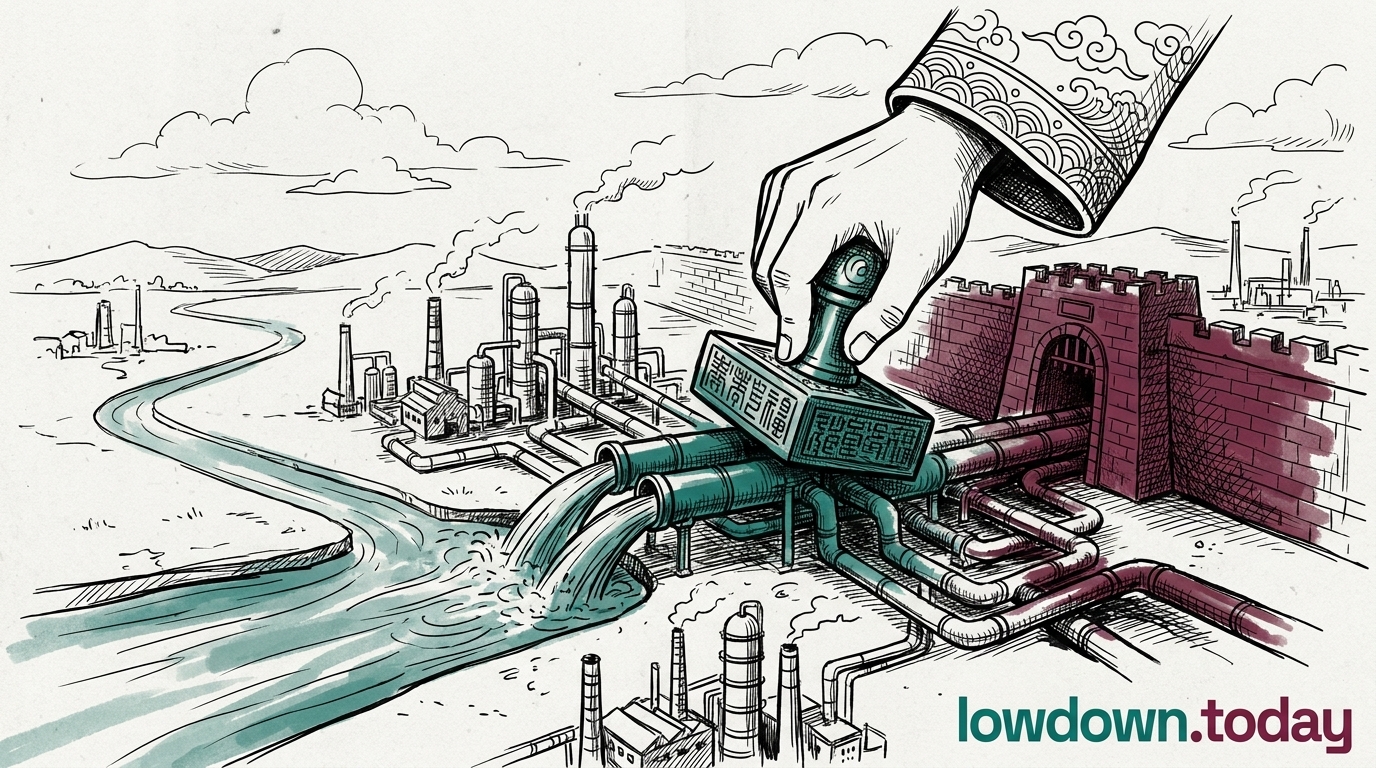
Iran's Foreign Minister Abbas Araghchi delivered a written 14-point ceasefire proposal to Pakistan for onward transmission to Washington on Friday 1 May1. Pakistan has been the documented mediation channel for US-Iran exchanges since the opening weeks of the war; the new text advances the fourth-text framework already delivered through the same conduit. Where the earlier two-phase and three-phase proposals were sequenced negotiating sketches, the 14-point document is structured as a single ceasefire instrument with a 30-day deadline.
Tehran demands lifting of the CENTCOM naval blockade, release of Iranian foreign-currency reserves frozen under US sanctions, payment of war reparations, US withdrawal from Iran's periphery, an end to the fighting in Lebanon, and a new transit-governance mechanism for the Strait of Hormuz, the 33-kilometre chokepoint at the mouth of The Persian Gulf through which roughly a fifth of global oil shipments pass. The Hormuz clause asks Washington to negotiate around the IRGC's informal toll mechanism rather than dismantle it.
'An end to the fighting in Lebanon' inside the Iranian text is the document's most consequential structural move. Washington has treated the Lebanon war as a parallel theatre handled through its monitoring track in Beirut. Tehran has now pulled it inside the Iran negotiation as a deliverable. That linkage means any 30-day Iranian timeline now requires Israeli operational restraint in southern Lebanon to count as compliance. The Pakistani channel becomes the evidentiary trail for whether the demand is met; if the channel falters, both sides lose their record of what was offered and what was refused.





