Skip to content
Briefings are running a touch slower this week while we rebuild the foundations.See roadmap
Iran Conflict 2026
17MAY

GPS blacked out across Gulf chokepoints

2 min read
10:45UTC

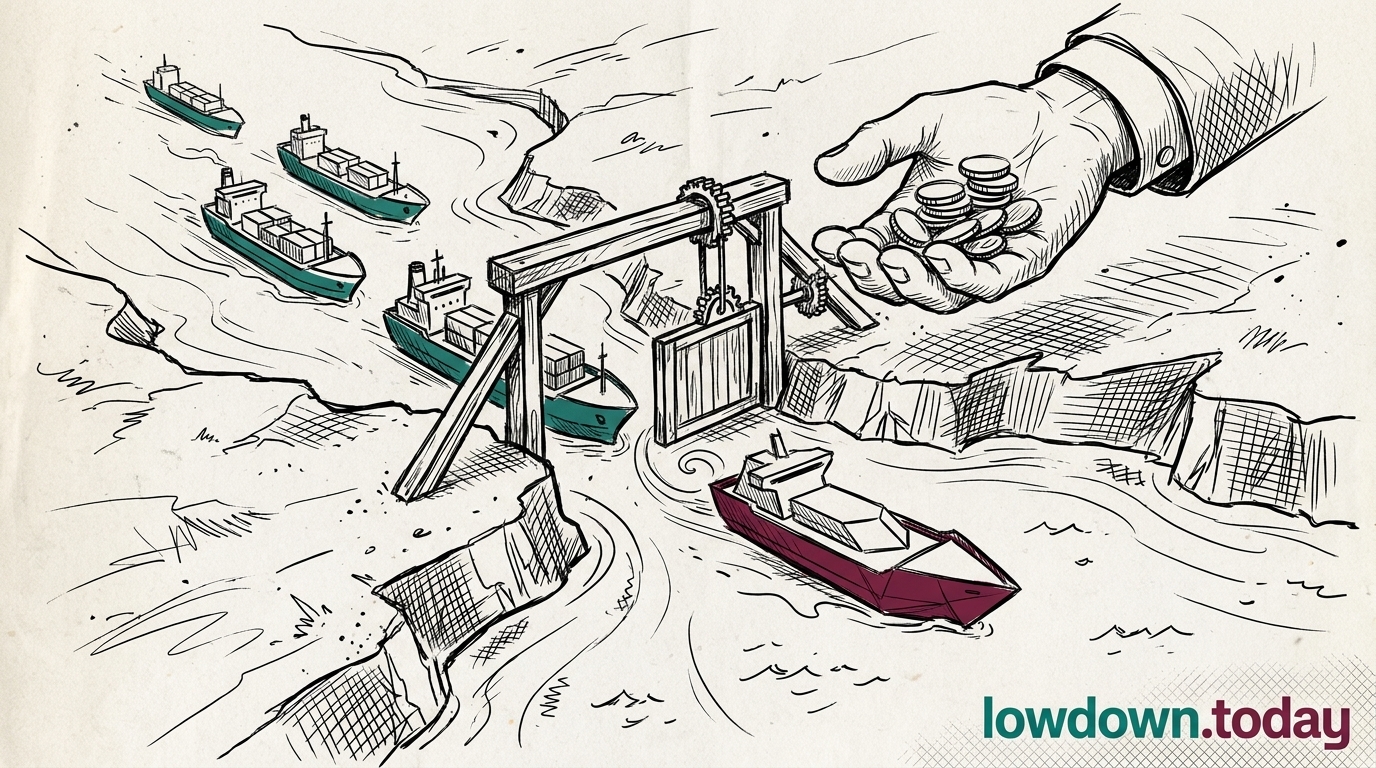
US and British maritime authorities confirm an electronic warfare corridor stretching 2,500 kilometres across two of the world's three critical sea lanes. There is no safe detour.

ConflictDeveloping
Key takeaway

An electronic warfare corridor now links two chokepoints, leaving no safe maritime alternative.

MARAD Advisory 2026-004 and UKMTO data confirm severe GNSS/GPS interference extending from the strait of Hormuz across The Gulf of Oman and into the Red Sea near Bab al-Mandeb 1. This is not a side effect of military operations but a deliberate electronic denial zone spanning two of the world's three critical maritime chokepoints.

No modern peacetime precedent exists for electronic warfare denial at this scale. During the Tanker War (1987 to 1988), mines and missile boats threatened individual vessels. The current denial threatens the navigational infrastructure itself, degrading the ability of any vessel to determine its own position across a 2,500-kilometre corridor. The Houthis threatened Bab al-Mandeb closure the day after Pakistan confirmed talks had stalled.

Vessels diverting from Hormuz toward the Red Sea now navigate degraded positioning systems approaching a second contested chokepoint. Roughly 4.5 million barrels per day and 12% of global trade pass through Bab al-Mandeb. Combined with near-total Hormuz closure, the world's two most important oil chokepoints are under simultaneous pressure for the first time since the 1973 oil crisis 2. The Cape of Good Hope route adds 10 to 14 days and $500,000 to $1 million per voyage in fuel costs.

Deep Analysis

In plain English

Ships navigate using GPS-style satellite signals. Someone is deliberately jamming those signals across a 2,500-kilometre corridor stretching from the Strait of Hormuz in the Gulf to the Bab al-Mandeb in the Red Sea. This matters because ships diverted away from Hormuz (which Iran controls) have been heading toward the Red Sea instead. The GNSS jamming makes that alternative route significantly more dangerous, because ships cannot accurately determine their own position. The practical effect: there is now no safe, insurable sea route between the Gulf and global markets. Ships must go around Africa instead, adding 10 to 14 days and significant fuel costs to every voyage.

First Reported In

Update #51 · Iran hits aluminium plants; Hormuz emptying

International Maritime Organisation / UKMTO· 29 Mar 2026
Read original
Different Perspectives
Markets
Markets
Brent crude rose 2.2 per cent to $96.34 on 10 June, reversing a 7 per cent weekly decline built on deal optimism, as the overnight exchange repriced the Strait of Hormuz risk premium in a single session. The move reflects transit-risk repricing rather than supply shock: Iran's exports had already collapsed to below 300,000 barrels per day.
Pakistan
Pakistan
Pakistan's Naqvi channel, the only mediation track carrying both civilian and military buy-in, was stress-tested by live ordnance within 48 hours of the 6-7 June Tehran visit. Whether Washington informed Islamabad of the imminent strike plan while Naqvi was in Tehran remains undisclosed, putting the channel's neutrality under scrutiny.
Kuwait
Kuwait
Kuwait hosted the third Iranian strike on its soil since the 3 June airport drone attack, with Ali Al Salem airbase targeted in the three-country salvo. Its recent $1.98 billion Anduril Anvil counter-drone purchase signals it is rearming rather than reconsidering its hosting posture.
Bahrain
Bahrain
Bahrain absorbed the IRGC barrage via PAC-3 intercepts with its magazine already at 87 per cent depletion and no resupply before 2027. Sounding air-raid sirens over Manama, it faced the intercept burden with the thinnest defensive stack in the Gulf coalition.
Jordan
Jordan
Jordan reported all five incoming missiles intercepted with no injuries and no damage, a clean defensive performance that strengthens Amman's case for staying in the Western coalition without escalating its own posture. It now sits on Iran's target list for the first time despite not being a party to the Abraham Accords confrontation.
Iran / IRGC
Iran / IRGC
Foreign Minister Araghchi posted on X that US forces should 'leave our region if you want to be safe' and framed the exchange as a US defeat, while the IRGC claimed 21 targets hit and an F-35 hangar destroyed. The claims serve a domestic and Arab-audience framing rather than a verified battle-damage assessment.