Skip to content
Iran Conflict 2026
28MAR

Houthis threaten to close Bab al-Mandeb

2 min read
17:06UTC

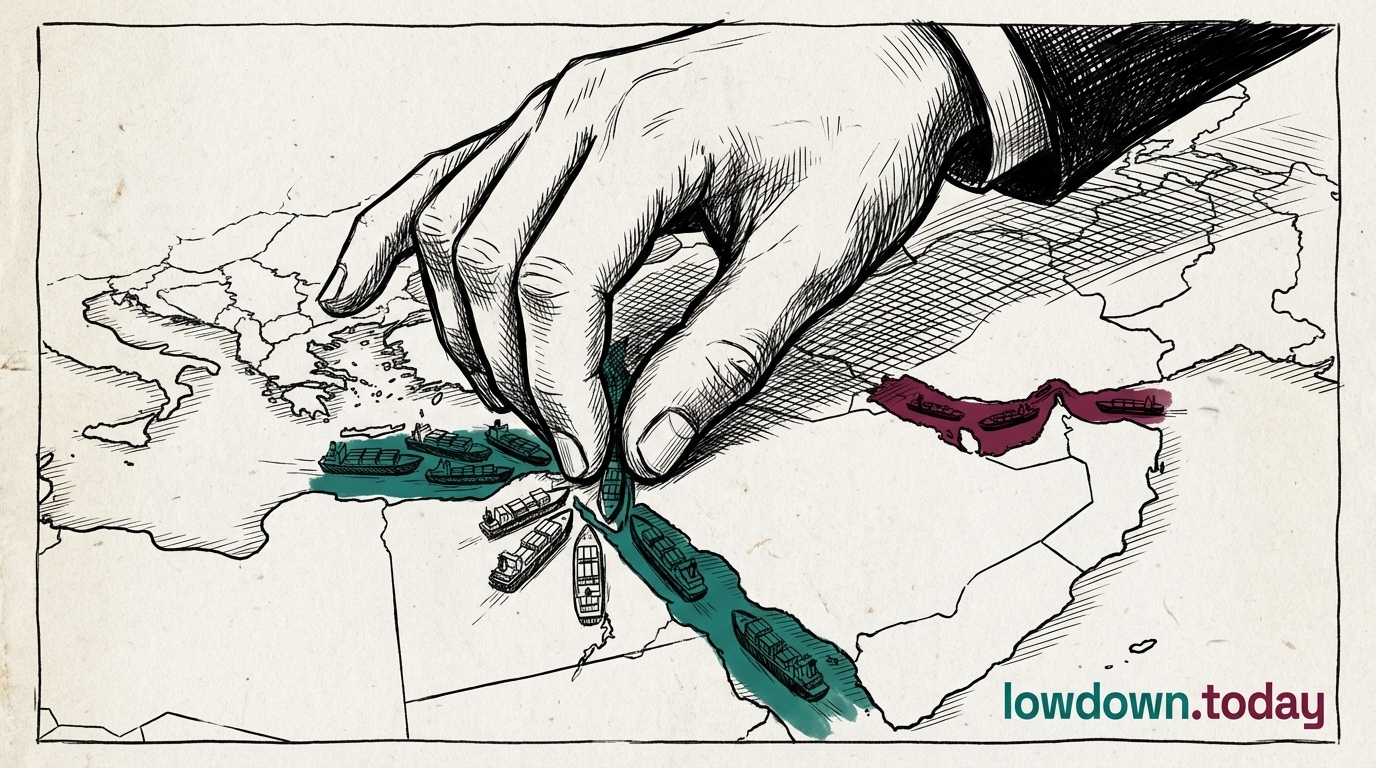
A senior Houthi official described closing the Red Sea strait as one stage in a deliberate escalation ladder.

ConflictDeveloping
Key takeaway

Dual-chokepoint pressure is now an active threat, not a theoretical scenario.

Mohammed Mansour, Houthi deputy information minister, told reporters: "We are conducting this battle in stages, and closing the Bab al-Mandeb strait is among our options." 1 Roughly 30% of Israeli imports and 6-7 million barrels per day of oil, approximately 7% of global supply, pass through the strait.

Mansour's language mirrors Iranian diplomatic formulations around Hormuz in the war's first week. The framing is a staged escalation ladder, not a single decision. Yahya Saree announced three formal red lines before the missile attack: US and Israeli use of the Red Sea for strikes, growing third-country participation, and escalating attacks on the "Axis of Resistance."

The IEA stated explicitly that its 400 million barrel emergency release "cannot substitute for the transit route itself" . Iran's Hormuz traffic control already routes vessels through a narrow corridor past Larak Island under IRGC escort; the Majlis toll bill would codify that system into domestic law. If both chokepoints tighten further, no reserve release addresses the shortfall.

Deep Analysis

In plain English

Bab al-Mandeb is a narrow sea passage between Yemen and East Africa. Almost all the oil and cargo that moves between Asia and Europe passes through it. Around 6-7 million barrels of oil cross every day. A senior Houthi official said on 28 March that closing this strait is one of their options as the war continues. They already have missiles and drones on Yemen's coastline. Iran already controls the other major oil route, the Strait of Hormuz. If the Houthis block Bab al-Mandeb as well, there would be no alternative route for most of the world's oil. Emergency reserves would run out in weeks; there is no spare capacity to replace both routes at once.

Deep Analysis
Root Causes

The structural driver is the Houthis' geographic positioning. Yemen's Tihama coast overlooks Bab al-Mandeb's 29-kilometre narrows. Anti-ship missiles already deployed there can reach any vessel in the strait. Unlike Hormuz, there is no second passage: cargo cannot route around Bab al-Mandeb without circumnavigating Africa, adding 6,000 nautical miles and roughly 20 days per voyage.

The Houthis' leverage exists regardless of Iranian direction because the geography is permanent. Tehran did not create this chokepoint; it merely held the group back from using it.

What could happen next?
  • Risk

    Dual chokepoint closure would exceed IEA emergency reserve capacity; no government has a contingency plan for simultaneous Hormuz restriction and Bab al-Mandeb closure.

  • Consequence

    Any ceasefire negotiation must now include Houthi participation or Bab al-Mandeb remains at risk regardless of what Iran agrees.

First Reported In

Update #50 · Houthis join; Iran holds two chokepoints

Axios· 28 Mar 2026
Read original
Different Perspectives
South Korean financial markets
South Korea, which imports virtually all its crude oil, is absorbing the war's economic transmission most acutely among non-belligerents. The second KOSPI circuit breaker in four sessions — with Samsung down over 10% and SK Hynix down 12.3% — reflects an industrial economy unable to reprice energy costs that have risen 72% in ten days. The market response indicates Korean industry cannot sustain oil above $100 per barrel without margin compression across manufacturing, semiconductors, and shipping.
Migrant worker communities in the Gulf
The first confirmed civilian deaths in Saudi Arabia — one Indian and one Bangladeshi killed, twelve Bangladeshis wounded — fell on communities with no voice in the military decisions that placed them in harm's way. Migrant workers live near military installations because that housing is affordable, not by choice. Bangladesh and India face the dilemma of needing to protect nationals who cannot easily leave a war zone while depending on Gulf remittances that fund a substantial share of their domestic economies.
Azerbaijan — President Ilham Aliyev
Aliyev treats the Nakhchivan strikes as a direct act of war against Azerbaijani sovereignty, placing armed forces on full combat readiness and demanding an Iranian explanation. The response is calibrated to maximise international sympathy while stopping short of military retaliation — Baku cannot fight Iran alone and needs either Turkish or NATO backing to credibly deter further strikes.
Oil-importing nations (Japan, South Korea, India)
The Hormuz closure is an existential threat. Japan, South Korea, and India receive the majority of their crude through the strait — they will bear the heaviest economic cost of a war they had no part in.
Global South governments (Indonesia, Brazil, South Africa)
Neutrality was possible when the targets were military. 148 dead schoolgirls made it impossible — no government can explain that away to its own citizens.
Turkey
Turkey
Has absorbed three Iranian ballistic missile interceptions since 4 March without invoking NATO Article 5 consultation. Each incident narrows Ankara's political room to continue absorbing without Alliance-level response.