Skip to content
You can now search across every topic, entity and event.What's new
European Oil Markets
4JUN

Pakistan's minister carries dual message to Tehran

3 min read
10:20UTC

Mohsin Naqvi reached Tehran on 6-7 June with written messages from both Pakistan's prime minister and its army chief, the one mediation track Iran's divided command cannot dismiss.

EconomicDeveloping
Key takeaway

Pakistan opened the war's most credible back-channel days before US and Iranian missiles tested it live.

Pakistan's Interior Minister Mohsin Naqvi was in Tehran on 6-7 June carrying written messages from both Prime Minister Shehbaz Sharif and Army Chief Field Marshal Asim Munir to Supreme Leader Mojtaba Khamenei, who has not appeared publicly since 28 February 1. Naqvi met Foreign Minister Abbas Araghchi on the morning of 7 June and coordinated with Qatar, Turkey and Egypt as a collective channel 2. IRNA and ABC News have now confirmed the visit that an earlier briefing flagged as unverified.

The institutional shape gives this track its weight. Pakistan carries both civilian and military buy-in, the prime minister's message and the army chief's running together, which is the one configuration Iran's divided command cannot wave away as a partial offer. Tehran's wartime authority splits between the IRGC, which controls the kinetic posture, and a foreign ministry whose public statements the corps has repeatedly reversed. A channel signed by Munir as well as Sharif speaks to both halves at once.

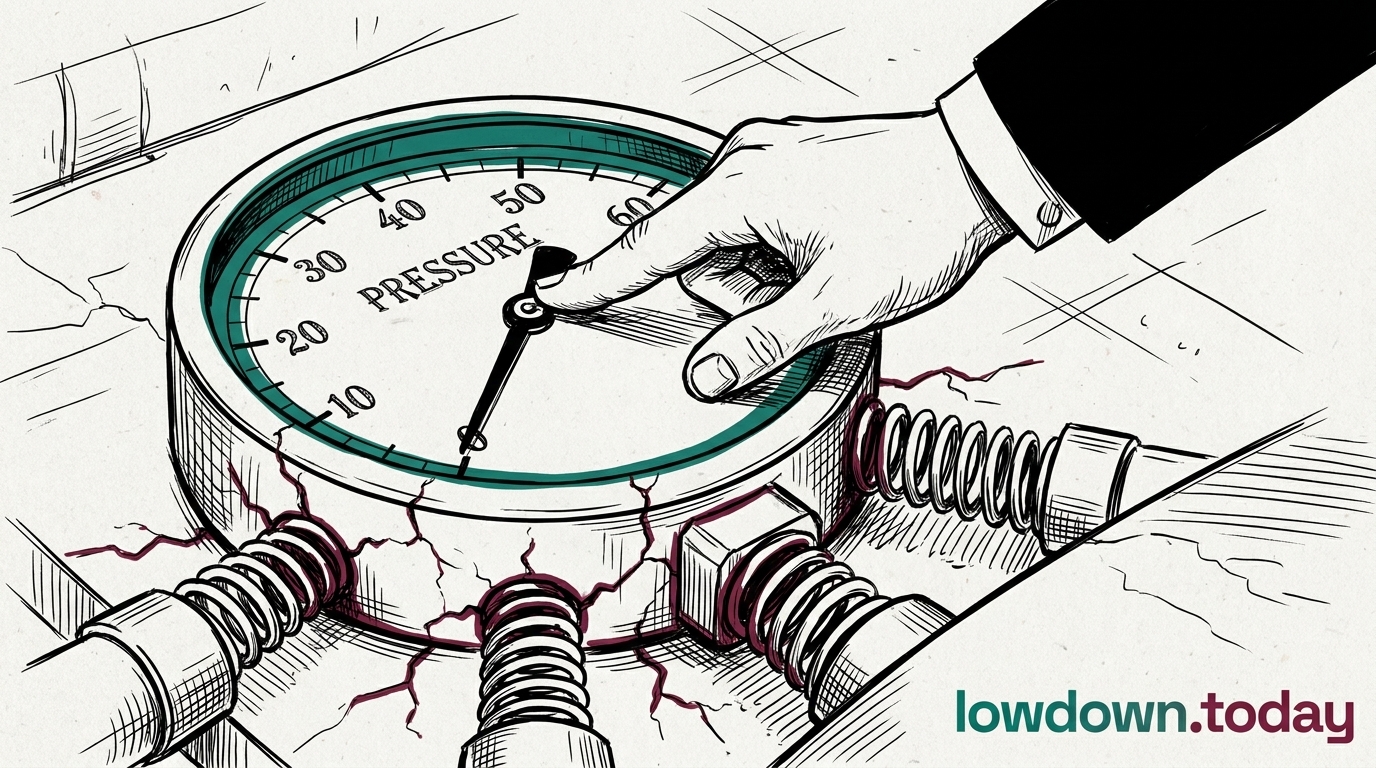
The timing exposed the track to immediate stress. Naqvi's shuttle and the US-Iran missile exchange ran across the same 72 hours, days after Trump publicly placed a deal in its "final throes" . The only mediation channel with full Pakistani buy-in was therefore stress-tested by live ordnance within hours of opening, before any reply from Khamenei had surfaced. Whether the silence reflects a courier lag or a deliberate hold is the open question Islamabad cannot yet answer.


Deep Analysis

In plain English

Pakistan sent its Interior Minister, Mohsin Naqvi, to Tehran on 6-7 June carrying two separate written letters: one from the elected Prime Minister and one from the army chief. This matters because normally a country speaks with one voice through its foreign ministry. Sending both a civilian and a military message together signals that any deal carried by this channel has broad Pakistani backing and will not be reversed by a change of government. Pakistan has been the main go-between linking the US and Iran since April 2026. It hosted the first direct US-Iran talks in decades and has shuttled proposals back and forth in writing. The visit came just two days before American strikes on Iran, raising questions about whether Tehran knew what was coming.

Deep Analysis
Root Causes

Pakistan's selection as mediator rather than a neutral European or Gulf state reflects three structural conditions that converged in 2026. First, Pakistan is the only nuclear-armed Muslim state with diplomatic relations with both the US and Iran, giving it a credibility with Tehran that neither Qatar nor Turkey possesses: Islamabad understands from its own nuclear programme why Iran regards enrichment as a sovereignty question.

Second, Field Marshal Asim Munir's February 2026 elevation to the rank of Field Marshal gave him a general-officer status that allowed direct peer engagement with IRGC Major General Ahmad Vahidi without Vahidi having to deal through a civilian foreign ministry he distrusts. The Pakistan Army's ISI history of intelligence brokerage with Iranian counterparts since the 1980s Afghan war provided operational familiarity neither Qatar's diplomats nor Turkey's AKP-linked channels could replicate.

Mojtaba Khamenei's public absence since 28 February adds a third condition: a leader who communicates exclusively through handwritten messages requires a mediator with couriers he trusts. Pakistan's documented record of physically moving written messages between Islamabad and Tehran since April made Naqvi the natural carrier for the 6-7 June letters.

First Reported In

Update #123 · Trump orders strikes on Iranian soil

Middle East Monitor· 10 Jun 2026
Read original
Different Perspectives
Kuwait
Kuwait
Kuwait absorbed the Iranian strike that knocked generating units offline at a combined power-and-desalination plant on 17 July, the event that finally moved freight and insurance in lockstep with Brent. The strike hit essential civilian infrastructure, not a trading desk's benchmark.
Asian buyers (Singapore)
Singapore's middle distillates rose 12% month-to-date to 8.91m barrels and fuel oil passed 19m barrels on a 105% net-import surge, buyers retaining barrels as the East-West arbitrage window narrows. Cargoes are being stockpiled ahead of further Hormuz-driven freight repricing rather than released west.
Austria (Coreper holdout)
Vienna is blocking the same package over roughly EUR 2bn of frozen Russian assets earmarked for Raiffeisen, a domestic banking dispute with no connection to the oil cap racing toward its 23 July expiry. The linkage forces the whole package to wait on a bilateral compensation fight.
Greece (Coreper holdout)
Athens is holding the 21st sanctions package at the 22 July Coreper vote over Russian LNG re-export rights, a condition unrelated to the oil price cap itself, leaving the $44.10 freeze one day from expiry without a deal. Greece's own tanker registry gives it a direct stake in how any shadow-fleet measures are drafted.
Marine underwriters (Gulf war-risk)
Hull war-risk cover for Hormuz transits widened to a 3-10% band on 17 July with 5% the emerging norm, up from a 3-4% baseline set in late June, the first repricing in six weeks to track a flat-price move rather than lag it. Cover resets on actuarial evidence of loss, not on diplomatic or price signals.
Money managers (CFTC-tracked)
The CFTC's week-to-14-July snapshot, released 17 July, showed WTI managed-money net long collapsing 69% to 19,783 contracts and a standalone 60,141-contract net short on Brent Last Day (NYMEX). Both readings predate the Kuwait strike and the 20 July escalation, so any covering since is not yet visible in public data.