Skip to content
You can now search across every topic, entity and event.What's new
European Oil Markets
13JUL

GL 134A lapses toward quiet extension

3 min read
10:34UTC

Treasury's Russian crude waiver expired on 11 April with wire reporting from Reuters, Semafor and Bloomberg pointing to renewal worth roughly $150 million a day to Moscow at current Urals prices.

EconomicDeveloping
Key takeaway

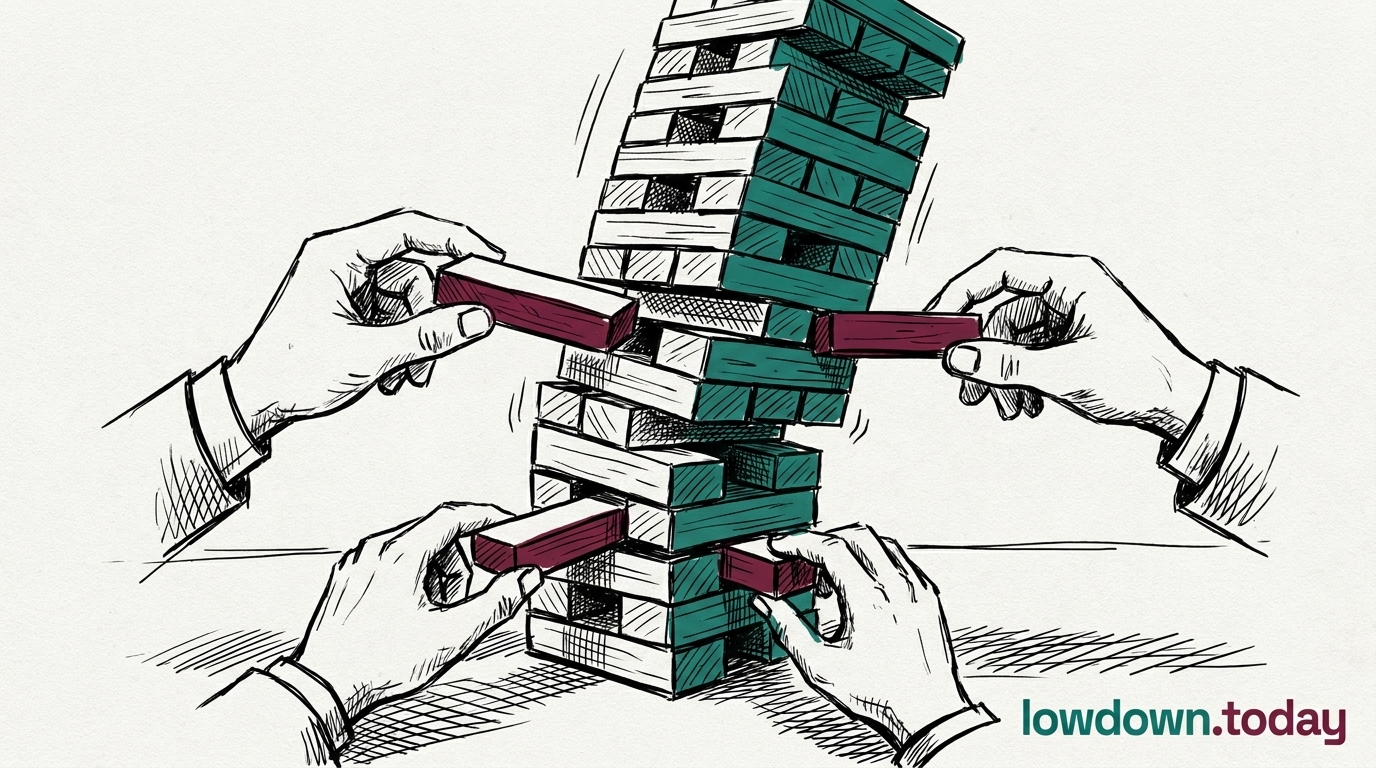
The Russian oil waiver is the same instrument doing the opposite job it was designed for.

General License 134A (GL 134A), the OFAC (Office of Foreign Assets Control) waiver that authorised transactions for Russian crude loaded before 12 March, expired on 11 April. Reuters, Semafor and Bloomberg report, citing people familiar with the discussions, that an extension is coming 1. A Treasury spokesperson offered only that the department "does not preview actions related to our sanctions."

Daniel Fried at the Atlantic Council called on Treasury Secretary Scott Bessent on 8 April to let the waiver lapse and fall back on the price cap. Asian governments led by India and the Philippines are pushing in the other direction. A week ago this was framed as a binary choice at $121 Urals . Bloomberg estimates the waiver is worth roughly $150 million a day in additional Russian budget revenue at $114 to $116 Urals.

One week of that uplift covers a fortnight of Kinzhal strikes. A full year covers a sum the EU has spent months trying to route to Kyiv against Hungarian opposition. The original GL 134 was defensible in March at $73 a barrel as market stabilisation after the Strait of Hormuz closed. At 64% above that price, and with the Iran ceasefire of 8 April partially reopening Hormuz, the same instrument now hands Moscow a surplus the sanctions architecture was designed to prevent. The Russia-Iran corridor that Israel struck at Bandar Anzali last month still runs.


Deep Analysis

In plain English

When the Iran conflict disrupted oil markets in March, the US Treasury issued a temporary waiver allowing banks and traders to continue processing payments for Russian crude already at sea. The idea was to prevent a sudden oil price spike. The waiver was set to expire on 11 April. The problem: when the waiver was issued, Russian oil was selling at $73 per barrel. By expiry it was trading at $114-116. That means every extra day of extension hands Russia roughly $150 million in war-funding revenue that sanctions were supposed to block.

Deep Analysis
Root Causes

GL 134A was issued on 12 March 2026 as a market-stabilisation measure when the Iran war disrupted Gulf crude flows. The structural problem is that the licence's dollar value is oil-price-sensitive: a barrel-price doubling since issuance means the waiver now hands Moscow a windfall the original policy never contemplated.

The secondary cause is bureaucratic path dependency. Once a sanctions waiver is issued to enable active market transactions, financial institutions and energy traders build positions around it. Lapse without a wind-down window triggers counterparty defaults that US regulators are reluctant to own.

What could happen next?
  • Consequence

    Each week of extension at current Urals prices transfers approximately $1.05 billion to Russia, partially offsetting the impact of the EU's phased gas import ban beginning 25 April.

  • Risk

    If the waiver is extended without a firm sunset date, it establishes precedent that sanctions can be indefinitely deferred when market conditions create lobby pressure, weakening the credibility of the entire OFAC architecture.

First Reported In

Update #12 · Three narrowings of US support for Kyiv

Reuters (via Kyiv Independent)· 11 Apr 2026
Read original
Different Perspectives
Indian refiners
Indian refiners
Indian refiners kept lifting discounted Urals as the India/Baltic price split widened past $9-10 a barrel, a gap that only grows as GL X1's Iranian wind-down cuts an alternative discounted grade off the market by 17 July. Cheaper Russian feedstock is being locked in while it lasts.
Chinese refiners
Chinese refiners
Chinese refiners gain leverage as the Urals-Brent discount widens, since Beijing's state buyers already source discounted Russian barrels near the fiscal floor unaffected by Western insurance costs. A wider discount, if it holds past 23 July, lets them lock in cheaper term contracts regardless of the cap's outcome.
US money managers (CFTC-tracked)
Managed money trimmed WTI net length into the rally, positioning that reflects doubt the Hormuz premium survives without freight or war-risk confirmation. The Brent-WTI spread widening almost entirely on the Brent leg supports that scepticism about a broad-based repricing.
OPEC+ (Saudi-led subgroup)
Saudi Arabia is defending market share through a fourth straight 188kbd August hike even as OPEC's own July MOMR cut 2026 demand growth for the fourth consecutive month. At a $108-111 fiscal breakeven, every added barrel costs Riyadh revenue it cannot recoup, so the hike reads as a positioning signal, not a demand bet.
Greek shipping registries
Greece, backed by Cyprus and Malta, is pushing a three-month cap-freeze compromise against the Commission's freeze to January 2027 ahead of the 23 July vote. Athens' and Valletta's combined tanker registrations mean a shorter review gives their insurers more frequent chances to reprice risk on Russian cargoes.
Russia (Deputy PM Alexander Novak)
Novak extended the diesel export restriction to producers on 8 July, the first producer-binding curb of the war, protecting the domestic pump price ahead of any refinery repair timeline. Urals still trades below Russia's $59 budget floor even as Brent gained, so the ban trades export revenue for fiscal stability at home.



