Skip to content
You can now search across every topic, entity and event.What's new
European Oil Markets
18MAY

Hormuz trickle: five then seven vessels

3 min read
17:30UTC

Kpler logged five vessel transits through the Strait of Hormuz on 9 April and seven on 10 April, against a pre-war baseline of 120 to 140 a day. ADNOC's chief executive told reporters the strait is not open.

EconomicDeveloping
Key takeaway

Hormuz is delivering fewer transits under ceasefire than under Iran's own toll regime.

Kpler recorded 5 vessel transits through the Strait of Hormuz on 9 April and 7 on 10 April, against a pre-war baseline of 120 to 140 daily 1. The ceasefire is delivering fewer movements than the 20 transits per day Iran's own toll regime was carrying on 5 April . More than 600 vessels remain stranded inside The Gulf, including 325 oil tankers.

Sultan Al Jaber, chief executive of ADNOC (Abu Dhabi National Oil Company), told reporters on Friday that "the strait of Hormuz is not open. Access is being restricted, conditioned and controlled" 2. Ana Subasic, a Kpler analyst, projects a ceiling of 10 to 15 transits per day even if the ceasefire fully holds.

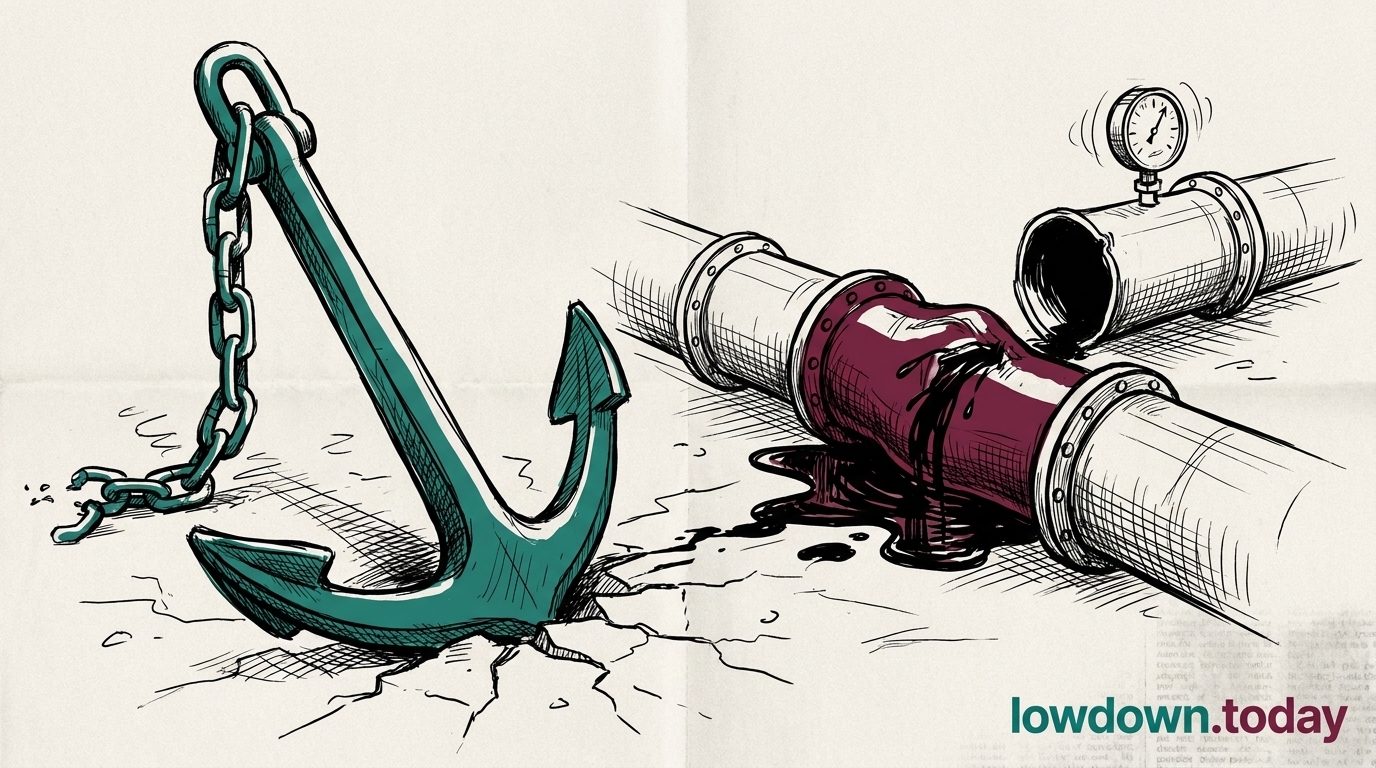
That ceiling is roughly one-tenth of the pre-war baseline and half of Iran's own toll volume last week. It implies structurally tight oil throughput regardless of Brent's headline price , and no single-day breakthrough is likely to restore pre-war flow. The Gulf is moving at a trickle because the physical problem in the water is larger than the political problem in the hotel in Islamabad.


Deep Analysis

In plain English

Before the war, 120 to 140 ships passed through the Strait of Hormuz every day carrying oil from Gulf states to the rest of the world. In the three days since the ceasefire, that number has fallen to five or seven — not much more than zero. The ceasefire stopped the bombing, but it did not clear the sea mines, lift the shipping insurance bans, or dissolve the Iranian inspection system. A political peace agreement does not automatically move oil.

Deep Analysis
Root Causes

The trickle is not a ceasefire failure in the usual sense. It reflects three compounding physical constraints that the diplomatic process cannot resolve: uncharted Iranian mines making navigation hazardous, the IRGC corridor system restricting passage to specific channels near Larak Island, and the withdrawal of war-risk insurance coverage from standard commercial operators.

The UN Security Council's 11-2 vote for a Hormuz reopening resolution was vetoed by Russia and China — both of whom benefit from the toll architecture their own tankers already use. The multilateral route to maritime normalisation is therefore closed, leaving only bilateral US-Iran negotiation or unilateral force, neither of which resolves the physical mine problem.

What could happen next?
  • Consequence

    Brent crude will remain structurally elevated at 40-60% above pre-war levels until mine clearance and insurance normalisation occur, regardless of which diplomatic outcome Islamabad produces.

  • Risk

    GL-U expiry on 19 April would simultaneously criminalise the 325 stranded tankers' cargo under US sanctions while they remain physically unable to move, creating a compound maritime-legal crisis.

First Reported In

Update #65 · Iran lost its own minefield

Al Jazeera· 11 Apr 2026
Read original
Different Perspectives
Greek shipping registries
Flag states dominating the tanker fleet await the EU's 15 July cap-freeze vote. A formula unlock toward $75 would loosen the ceiling squeezing insurance and crewing costs on their registered hulls.
US money managers
US money managers
NYMEX WTI managed-money net long fell 23% to +64,041 in the week to 7 July, trimming length into the rally on doubt the Hormuz premium survives without freight or war-risk confirmation.
European refiners (ARA)
ARA refiners are capturing an $80/bbl US diesel crack as Russian gasoil loadings collapsed to 234kbd before Novak's 31 July export ban even bites, widening the arbitrage straight into refining margins.
OPEC+
OPEC+
The seven-member group confirmed a fourth consecutive 188kbd August hike on 5 July, defending market share even though Saudi Arabia's $108-111/bbl breakeven means every added barrel costs Riyadh revenue it cannot recoup.
Indian refiners
Indian refiners
Refiners kept lifting discounted Urals as the India/Baltic split widened past $9-10 a barrel on 7 July. A wider Urals-Brent gap means cheaper feedstock locked in against Baltic buyers.
Russia
Russia
Urals traded $48.95-55.12 on 12-13 July, below Moscow's $59 budget floor even as Brent gained $6. Oil and gas fund roughly 30% of federal revenue, and Novak's diesel export ban is rationing a shrinking export base.