Skip to content
You can now search across every topic, entity and event.What's new
European Energy Markets
15JUN

Israel claims 85% of Iran's chemicals

3 min read
12:23UTC

Israel struck the South Pars gas complex on 6 April; Defence Minister Israel Katz claimed the bombing has now knocked out the bulk of Iran's petrochemical exports.

EconomicDeveloping
Key takeaway

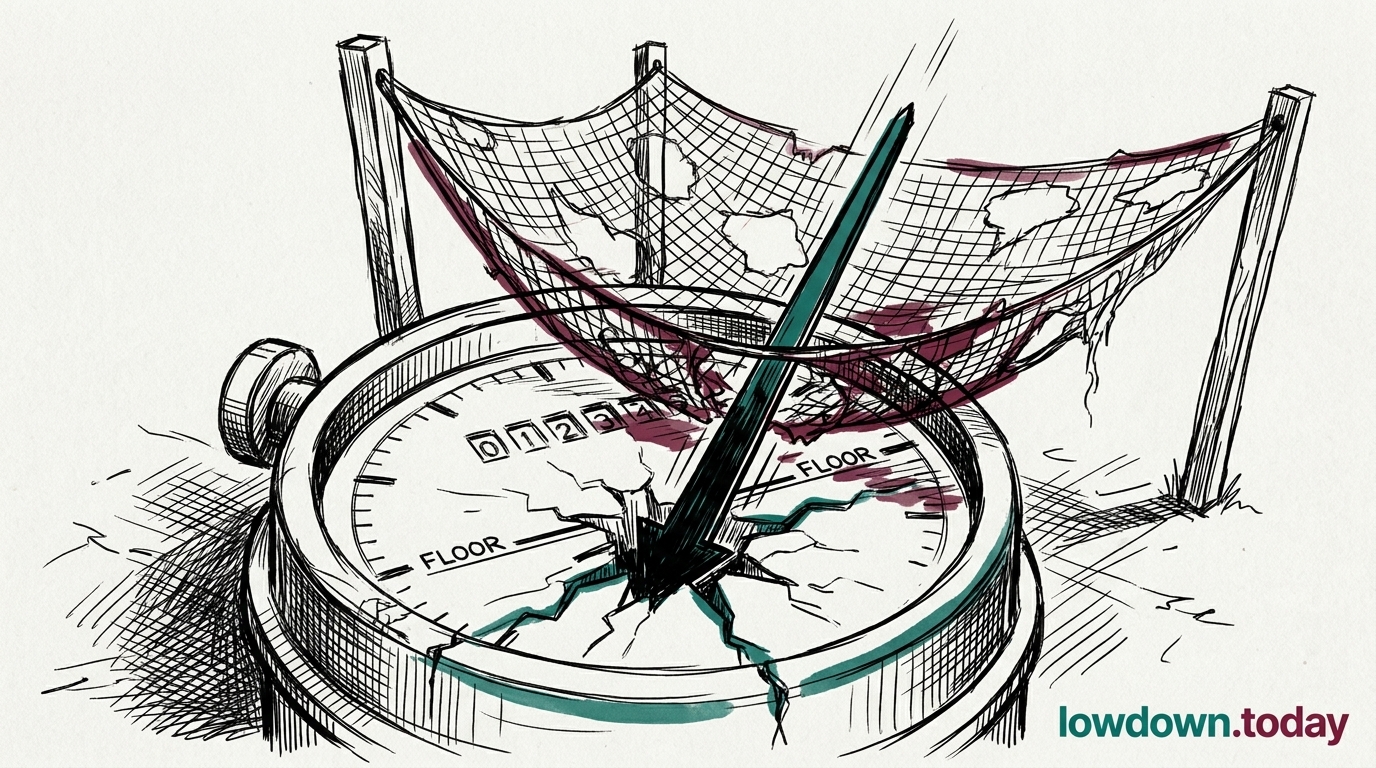
If Katz's figure holds, Israeli bombs have done in three weeks what twenty years of US sanctions could not.

The Israel Defence Forces struck the South Pars / Asaluyeh gas complex on 6 April, Iran's largest petrochemical facility. Israeli Defence Minister Israel Katz confirmed the strike publicly and characterised it as "a severe economic blow costing Iran tens of billions of dollars" 1. Combining Asaluyeh with the Mahshahr complex hit on 5 April , Katz claimed that 85% of Iran's petrochemical export capacity is now offline. Iran has not confirmed the figure.

That figure is an Israeli government claim, not an established fact, and it should be read as such. Independent verification is constrained because Planet Labs commercial satellite imagery of Iran has been blacked out by undisclosed US government order since 9 March , removing the principal external check on damage assessments from either side. Iran's pre-war petrochemical exports earned roughly $14 billion a year in hard currency, and Tehran has not announced a replacement revenue stream as the strikes accumulate.

If Katz's number is accurate, the tools Washington spent two decades building are now being outperformed by the bombs of an ally Washington was supposed to be restraining. South Pars is jointly operated with Qatar, which calls its half North Dome. A strike that compounds pressure on Doha lands in the same week Doha refuses to mediate. The two facts may be unrelated. Neither side is treating them that way.


Deep Analysis

In plain English

South Pars is Iran's largest gas and petrochemical complex, and Iran's most valuable single economic site , roughly equivalent to attacking Britain's entire North Sea production in a single strike. Israel hit it on 6 April, a day after hitting the Mahshahr complex, and Israel's defence minister claimed the two strikes together have knocked out 85% of Iran's ability to export petrochemicals. That figure has not been independently verified: a US government order has blocked commercial satellite imagery of Iran since 9 March, so there is no external check. The strikes may be the most economically consequential of the war; we will not know the true damage figure until the blackout lifts.

Deep Analysis
Root Causes

South Pars is Iran's most important single economic asset: jointly operated with Qatar's North Dome field, it accounts for the majority of Iran's natural gas production and a disproportionate share of its petrochemical export earnings.

The IDF struck it because its symbolic and economic weight exceeds that of any comparable target, and because the Planet Labs blackout , an undisclosed US government order since 9 March , removed the principal check on independent damage assessment that would otherwise constrain Israeli strike claims.

Escalation

The South Pars strike raises the structural stakes of any Iranian retaliation: hitting Qatar's shared North Dome infrastructure would constitute an attack on a non-belligerent Gulf state hosting US forces, crossing a threshold that has deterred Iran throughout the conflict. Tehran's retaliation options are therefore constrained precisely because the most economically symmetrical response carries the highest escalation risk.

What could happen next?
  • Consequence

    If the 85% figure is directionally accurate, Iran's hard-currency earnings have been structurally compressed in a way that two decades of US sanctions failed to achieve, increasing pressure on Tehran's ability to fund a prolonged conflict.

  • Risk

    Iran's most economically symmetrical retaliation , striking Qatar's North Dome , would constitute an attack on a US-base-hosting Gulf state, meaning the strike has constrained rather than widened Tehran's options for a proportionate response.

First Reported In

Update #61 · Carriers retreat; Iran codifies Hormuz

Investing.com / ICE· 7 Apr 2026
Read original
Different Perspectives
Spain's LNG terminal operators
Spain's 9,145 GWh terminal inventory is the largest single stock in the EU LNG network, an option value that can reroute cargoes wherever the winter strip pays best rather than a cavern gas obligation tied to a fixed date. That flexibility matters more as Germany's cavern shortfall pushes more of the winter security question onto import infrastructure.
European Commission
European Commission
Brussels holds the bloc to 90% on a flexible window while Germany, holding roughly a quarter of EU storage capacity, tracks toward missing its own lower 80% figure by 21 points. A national shortfall this size in the anchor market matters more to bloc security than the flexible timetable alone can absorb.
French power exporters and CRE
French day-ahead rose in step with Germany but by less, reopening a EUR 7-17 premium that makes northward export flows commercially attractive again after the EUR 43.09 discount evaporated in days. CRE separately authorised RTE and Enedis to buy flexibility locally, betting the coming winter's binding constraint is grid congestion rather than a shortage of firm capacity.
TTF trading desk
TTF trading desk
A visible national shortfall like Germany's 21-point gap is a directional signal, not noise, for a desk holding the summer-winter spread. TTF's flat EUR 58-60 range through this week's German price swings says the market has not yet chosen to reprice refill risk into the front of the curve.
German cavern and CCGT operators
German caverns kept buying prompt gas at TTF near EUR 58-60 through the inversion; the wind collapse to 2.4 GW then flipped the spark spread to plus EUR 29 and put turbines back in the same queue. Every day turbines win that bid, injection at a third of the 877 GWh/day pace needed falls further behind.
Slovakia
Slovakia
Slovakia says it dropped its hold-out on the 21st sanctions package only after Ursula von der Leyen personally signed written gas-price and supply guarantees. The Council of the European Union's own 17,238-character release on the package names neither Slovakia nor any guarantee, leaving Bratislava's account unconfirmed by the institutional record.



