Skip to content
Briefings are running a touch slower this week while we rebuild the foundations.See roadmap
European Energy Markets
18MAY

Six Arc7 carriers face binary maintenance fork

4 min read
11:11UTC

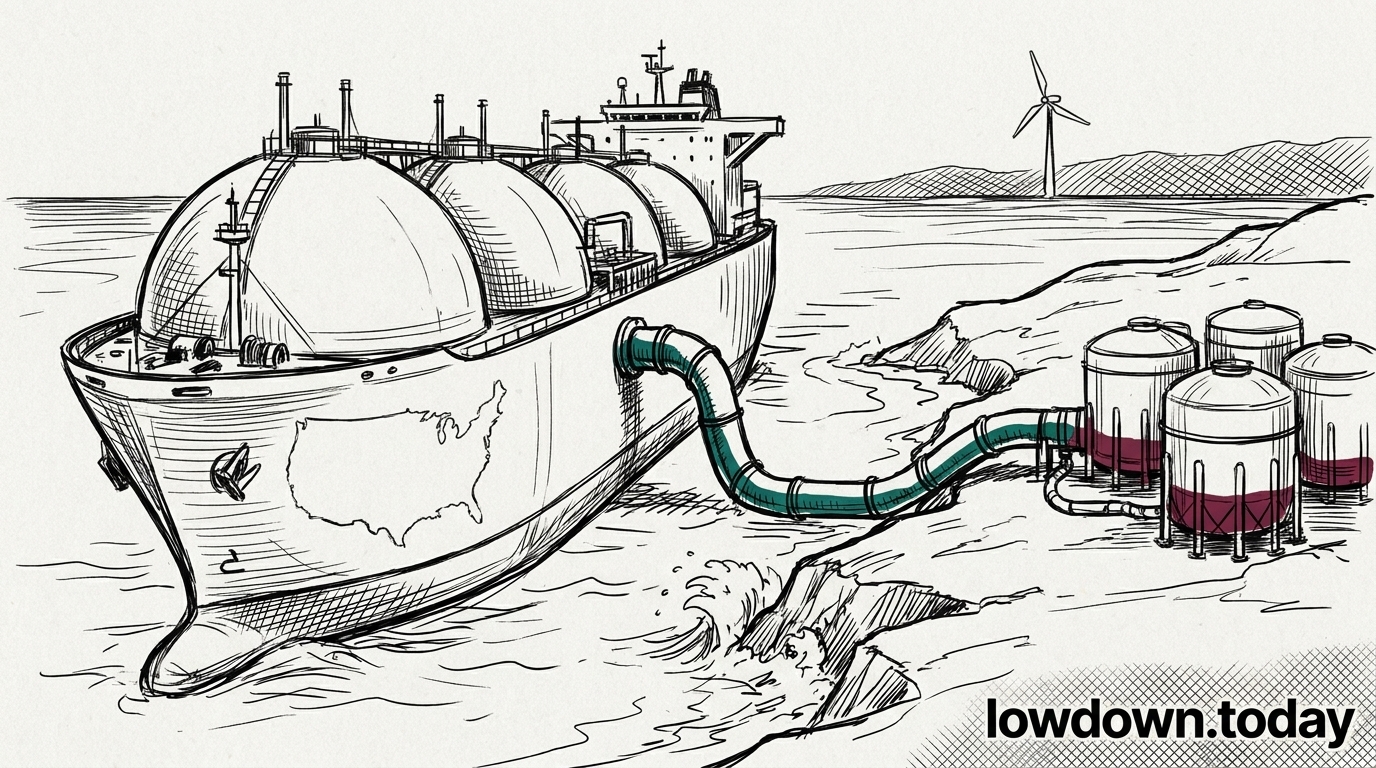
The EU 20th sanctions package banned EU yards from servicing Arc7 ice-class LNG carriers from 25 April. Six named vessels are due dry-dock across summer 2026; all six were last serviced in France or Denmark in 2023.

EconomicAssessed
Key takeaway

Six Arc7 carriers must reach Singapore, China or the UAE this summer or face the 2026/27 Arctic season uncertified.

The EU 20th sanctions package, adopted by EU Council on 23 April and operative from 25 April, banned EU yards from servicing Arc7 ice-class LNG carriers 1. Six named vessels are due for dry-dock across summer 2026: Rudolf Samoylovich, Georgiy Brusilov, Boris Davydov, Vladimir Vize, Nikolay Zubov, and Nikolay Yevgenov. All six were last serviced in France or Denmark in 2023, on the standard three-year ice-class certification cycle.

Operators face a binary fork on operating mechanics: reach non-EU yards in Singapore, China or the UAE inside the summer window, or push servicing into the 2026/27 Arctic operating season after sea ice returns. Push the work past the window and an ice-class certification gap opens at the moment the vessel most needs it. If even two or three of the six fail to secure servicing, Yamal LNG breakdown risk rises sharply through next winter. EU Council blocked the full maritime services ban at adoption ; only the Arc7-specific maintenance ban passed. That partial scope concretes the risk: the chokepoint sits on yard access, not vessel certification.

This sits outside every published EU refill model. Bruegel's three-scenario refill model prices LNG cargo costs at given TTF levels; the ACER modelling prices a 26 bcm Qatar-offline shortfall. Neither prices supply continuity for Russian Arctic LNG flow that the EU is gradually choking through a maintenance side-door. Even if EU storage lands at 80% on 1 November, winter 2026/27 reliability still depends on volumes the sanctions architecture is now indirectly disrupting.


Deep Analysis

In plain English

Yamal LNG is a massive gas liquefaction facility built on a remote Arctic peninsula in Russia. The specialised ships that carry its gas, called Arc7 carriers, are built to break through several metres of ice and operate in temperatures below -50°C. Like any ship, they need periodic maintenance in a dry-dock. They were last maintained in France and Denmark in 2023, so several are due for their next service this summer. The European Union has now banned its own shipyards from doing that work as part of sanctions against Russia. The carriers must now find yards in Singapore, China or the UAE to do the work instead, but those yards have limited space for such unusual vessels. If they cannot get serviced before autumn ice returns, they will not be able to operate safely through next winter.

Deep Analysis
Root Causes

The Arc7 maintenance ban creates a non-substitutable chokepoint for three interlocking structural reasons.

First, Arc7 ice-class certification is technically specific. The designation requires testing of hull steel behaviour at -52°C, propulsion performance in 2.1-metre consolidated ice, and rescue system functionality in Arctic conditions. These tests cannot be conducted in tropical yards; they require ice-class testing facilities in northern Norway or Finland, both now barred under the 20th package, or the equivalent in Russia, which lacks the modern testing infrastructure.

Second, Arctic sea ice returns to the Northern Sea Route by mid-September, setting a hard calendar deadline for any vessel that needs dry-dock time. Vessels operating after that date without current ice-class certification face flag-state detention risk and lose the ability to navigate the route that Yamal LNG depends on for cargo export.

Third, the EU deliberately scoped the ban to maintenance only, excluding full maritime services . That partial scope was a political compromise within the Council but it does not reduce the operational consequence: the maintenance ban is the binding constraint, and the services carve-out does not help vessels that cannot get into a yard.

What could happen next?
  • Risk

    If two or more Arc7 vessels fail to clear non-EU yards by September, Yamal LNG faces a reliability reduction of up to 30% through winter 2026/27, a risk priced in no published EU refill model.

    Medium term · 0.65
  • Precedent

    The partial scope of the EU Arc7 ban, maintenance only, maritime services excluded, creates a sanctions architecture loophole that Russia may exploit via TsNIIMF provisional certification extension, setting a precedent for future ice-class sanctions evasion.

    Medium term · 0.58
  • Risk

    Singapore and Keppel yards' three-hull capacity for Arc7 servicing against six vessels needing work means at least three operators will miss Q3 2026 yard slots unless Chinese yards (Hudong-Zhonghua) agree to receive Russian-sanctioned vessels under their own flag-state framework.

    Short term · 0.62
First Reported In

Update #7 · Storage pace 0.21 vs 0.257; floor not yet met

Hill Dickinson· 4 May 2026
Read original
Different Perspectives
US LNG exporter (Sabine Pass / Corpus Christi)
The 58% EU import share confirmed by ACER, heading toward 65% in 2026, represents a structural long-term offtake position that European terminal operators are now willing to underwrite against the German 2031 gas-demand floor. Ribera's warning lands inside a commercial relationship that is expanding, not contracting.
Teresa Ribera, European Commission EVP
Ribera warned Europe should 'avoid replacing one energy dependency with another', framing the ACER 58% US LNG figure as a supply-security risk in the same week TTF broke EUR 50. Her institution has spent EUR 117 billion on US LNG since 2022.
Yara International (ammonia producer)
Front-month TTF at EUR 50+ touches the demand-destruction threshold at which ammonia output curtailments have historically been triggered. Yara faces the same lock-or-ride binary as financial desks, but the downside is production loss rather than mark-to-market exposure.
Katherina Reiche, German Economy Minister
Reiche confirmed the 12 GW hydrogen-ready gas tender is formally agreed with the EU Commission, with first auctions in 2026 and all units operational by 2031. The confirmation closes three years of SPD environment-ministry obstruction and anchors German gas demand through the early 2030s.
European gas trader (Amsterdam desk)
The EUR 50 break is a watershed signal, not a squeeze: the forward curve at EUR 55.21 twelve months out implies the market has repriced structural winter risk, not a positioning overshoot. The lock-or-ride decision on winter hedges closes in June when injection-pace data for May lands.
Hungarian and Slovak gas buyers and regulators
Hungary cleared EUR 123.23/MWh on 12 May, EUR 54 above Spain's same-day clearing and the largest single-market premium of the briefing series, as ACER named it among seven NRAs in TurkStream derogation opinions with the 5 August EC ruling pending. A denial of derogation removes the only available pipeline substitute for Russian LNG banned since 25 April.
