As the last of the six Arc7 vessels, does Nikolay Yevgenov face the highest risk of missing its certification slot?
Timeline for Nikolay Yevgenov
Kunpeng rejected at Dahej, LNG sanctions hold
European Energy MarketsSix Arc7 carriers face binary maintenance fork
European Energy MarketsBackground
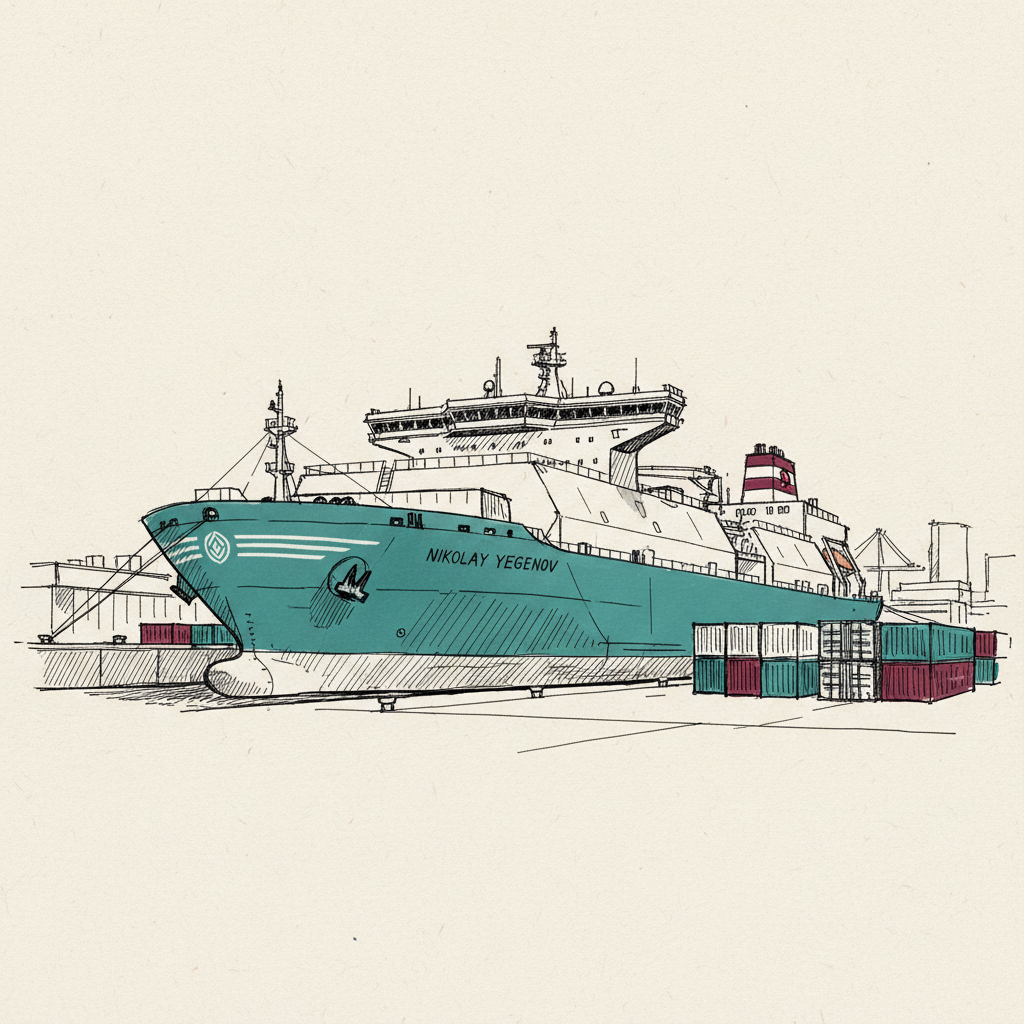
Nikolay Yevgenov is a Russian Arc7 ice-class LNG carrier operated as part of the Yamal LNG fleet under Sovcomflot management. Named after Soviet Arctic hydrographer Nikolay Yevgenov, the vessel is certified to Arc7 specification for Independent navigation of consolidated SEA ICE up to 2.1 metres. It was last dry-docked in France or Denmark in 2023, placing it due for its three-year ICE-class recertification in the summer 2026 window.
Nikolay Yevgenov is the sixth named vessel in the group of Arc7 carriers facing the binary maintenance decision created by the EU 20th sanctions package ban on EU yard servicing, operative from 25 April 2026. With approximately three available slots at non-EU yards in Singapore against six vessels requiring service, Nikolay Yevgenov faces the same binary fork as its sister vessels: reach a non-EU yard before mid-September 2026, or enter the Arctic season without current ICE-class certification. The May 2026 rejection of the Kunpeng at India's Dahej LNG Terminal, stranding it near Singapore, further illustrates how constrained Asian port access has become for Russian LNG logistics.
The Hill Dickinson analysis that identified the six-vessel queue noted that the last arrivals at Singapore yards face the highest probability of missing slots, as the facilities are booked on a first-come basis. Nikolay Yevgenov's position in the queue depends on its location at the time of the ban and its ability to transit the Northern Sea Route toward Asian yards during the open-water season.
