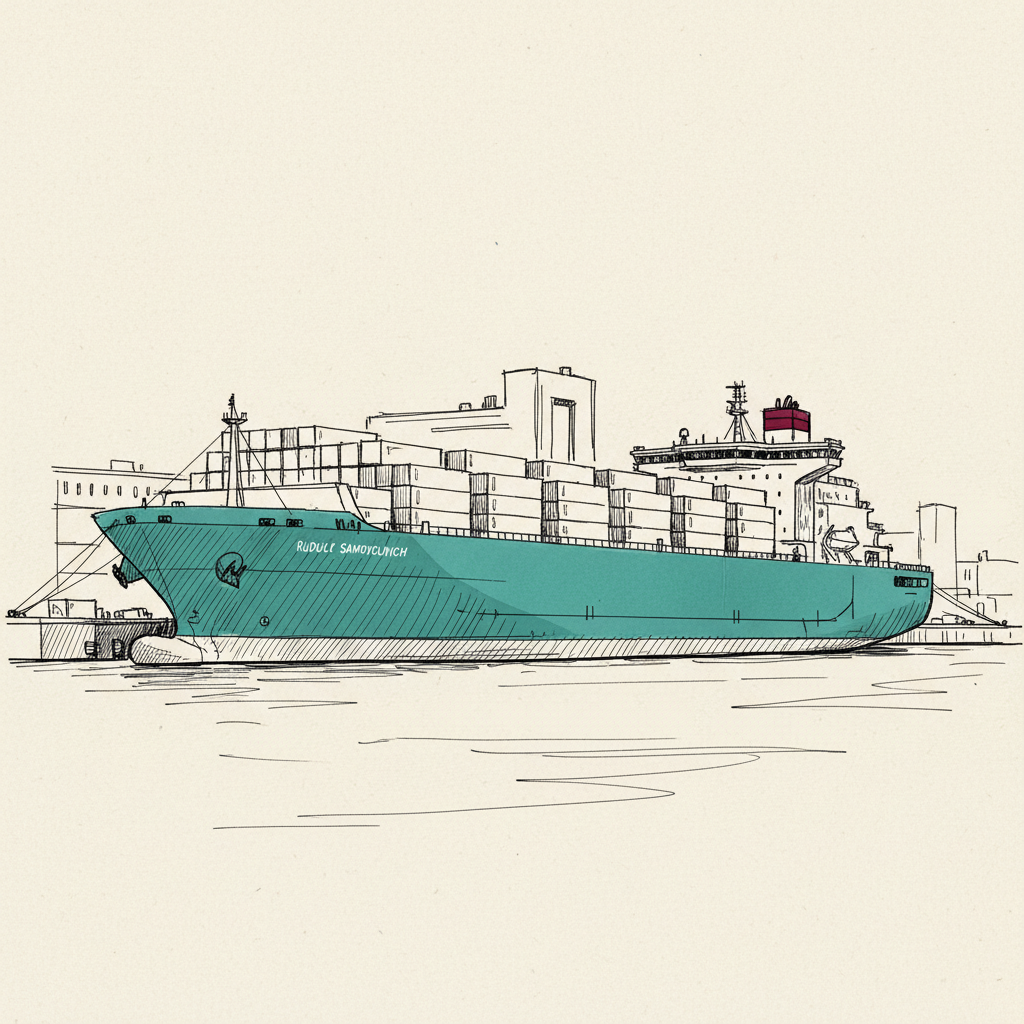
Rudolf Samoylovich
Russian Arc7 LNG icebreaker carrier; due summer 2026 dry-dock with EU yards barred under 20th sanctions package.
Last refreshed: 18 May 2026 · Appears in 1 active topic
Will Rudolf Samoylovich secure Arctic certification in time before EU yards ban forces it to Singapore?
Timeline for Rudolf Samoylovich
Kunpeng rejected at Dahej, LNG sanctions hold
European Energy MarketsSix Arc7 carriers face binary maintenance fork
European Energy MarketsBackground
Rudolf Samoylovich is a Russian Arc7 ice-class LNG carrier operated as part of the Yamal LNG fleet under Sovcomflot management. Named after Soviet Arctic explorer Rudolf Samoylovich, the vessel was built to Arc7 specification, meaning it can navigate consolidated SEA ICE up to 2.1 metres independently and operate at temperatures as low as -52°C. It was last dry-docked in France or Denmark in 2023, placing it due for scheduled maintenance in the summer 2026 window under a standard three-year ice-class certification cycle.
The EU 20th sanctions package, operative from 25 April 2026, banned European Union shipyards from servicing Arc7 ice-class LNG carriers, barring Rudolf Samoylovich from its usual French or Danish maintenance yards. The vessel must now secure a dry-dock slot at a non-EU yard in Singapore, China, or the UAE before Arctic SEA ICE returns to the Northern Sea Route in mid-September 2026. Hill Dickinson's Marine Asset Group assessed that Singapore's Sembcorp Marine and Keppel yards have combined capacity for roughly three Arc7-class hulls per summer window across all six vessels requiring service. The same summer window saw the LNG carrier Kunpeng stranded near Singapore after rejection at India's Dahej terminal, illustrating the wider sanctions squeeze on Russian LNG logistics.
If Rudolf Samoylovich cannot secure a servicing slot before September, it faces operating in the 2026/27 Arctic season without current ICE-class certification, creating flag-state detention risk and potential Yamal LNG supply disruption during the critical winter period.
