Skip to content
You can now search across every topic, entity and event.What's new
Vladimir Vize
ProductRU

Vladimir Vize

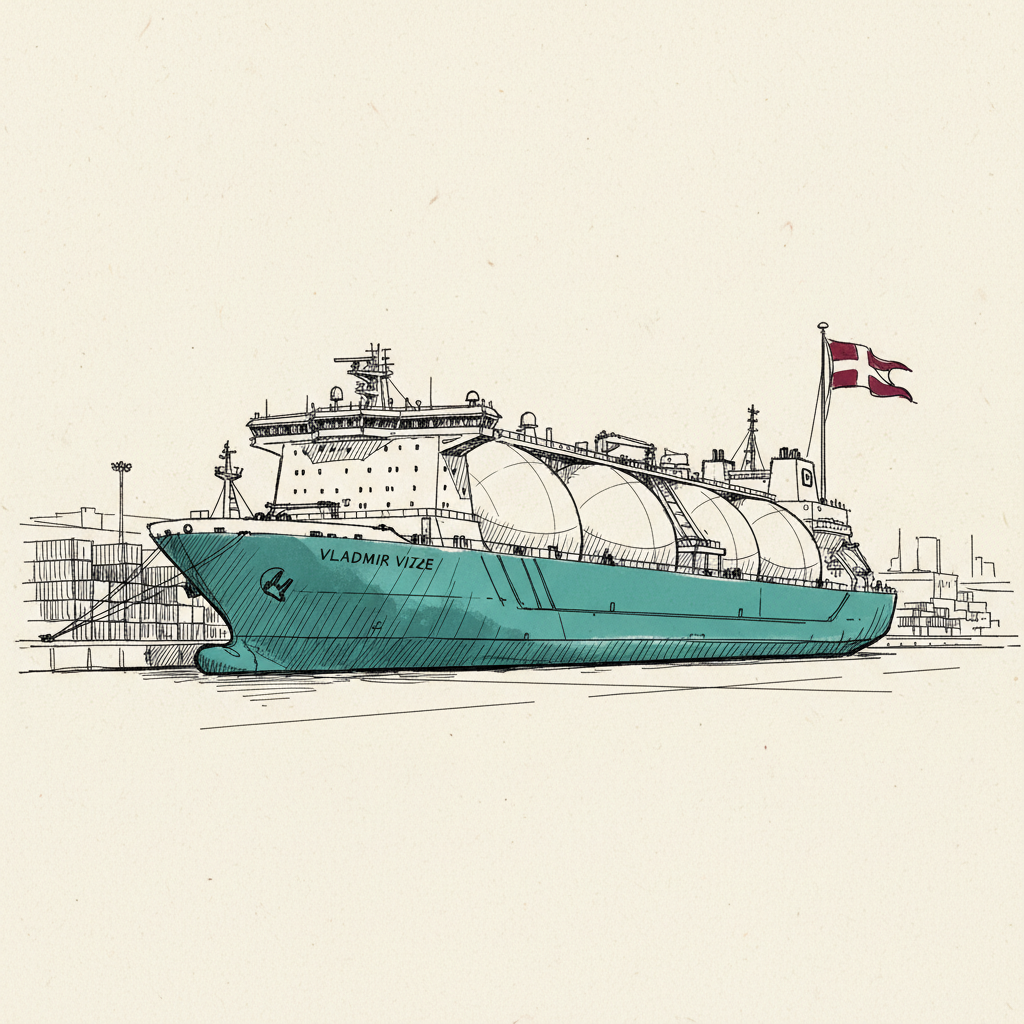
Russian Arc7 LNG icebreaker carrier; due summer 2026 dry-dock with EU yards now barred.

Last refreshed: 18 May 2026 · Appears in 1 active topic

Key Question

Can the Vladimir Vize make it to a non-EU shipyard before September ice closes the Arctic route?

Timeline for Vladimir Vize

#1012 May
View full timeline →
Common Questions
What is the Vladimir Vize LNG ship?
Vladimir Vize is a Russian Arc7 ICE-class LNG carrier in the Yamal LNG fleet, named after Soviet geographer Vladimir Vize. Certified to navigate 2.1-metre consolidated sea ICE, it is one of six vessels needing mandatory three-year recertification in summer 2026 at yards now barred to them by EU sanctions.Source: Lowdown European Energy Markets
How does the Arc7 dry-dock ban affect Yamal LNG output?
If two or three of the six affected Arc7 vessels miss certification, Hill Dickinson estimates Yamal LNG output could fall by around 30%, removing approximately 6.3 million tonnes per annum from winter supply. The EU and China are the primary customers, so any shortfall would hit both markets simultaneously.Source: Lowdown European Energy Markets
Who is Vladimir Vize and why is an LNG ship named after him?
Vladimir Vize (1886-1954) was a Soviet polar scientist and geographer who made important contributions to Arctic oceanography and cartography, including mapping the Novaya Zemlya archipelago. Yamal LNG named its Arc7 fleet after Soviet polar explorers to brand the vessels as heirs to Russia's Arctic heritage.Source: Lowdown European Energy Markets

Background

Vladimir Vize is a Russian Arc7 ICE-class LNG carrier operated as part of the Yamal LNG fleet under Sovcomflot management. Named after Soviet polar scientist and geographer Vladimir Vize, the vessel is certified to Arc7 specification, enabling independent navigation of consolidated sea ICE up to 2.1 metres and Arctic operations at temperatures down to -52°c. It was last dry-docked in France or Denmark in 2023, placing it within the summer 2026 window for its scheduled three-year ice-class certification maintenance.

The EU 20th sanctions package, operative from 25 April 2026, blocked EU yards from servicing Vladimir Vize and its five sister vessels. The vessel must now navigate the Northern Sea Route southward before Arctic ICE closes in mid-September 2026 and secure a dry-dock slot in Singapore, China, or the UAE. Six vessels competing for approximately three available non-EU slots creates a binary outcome: vessels that arrive first at Singapore yards complete certification before the Arctic season; those that do not face operating without it. The LNG carrier Kunpeng, stranded near Singapore in May 2026 after Dahej rejected it, underscores how Asian port access for Russian LNG vessels has become contested.

A failure to service Vladimir Vize on schedule contributes to cumulative Yamal LNG winter reliability risk, which analysts at Hill Dickinson estimate could represent a 30% output reduction if two or three of the six vessels miss certification, removing approximately 6.3 mtpa from the EU-and-China-facing supply book.

More questions
What is the EU 20th sanctions package and what does it ban in shipping?
The EU 20th sanctions package, adopted in April 2026, extended Russia sanctions to include a ban on EU shipyards servicing Arc7 ICE-class LNG carriers. This was the first direct restriction on maintenance of the Yamal LNG fleet, targeting the Arctic shipping infrastructure Russia depends on to export LNG year-round.Source: Lowdown European Energy Markets
Can the six Arc7 LNG carriers all get serviced before the September Arctic ice closure?
Probably not all six. Singapore yards are estimated to have capacity for roughly three Arc7-class hulls across the summer window. The vessels that reach non-EU yards first will secure slots; the remainder risk entering the 2026/27 Arctic season without current ICE-class certification.Source: Lowdown European Energy Markets
Source Material