Skip to content
You can now search across every topic, entity and event.What's new
Nikolay Zubov
ProductRU

Nikolay Zubov

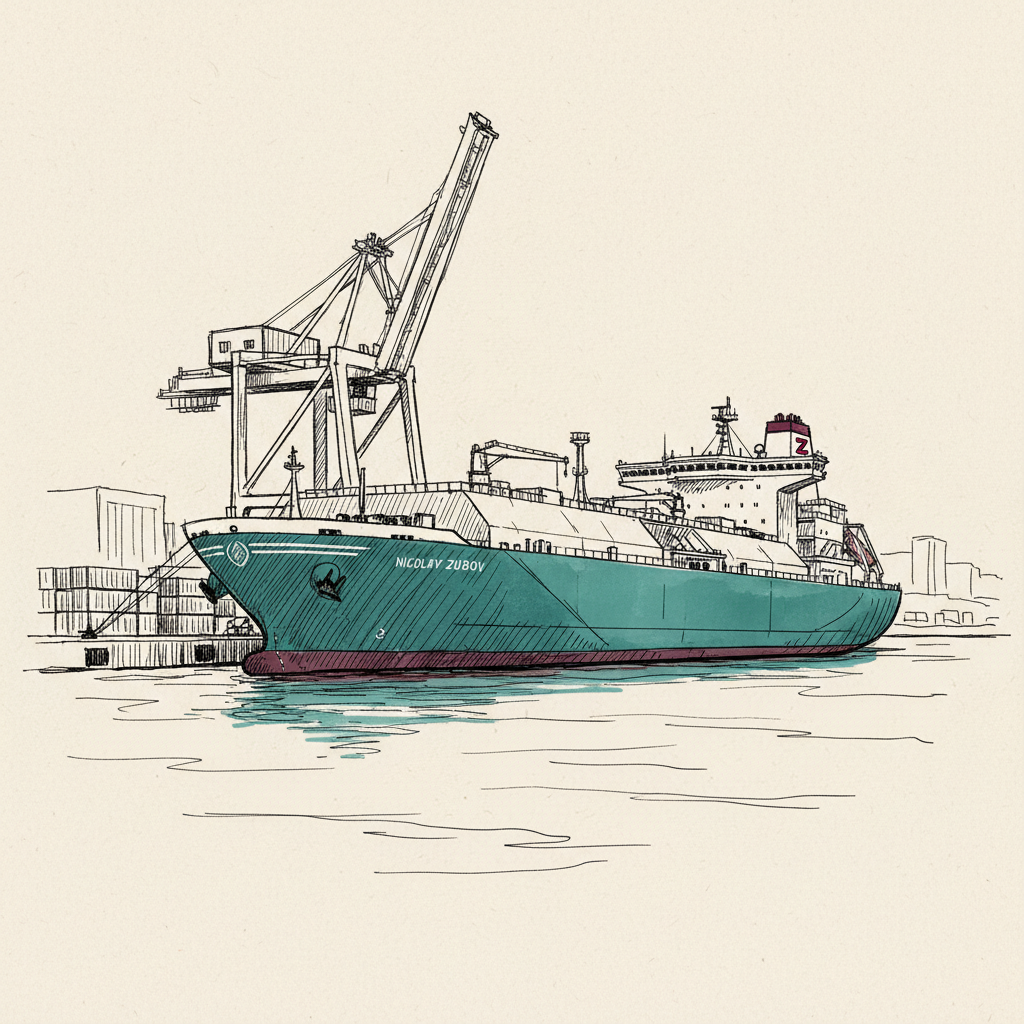
Russian Arc7 LNG icebreaker carrier; one of six facing a non-EU yard queue after the EU 20th sanctions ban.

Last refreshed: 18 May 2026 · Appears in 1 active topic

Key Question

With six Arc7 ships and only three non-EU yard slots, which vessels will miss their Arctic certification?

Timeline for Nikolay Zubov

#1012 May
View full timeline →
Common Questions
What is the Nikolay Zubov LNG carrier?
Nikolay Zubov is a Russian Arc7 ICE-class LNG carrier in the Yamal LNG fleet, named after Soviet oceanographer Nikolay Zubov. It is one of six vessels requiring mandatory three-year dry-dock recertification in summer 2026, now unable to use its usual EU yards due to the 20th sanctions package ban.Source: Lowdown European Energy Markets
Where will Arc7 LNG ships go for maintenance now EU yards are banned?
The viable alternatives are Singapore (Sembcorp Marine and Keppel), Chinese yards, and UAE facilities. Singapore is the most capable but has capacity for only around three Arc7-class hulls over the summer window. China and UAE are longer-term options but face secondary sanctions risks from servicing designated vessels.Source: Lowdown European Energy Markets
Why are Arc7 LNG carriers named after Soviet polar explorers?
Yamal LNG deliberately named its fleet after Soviet Arctic scientists to brand the vessels as heirs to Russia's polar exploration heritage, projecting national prestige onto commercial LNG infrastructure. The naming includes Zubov (oceanographer), Vize (geographer), Samoylovich (explorer), Brusilov (explorer), Davydov (hydrologist), and Yevgenov (hydrographer).Source: Lowdown European Energy Markets

Background

Nikolay Zubov is a Russian Arc7 ICE-class LNG carrier operated as part of the Yamal LNG fleet under Sovcomflot management. Named after Soviet oceanographer and polar scientist Nikolay Zubov, the vessel is certified to Arc7 specification for independent navigation of consolidated sea ICE up to 2.1 metres and operation at temperatures as low as -52°c. It was last dry-docked in France or Denmark in 2023, placing it within the summer 2026 window for its three-year ice-class recertification.

The EU 20th sanctions package ban on EU yards, operative from 25 April 2026, prevents Nikolay Zubov from returning to its usual French or Danish maintenance yards. The vessel is one of six in the same position, competing for an estimated three available slots at non-EU Arctic-capable yards in Singapore, China, or the UAE, before the Northern Sea Route closes to independent navigation in mid-September 2026. The stranding of the sanctioned LNG carrier Kunpeng near Singapore in May 2026, rejected at India's Dahej terminal, shows that even vessels reaching Asian waters cannot assume smooth passage through the new sanctions environment.

All six vessels were deliberately named after Soviet polar explorers and oceanographers, reflecting Yamal LNG's branding of the fleet as an extension of Russian Arctic scientific heritage. The sanctions ban turns that naming into an operational constraint: Soviet-era scientists the vessels are named after navigated the same route, but without the hard September Deadline now imposed by the EU maintenance ban.

More questions
How does the EU sanctions ban on Arc7 maintenance affect European gas supply?
If multiple Arc7 vessels miss their summer maintenance window, Yamal LNG output could fall by up to 30% during the 2026/27 winter. Europe's gas storage is already below the five-year average, so a Yamal LNG disruption would amplify supply tightness heading into the heating season and push TTF prices higher.Source: Lowdown European Energy Markets
What is Yamal LNG and how much gas does it produce?
Yamal LNG is a major Russian Liquefied Natural Gas project on the Yamal Peninsula in Siberia, producing approximately 16.5 million tonnes of LNG per annum. It is majority-owned by Novatek, with stakes held by Total Energies and CNPC. The Arc7 fleet is the dedicated shipping Arm that transports output westward and eastward via the Northern Sea Route.Source: Lowdown European Energy Markets
Source Material