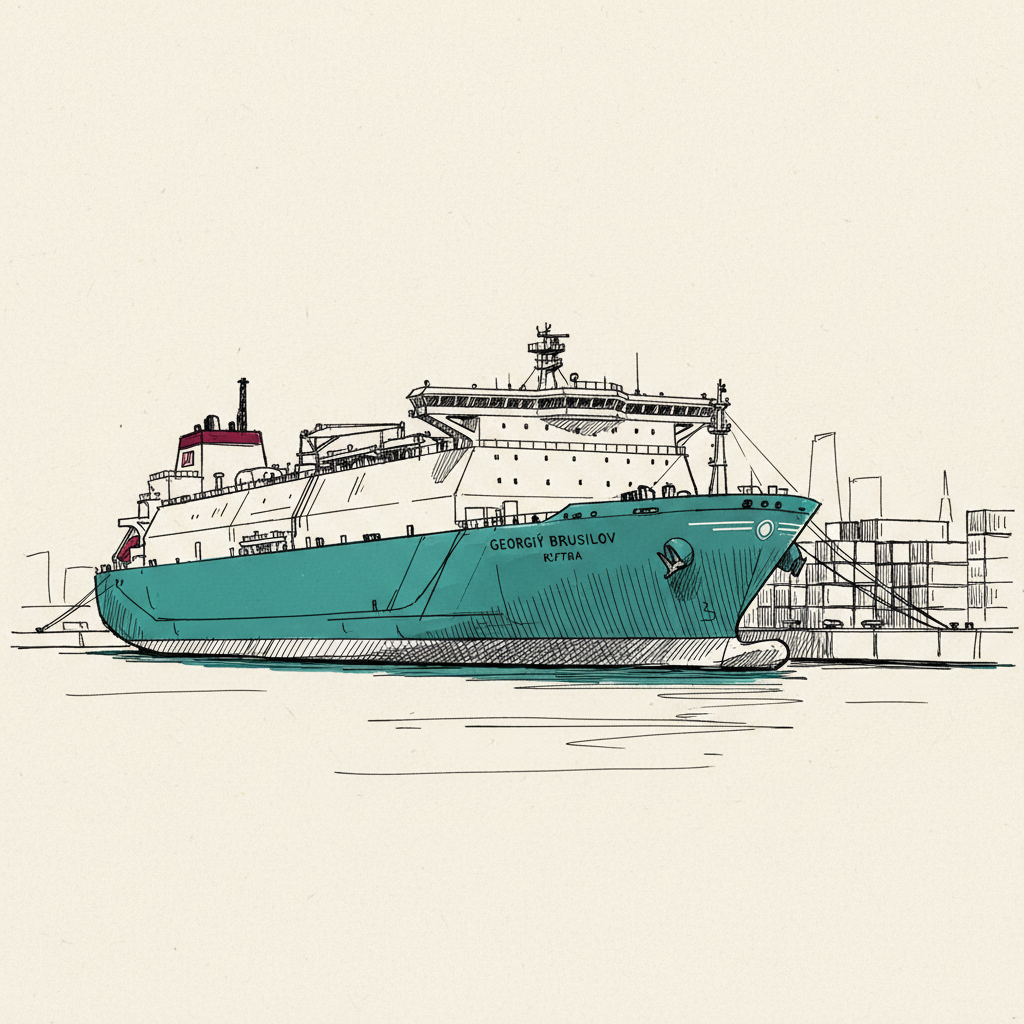
Georgiy Brusilov
Russian Arc7 LNG icebreaker carrier; due summer 2026 dry-dock with EU yards barred under 20th sanctions package.
Last refreshed: 18 May 2026 · Appears in 1 active topic
Which of the six Arc7 vessels will miss their Arctic certification window this summer?
Timeline for Georgiy Brusilov
Kunpeng rejected at Dahej, LNG sanctions hold
European Energy MarketsSix Arc7 carriers face binary maintenance fork
European Energy MarketsBackground
Georgiy Brusilov is a Russian Arc7 ice-class LNG carrier operated as part of the Yamal LNG fleet under Sovcomflot management. Named after Russian Arctic explorer Georgy Brusilov, the vessel is built to Arc7 specification and can navigate consolidated SEA ICE up to 2.1 metres independently. It was last dry-docked in France or Denmark in 2023, making it due for scheduled three-year ICE-class certification maintenance in the summer 2026 window.
The EU 20th sanctions package, operative from 25 April 2026, banned European Union shipyards from servicing Arc7 ice-class LNG carriers. Georgiy Brusilov must now secure a dry-dock slot at a non-EU facility in Singapore, China, or the UAE before Arctic SEA ICE returns to the Northern Sea Route in mid-September 2026. Six Arc7 vessels require servicing against an estimated three-hull capacity at Singapore's Sembcorp Marine and Keppel yards for this class over the summer window, creating a queue in which the first vessels to arrive secure slots and later arrivals face postponement. The simultaneous stranding of the Kunpeng near Singapore after Dahej rejected its Russian cargo illustrates the wider blockage in Russian LNG logistics through Asian ports.
Failing to secure certification before September risks operating in the 2026/27 Arctic season without current ICE-class status, exposing the vessel to flag-state detention, insurance coverage gaps, and contributing to elevated Yamal LNG winter supply risk.
