Skip to content
Briefings are running a touch slower this week while we rebuild the foundations.See roadmap
European Energy Markets
18MAY

Berlin confirms 12 GW gas tender

3 min read
11:11UTC

German Economy Minister Katherina Reiche confirmed the 12 GW hydrogen-ready gas-plant tender programme is formally agreed with the European Commission, with first units operational by 2031 and a 20 GW coalition target by 2030.

EconomicDeveloping
Key takeaway

Reiche's confirmation puts a floor under German gas demand through the early 2030s, closing a three-year coalition fight.

New German Economy Minister Katherina Reiche confirmed that the 12 GW hydrogen-ready gas-plant tender programme is formally agreed with the European Commission. First tenders open in 2026, with additional rounds in 2027 and 2029/2030; all units must be operational by 2031, hydrogen-ready and decarbonised by 2045. A capacity market for supply security from 2032 is targeted for delivery in 2027. The coalition target is up to 20 GW of gas-fired capacity by 2030.

The political resolution matters more than the megawatt count. The September 2026 first-auction date set under the prior coalition had been blocked at substance level by SPD environment-ministry objections that delayed the draft law for three years. Reiche's confirmation closes that fight: Berlin is committed to forward gas-plant build regardless of how the SPD environment portfolio frames its renewables conditions. The 2027 capacity-market delivery target creates an investment-decision hurdle ahead of the build-out, with the binding constraint being whether auction-clearing prices exceed merchant CCGT spreads at 2031 vintage. The forward gas-demand curve through the early 2030s now has a German floor under it, structurally linked to the LNG supply architecture the Kunpeng case is testing in public.


Deep Analysis

In plain English

Germany has agreed with Brussels to build 12 gigawatts of new gas-fired power plants that can later be converted to run on hydrogen, a cleaner fuel. The first contracts go out to tender this year and all the plants must be running by 2031. Germany needs these plants to keep the lights on after closing its nuclear stations and while its wind and solar capacity cannot yet cover all demand on calm or cloudy days.

Deep Analysis
Root Causes

Germany's 2022-23 simultaneous nuclear exit and accelerated coal retirement removed approximately 25 GW of firm dispatchable capacity without a replacement mechanism, creating a structural gap that the renewables build-out cannot close on its own because of intermittency.

The SPD environment ministry's three-year objection to the gas-plant draft law was rooted in the ministry's interpretation that new gas plant build extended fossil fuel lock-in beyond the 2045 climate target, a dispute only resolved by the hydrogen-ready specification that gives plants a defined decarbonisation pathway.

EU state aid rules required Commission notification and approval for the capacity market, adding an external regulatory timeline that the German government could not accelerate unilaterally, which is why the September 2026 auction target in the original draft slipped.

What could happen next?
  • Meaning

    Siemens Energy and GE Vernova are the two primary turbine suppliers with H2-ready CCGT units in commercial delivery; the 12-20 GW programme represents a multi-billion euro order book concentrated in two manufacturers.

    Short term · Assessed
  • Meaning

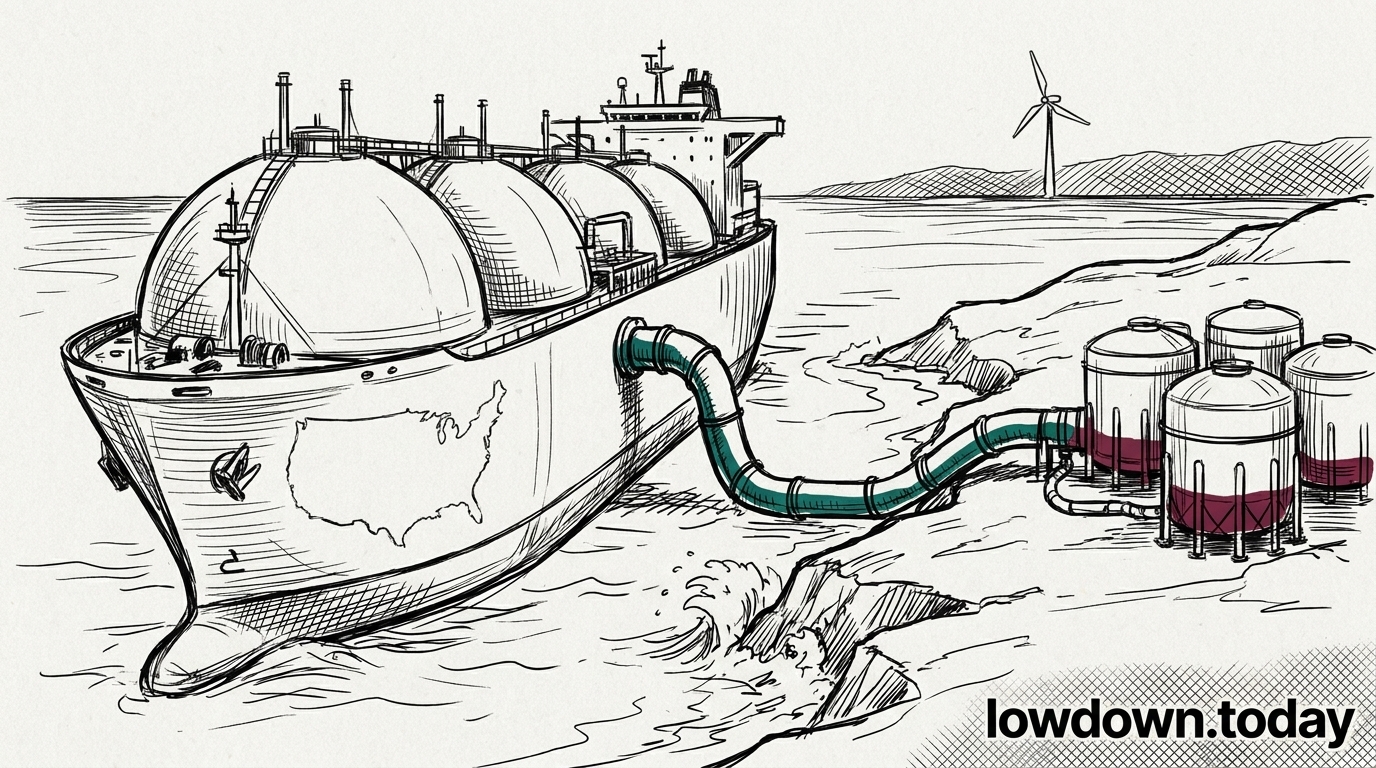
    The forward gas demand floor through 2031 provides a structural backstop for EU LNG import capacity investment, as European terminal operators can underwrite new regasification capacity against visible German gas demand.

    Short term · Assessed
  • Meaning

    SPD's acceptance of the gas-plant programme at coalition level represents a structural defeat for the German environment ministry's position that new firm capacity should come exclusively from storage and demand response, with implications for the ministry's credibility in future coalition negotiations.

    Short term · Assessed
First Reported In

Update #10 · TTF breaks EUR 50; US LNG hits 58% of imports

Clean Energy Wire· 18 May 2026
Read original
Causes and effects
This Event
Berlin confirms 12 GW gas tender
The political resolution closes three years of SPD environment-ministry obstruction. The forward German gas-demand curve through the early 2030s now has a floor under it.
Different Perspectives
US LNG exporter (Sabine Pass / Corpus Christi)
The 58% EU import share confirmed by ACER, heading toward 65% in 2026, represents a structural long-term offtake position that European terminal operators are now willing to underwrite against the German 2031 gas-demand floor. Ribera's warning lands inside a commercial relationship that is expanding, not contracting.
Teresa Ribera, European Commission EVP
Ribera warned Europe should 'avoid replacing one energy dependency with another', framing the ACER 58% US LNG figure as a supply-security risk in the same week TTF broke EUR 50. Her institution has spent EUR 117 billion on US LNG since 2022.
Yara International (ammonia producer)
Front-month TTF at EUR 50+ touches the demand-destruction threshold at which ammonia output curtailments have historically been triggered. Yara faces the same lock-or-ride binary as financial desks, but the downside is production loss rather than mark-to-market exposure.
Katherina Reiche, German Economy Minister
Reiche confirmed the 12 GW hydrogen-ready gas tender is formally agreed with the EU Commission, with first auctions in 2026 and all units operational by 2031. The confirmation closes three years of SPD environment-ministry obstruction and anchors German gas demand through the early 2030s.
European gas trader (Amsterdam desk)
The EUR 50 break is a watershed signal, not a squeeze: the forward curve at EUR 55.21 twelve months out implies the market has repriced structural winter risk, not a positioning overshoot. The lock-or-ride decision on winter hedges closes in June when injection-pace data for May lands.
Hungarian and Slovak gas buyers and regulators
Hungary cleared EUR 123.23/MWh on 12 May, EUR 54 above Spain's same-day clearing and the largest single-market premium of the briefing series, as ACER named it among seven NRAs in TurkStream derogation opinions with the 5 August EC ruling pending. A denial of derogation removes the only available pipeline substitute for Russian LNG banned since 25 April.
