Skip to content
Welcome, thoughtbot's Giant Robots listeners!Start here
Data Centres: Boom and Backlash
15NOV

Texas queue swells to 438 GW

3 min read
23:07UTC

Texas approved its first formal large-load study process on 18 June, even as ERCOT's connection queue climbed to 438 GW, about 90% of it data centres. The plan to clear it is not due until autumn 2027.

IndustryDeveloping
Key takeaway

ERCOT's queue has nearly doubled to 438 GW while the plan to clear it runs to autumn 2027.

The Public Utility Commission of Texas approved the state's first formal Batch Zero large-load study process on 18 June, the cohort method ERCOT will use to work through its connection requests⁠1. ERCOT, the Electric Reliability Council of Texas, which runs about 90% of the state grid, reported its large-load queue at 438 GW (gigawatts), roughly 90% of it data centres.

The queue climbed from 410 GW in April in about six weeks, and Texas first tried to clear it when it stood at 225 GW. It has nearly doubled since. ERCOT's final transmission plan is not due until autumn 2027, with the next application round, Batch 1, opening in summer 2027.

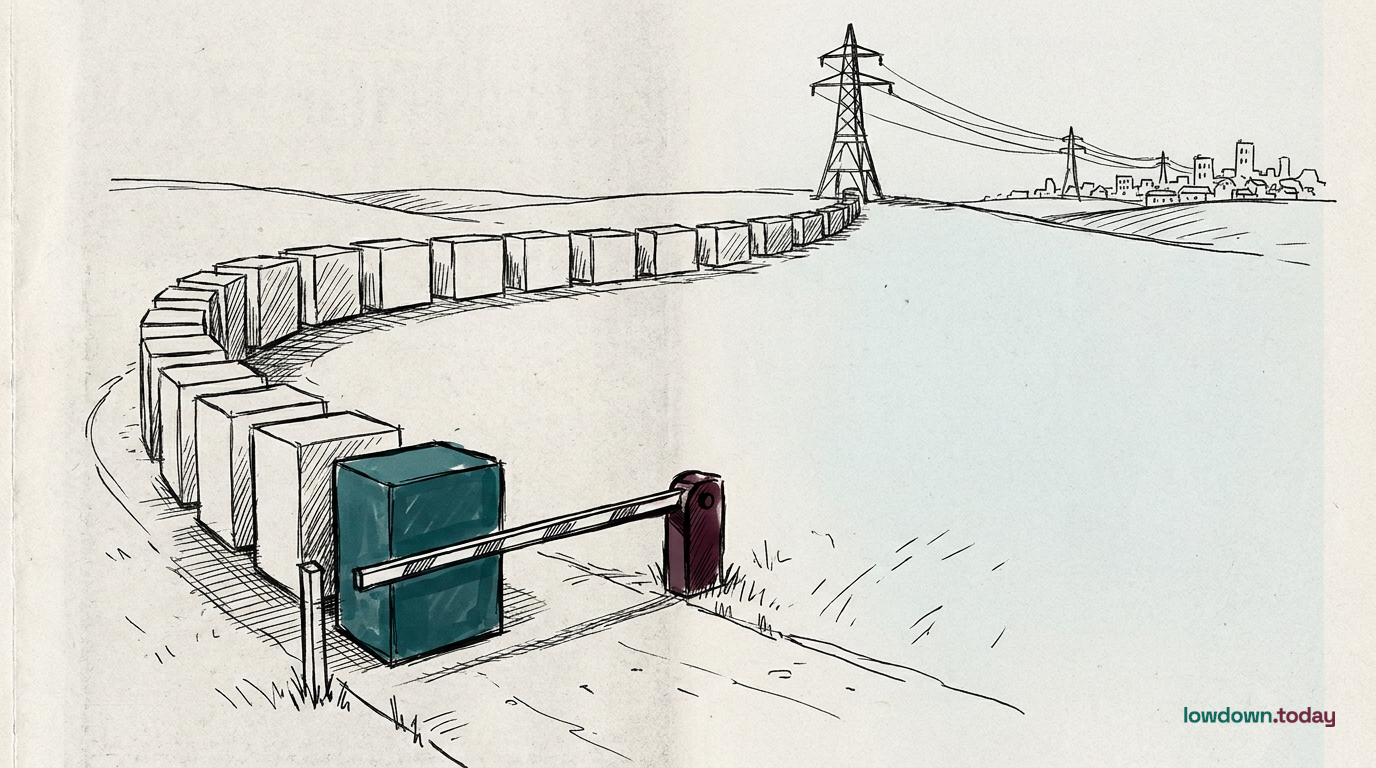
Intake runs at tens of gigawatts a quarter while the study meant to clear it takes years, so the backlog grows faster than any single cohort can be processed. A connection cleared through Batch Zero still cannot switch on without the transformers to serve it, and those are running years behind for new grid links. A transformer ordered today arrives after both the FERC show-cause responses and the Batch Zero plan are already on the table.

Deep Analysis

In plain English

ERCOT (Electric Reliability Council of Texas) is the company that operates the electricity grid for about 90% of Texas. When a company wants to connect a new power user, like a data centre, to the Texas grid, it has to apply for a connection and join a queue. ERCOT then studies whether the local grid can handle the extra load without causing problems for existing customers. That queue has now reached 438 GW, meaning companies have applied to connect 438 GW of new electricity demand, roughly five times Texas's actual peak electricity use of about 85 GW. About 90% of those applications are from data centres. On 18 June, Texas approved the first formal batch process to work through the queue, called Batch Zero. But the final plan is not due until autumn 2027, and the next round of applications does not open until summer 2027, meaning new data centres approved through this process will not have confirmed grid connections for at least two more years.

What could happen next?
  • Consequence

    ERCOT's Batch Zero timeline locks the Texas data-centre grid-connection question to 2027-28, a 12-18 month gap that will be filled by BTM generation deals like Project Kilby rather than utility connections.

  • Risk

    If queue growth continues at the 28 GW per two-month pace observed between April and June 2026, the queue will exceed 600 GW before Batch Zero's autumn 2027 plan is delivered, making any single batch process insufficient.

First Reported In

Update #8 · Data centres build their own power plants

Utility Dive· 28 Jun 2026
Read original →
Different Perspectives
Mooresville Board of Commissioners
The town board north of Charlotte voted unanimously on 2 November to stop taking data-centre applications for 12 months. Commissioners cited environmental and electrical impacts, joining other North Carolina towns that have paused new projects.
Naver
Naver
Naver signed a US$9bn contract under which a Brookfield vehicle owns the GPUs and buildings and sells computing to Naver Cloud. It guarantees the fees for up to eight years, which also unlocked Nvidia's US$1bn equity investment.
Saudi Aramco
Saudi Aramco
Aramco closed its purchase of 49% of HUMAIN on 1 November, paying about US$2.6bn in cash and adding its own AI, compute and digital assets. Chief executive Amin Nasser cast the deal as a gain in technology standing.
NEXTDC board
NEXTDC board
The board called the Goodman and Digital Realty stake opportunistic and said it had received no takeover proposal. It enters the 20 November meeting with a new chairman search, a 10% fee cut and a spill resolution on the agenda.
Brasscom
Brasscom
Sergio Sgobbi of Brazil's technology industry association says investors face uncertainty until the Redata rules are public. Members need rulings on gas and the CDE levy after Lula said data centres must build their own power.
Johari Abdul Ghani, Malaysia's investment, trade and industry minister
He told the Dewan Rakyat in October that data centres pay for all the grid capacity they reserve and fund upgrades to TNB's network. Google's 4 November pledge repeats those terms as its own.

Written with AI from Lowdown's published reporting. Not individually reviewed by an editor. Editorial standards.