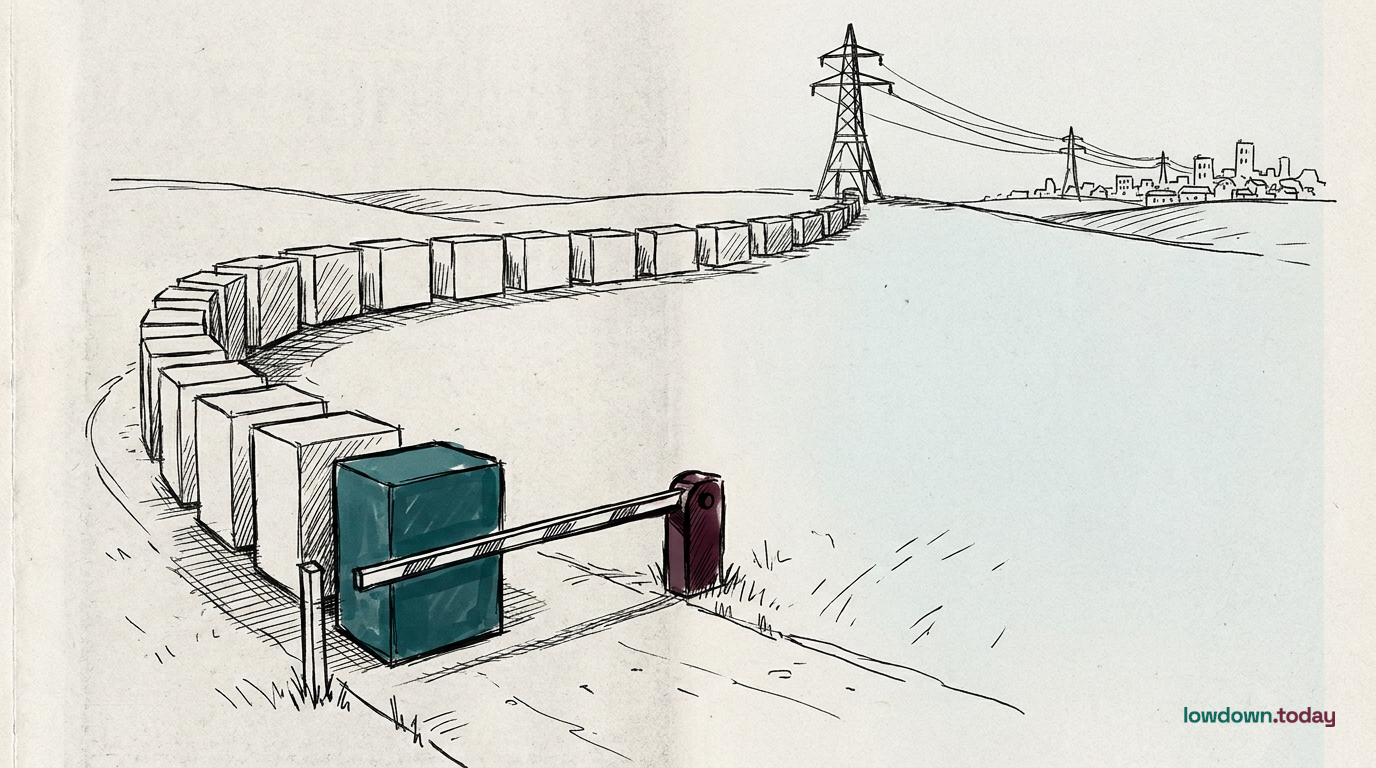
Statnett, Norway's transmission system operator, took no new grid-capacity reservations for data centres from Monday 9 November, and expects the halt to lift by 1 August 2027 at the latest1. It also paused section 14 approvals, which settle how a new plant behaves on the grid. They resume once Statnett has written functional requirements for data centres and the energy regulator, RME (Reguleringsmyndigheten for energi), has approved them after consultation.
Statnett's figures show the scale of the pile-up. 800 MW (megawatts) of data centres are connected; 4,200 MW hold reserved capacity, 9,100 MW sit in the queue and a further 18,000 MW has been requested. Together that is 32,100 MW, about 7,000 MW more than Norway's highest-ever demand of just over 25,000 MW.
Statnett cites speed: data centres can swing their draw up and down fast, the same risk behind Ireland's new ride-through rule, which requires transmission-connected demand facilities, data centres among them, to stay connected through brief voltage dips. Existing connections are untouched, and capacity freed during the halt will not go to other customers ahead of data centres already queued.
The Norwegian government went further the same day. It will bring in a concession scheme, a licence, for existing and new data centres, let Statnett set connection conditions, and study state ownership of "especially socially useful" projects2. Four MPs asked for a concession system in their Dok 8:6 S proposal on 5 October; ministers have now adopted the idea without waiting for a vote in the Storting (Norway's Parliament).



