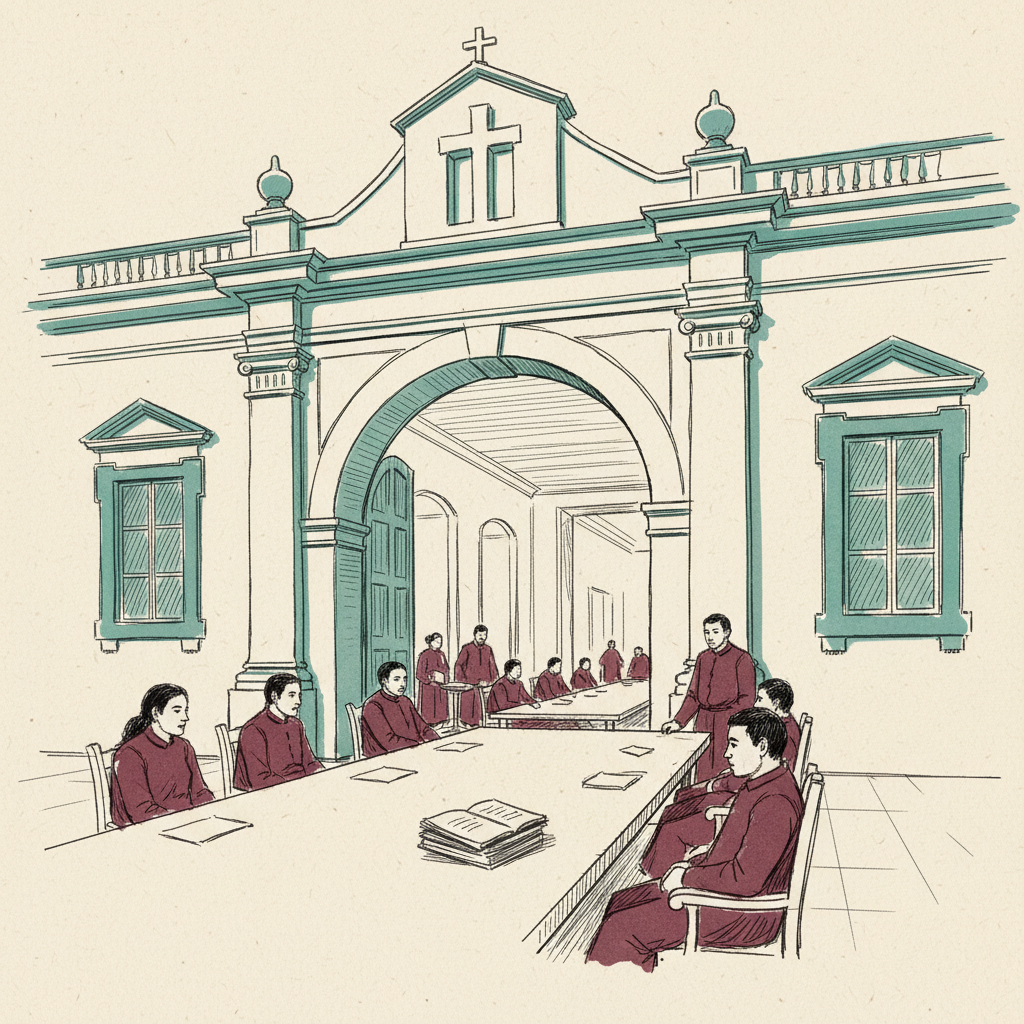
How is Caritas Cuba distributing US aid while bypassing the Cuban government?
Timeline for Caritas Cuba
Distributed 82 per cent of a $3M US aid tranche to approximately 8,800 families
Cuba Dispatch: Church aid moves as $100M offer stallsBackground
Caritas Cuba is the humanitarian and charitable agency of the Catholic Church in Cuba, a national member of Caritas Internationalis, the global confederation of Catholic relief organisations headquartered in Rome. Founded on the same model as national Caritas bodies across Latin America and the Caribbean, Caritas Cuba has operated continuously across periods of intense political restriction, distributing food, medicine, and social services through the Church's parish network across the island. Its institutional position within the Cuban Catholic Church grants it a measure of operational space that purely secular civil-society organisations do not have: the state tolerates the Church's charitable infrastructure in part because it provides social services the state cannot reliably deliver, and in part because of the diplomatic weight the Holy See carries in Havana's foreign relationships.
In May 2026 Caritas Cuba assumed the central operational role in a new US humanitarian channel to the island. Following US Secretary of State Marco Rubio's 9 May audience with Pope Leo XIV at the Holy See, in which Rubio proposed routing aid through the Catholic Church rather than through GAESA, the military conglomerate that controls most of Cuba's import infrastructure, Caritas Cuba became the distribution mechanism. By mid-May it had delivered 82 per cent of an initial $3M US aid tranche to approximately 8,800 families in the provinces carrying the heaviest burden of the fuel and grid crisis. The distribution bypasses state channels entirely, reaching families directly through parish networks.
Caritas Cuba's position in 2026 illustrates how the Church-state relationship in Cuba, always complex, has become a pivot point in the US-Cuba confrontation. The organisation operates within the island under Cuban government tolerance; it is simultaneously the mechanism the US has chosen to deliver aid that the Cuban government has not formally accepted but has not blocked. A further $100M US humanitarian offer is conditioned on political concessions Havana has refused, leaving Caritas Cuba able to distribute at the small scale while the large offer stalls over conditions the government reads as regime-change demands. The organisation's effectiveness as an aid channel depends precisely on its not being a political actor, which is the same quality that makes it a useful instrument in a political confrontation.
What is Caritas Cuba and what does it do?
How is the US getting aid to Cuban families without going through the Cuban government?
What is the $100M US humanitarian offer to Cuba?
Why does the Cuban government allow Caritas to operate?
