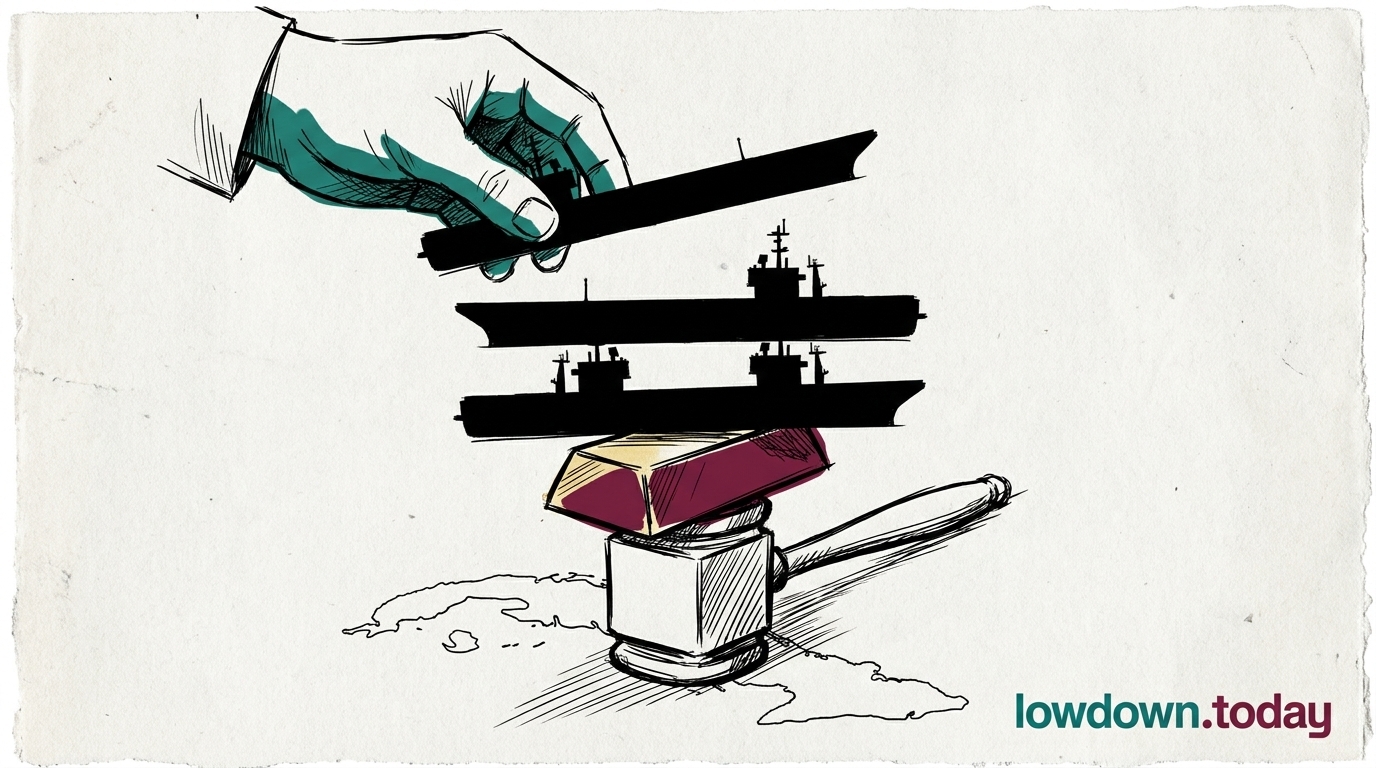
Caritas Cuba, the Catholic Church's humanitarian arm, has distributed 82 per cent of an initial $3M US aid tranche to approximately 8,800 families1. The aid moves through the Church rather than GAESA, the military business empire that controls the bulk of Cuba's import infrastructure, the routing Marco Rubio proposed at his Vatican audience with Pope Leo XIV. The distribution reaches families in the eastern provinces carrying the heaviest weight of the fuel and grid crisis.
The renewed $100M package is where the politics turn. The US has tied that larger humanitarian sum, also routed through the Church, to conditions Havana reads as regime change. Archbishop Thomas Wenski of Miami, a senior US Church figure, characterised the terms as requiring the Cuban government to surrender, the clearest signal yet that the offer is not purely humanitarian2. Cuba has neither formally accepted nor rejected it, and no $100M shipment has departed.
The structure puts the Church in a narrow position. Caritas can deliver tonnes of aid to families today through a channel that keeps the state conglomerate out of the chain, which is the channel's whole design. The conditional $100M sum, by contrast, asks Havana to trade political concessions for relief, and a government that has refused to put its jailed critics on the negotiating table is not built to take that trade. Relief flows at the small scale precisely because it asks nothing; the large offer stalls because it asks for everything.




