Skip to content
Briefings are running a touch slower this week while we rebuild the foundations.See roadmap
Cuba Dispatch
28MAY

Havana calls the Castro charge coercion

3 min read
08:42UTC

Cuba's foreign ministry condemned the Raul Castro charges as political coercion, and on 24 May the US Deputy Secretary of State answered Havana's formal protest directly.

PoliticsDeveloping
Key takeaway

A formal US reply to Havana's protest confirms the indictment is being treated as statecraft, not law.

Cuba's foreign ministry, MINREX, condemned the Raul Castro indictment as 'political coercion', delivered through its state outlet Cubadebate 1. Havana's framing held that defending national airspace is not a crime and accused Washington of reviving a narrative built on manipulation 2. On Sunday 24 May the US Deputy Secretary of State answered the Cuban embassy's formal protest, a direct government-to-government exchange that confirmed the indictment unsealed on 20 May had been received in Havana as a state act rather than a courtroom matter 3.

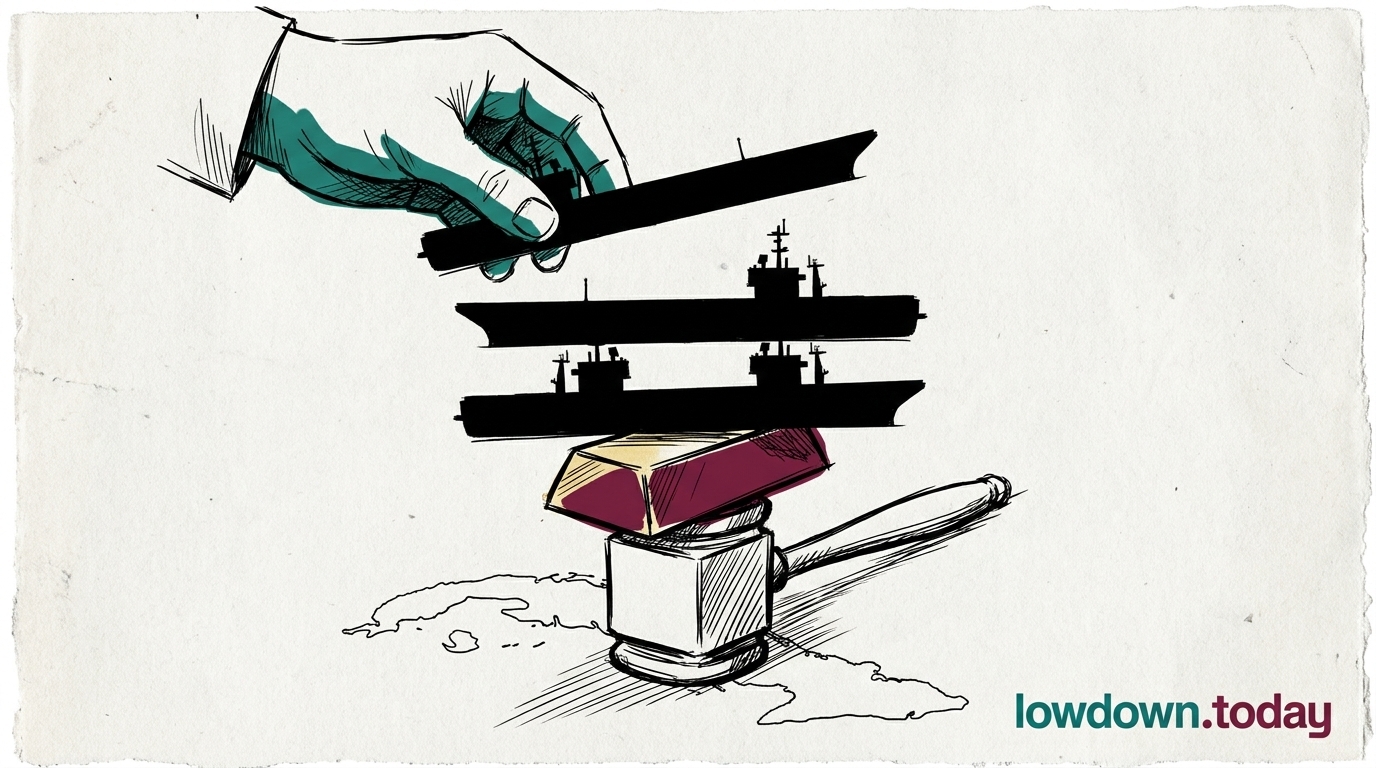
The 24 May reply shows the pressure landing where it was aimed. Havana is now responding to Washington across the same three registers it was hit on: a legal rebuttal of the indictment, a diplomatic protest over the second sanctions wave, and silence on the carrier it can neither safely acknowledge nor dismiss. The diplomatic exchange runs along the channel Marco Rubio reopened at the Vatican on 9 May , the track Havana has used to keep a line open while rejecting the substance.

President Miguel Diaz-Canel has offered dialogue 'on equal terms' while ruling political prisoners off the table, the same posture he held when he conceded on 4 May that Russian crude was running out . The government is reacting on every front and conceding none, which is what an administration does when it judges the pressure to be real but does not yet know how far it will run.

Deep Analysis

In plain English

When a country's top official is charged with murder by a foreign court, there are two ways to respond: accept the jurisdiction and cooperate (which no government does for its current or recent leaders) or reject the jurisdiction and fight the framing diplomatically. Cuba chose the diplomatic route. Its foreign ministry (MINREX) called the indictment 'political coercion' ; meaning, in diplomatic language, that Washington is using the legal system as a weapon rather than seeking genuine justice. Cuba's position is that its air force was defending national airspace against aircraft that had been warned multiple times. The US position ; backed by an international aviation investigation in 1996 ; is that the planes were in international airspace when they were shot down. Both sides also held a face-to-face exchange on 24 May: the US Deputy Secretary of State formally replied to Cuba's official protest note. That kind of government-to-government paper exchange shows both sides are keeping a communication channel open, even while publicly attacking each other.

What could happen next?
  • Consequence

    Havana's 'political coercion' framing, delivered through MINREX and Cubadebate, is now the official diplomatic record Cuba will cite at UN Human Rights Council and CELAC sessions, building a multilateral counter-narrative to the US legal instrument.

  • Risk

    Diaz-Canel's 'equal terms, no political prisoners' dialogue offer, if accepted by Washington as a negotiating framework, locks in a structure where the US abandons its primary human-rights leverage before any reciprocal Cuban concession.

First Reported In

Update #5 · Washington stacks three instruments at Cuba

Cubadebate / MINREX / CiberCuba· 28 May 2026
Read original
Different Perspectives
Holy See and WOLA engagement-track analysts
Caritas Cuba distributed 82 per cent of a $3M tranche to 8,800 families via the Church channel Rubio proposed at his 9 May Vatican audience. WOLA analysts note that personal sanctions on peso-denominated officeholders carry limited coercive effect; the Church track is the one instrument that reaches ordinary Cubans directly.
Sovcomflot and Russia
Moscow has announced no replacement for the Universal after it diverted on 26 May, and Sovcomflot's failure to activate Russia's National Reinsurance Company cover as a substitute for the expired P&I insurance signals that Russian fuel deliveries to Cuba now depend on OFAC-compatible licensing rather than on an unconditional bilateral commitment.
Prisoners Defenders and OCDH human rights monitors
Prisoners Defenders' April 2026 census of 1,260 political prisoners, its highest on record, documents the caseload rising by ten in a month despite repeated Cuban pardon announcements. Maykel Osorbo's refusal of the State Security exile-or-2030 ultimatum in May kept a high-profile name inside the registry Havana would need cleared before any prisoner-release negotiation proceeds.
MINREX and Cuban government
Cuba's foreign ministry condemned the indictment as 'political coercion' and filed a formal protest met by the US Deputy Secretary of State on 24 May. Diaz-Canel offered dialogue 'on equal terms' but ruled political prisoners off the table, while Cuba's pardon decrees structurally exclude crimes-against-authority charges from every amnesty wave, leaving the 1,260-prisoner count unchanged.
Trump administration and Florida delegation
The administration framed the 18 May designation wave and 20 May indictment as accountability for Cuba's security apparatus; Florida Republicans Gimenez, Diaz-Balart, and Salazar credited constituent pressure for the EO 14404 architecture. Senate Democrats Kaine, Schiff, and Gallego, having lost S.J.Res.124 51-47 on 29 April, called the Nimitz deployment under Operation Southern Spear a constitutional overreach.
OCDH and dissident coalition (Otero Alcántara, Osorbo proxies)
The Madrid-based OCDH coordinated the 13 May Brussels handover after the Cuban Supreme Popular Court rejected Otero Alcántara's early-release appeal in late April. The coalition's pivot to the EU restrictive-measures track follows procedural closure of the early-release vector before the 24 April US deadline lapsed.

