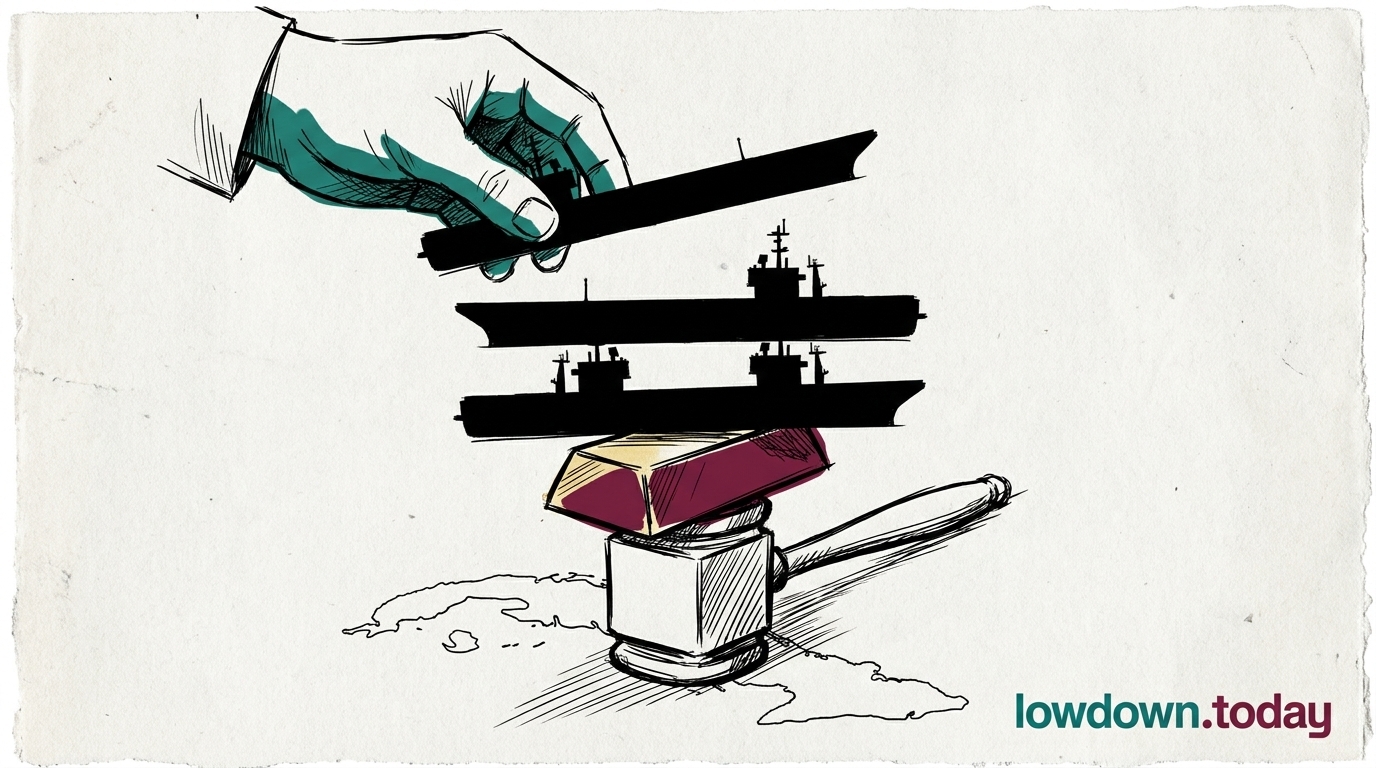
The USS Nimitz carrier strike group, with Carrier Air Wing 17, the destroyer USS Gridley and the replenishment vessel USNS Patuxent, reached the Caribbean on 20 May1. The stated mission, from SOUTHCOM (US Southern Command, the US military command for Latin America and the Caribbean), is the recurring Southern Seas 2026 exercise, the eleventh edition of a routine South American deployment2. On its face this is a presence operation rather than a Cuba operation, and that is how SOUTHCOM frames it.
What makes the carrier legible as pressure on Havana is the framework it sits inside, not the press release. The Nimitz operates under Operation Southern Spear, the western-hemisphere naval campaign that struck dozens of vessels and under which US forces captured Venezuelan President Nicolas Maduro in a January 2026 raid3. Reading the carrier as aimed at Cuba is Lowdown's analysis, not SOUTHCOM's stated purpose. The narrower point is harder to dismiss: the same operation has already been executed once in this hemisphere, against a neighbouring government. That precedent is why the deployment cannot be filed under routine in Havana.
The convergence deserves its caveat. Three acts landing in one week, the carrier, the indictment and the sanctions wave, are not proof of one coordinated plan, and a recurring exercise was scheduled long before any of it. The deployment arrives, though, into a fortnight in which the legal track moved against Raul Castro and the fuel track tightened after GL 134B lapsed on 16 May with no Cuba-specific successor. Whether tightly coordinated or merely concurrent, the cumulative effect on Havana's threat calculus is the same, and that effect is the story.




