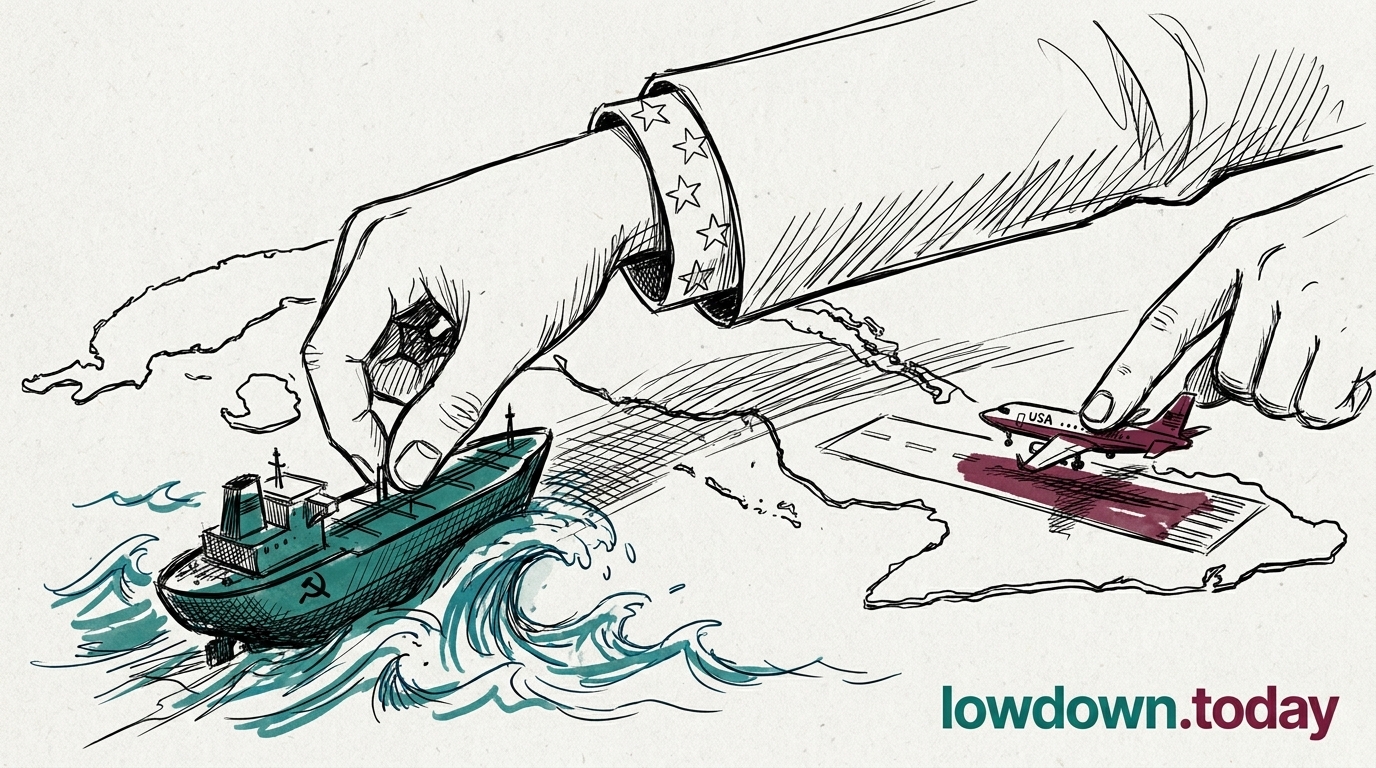
UNE, Cuba's state grid operator (Unión Eléctrica Nacional), forecast a peak deficit of 1,365 to 1,395 MW for Sunday 26 April 2026 against demand of 3,100 MW. The shortfall sits 337 to 367 MW below the 1,732 MW deficit recorded on 15 April. The Camilo Cienfuegos refinery in Cienfuegos province restarted on Friday 17 April after roughly four months offline, routing the Anatoly Kolodkin crude delivered on 31 March into the grid. Energy Minister Vicente de la O Levy said publicly that "with just this ship, we only have fuel until the end of April".
The arithmetic of Cuban resupply has tightened to a single dependency. The thermal fleet needs roughly eight fuel cargoes a month at design tempo; between December 2025 and April 2026 it received one, meeting roughly 13 per cent of stated need. The PDVSA Cuba carve-out from 18 March walled off Venezuelan crude from the state oil entity, leaving Russian Sovcomflot deliveries as the island's last active supply line. The next cargo is the Universal, the Sovcomflot tanker expected at Matanzas on Wednesday 29 April under the cover of OFAC General Licence 134B.
Without that wind-down licence, every port operator, insurer and payment intermediary handling the Universal would face secondary-tariff exposure under EO 14380. Treasury chose the operational track instead, narrowing its own architecture to keep the supply chain legal in May.
Camilo Cienfuegos was down for four months because Cuba had no crude to refine; its return depends on the Universal arriving on time and discharging. Renewable photovoltaic at 641 MW peak midday is now visible in UNE bulletins but cannot fill the evening hole that drove the 26 April deficit. De la O Levy's end-of-April fuel exhaustion signal makes the Universal a politically dated event with measurable consequences if it slips.




