Skip to content
You can now search across every topic, entity and event.What's new
Cuba Dispatch
27APR

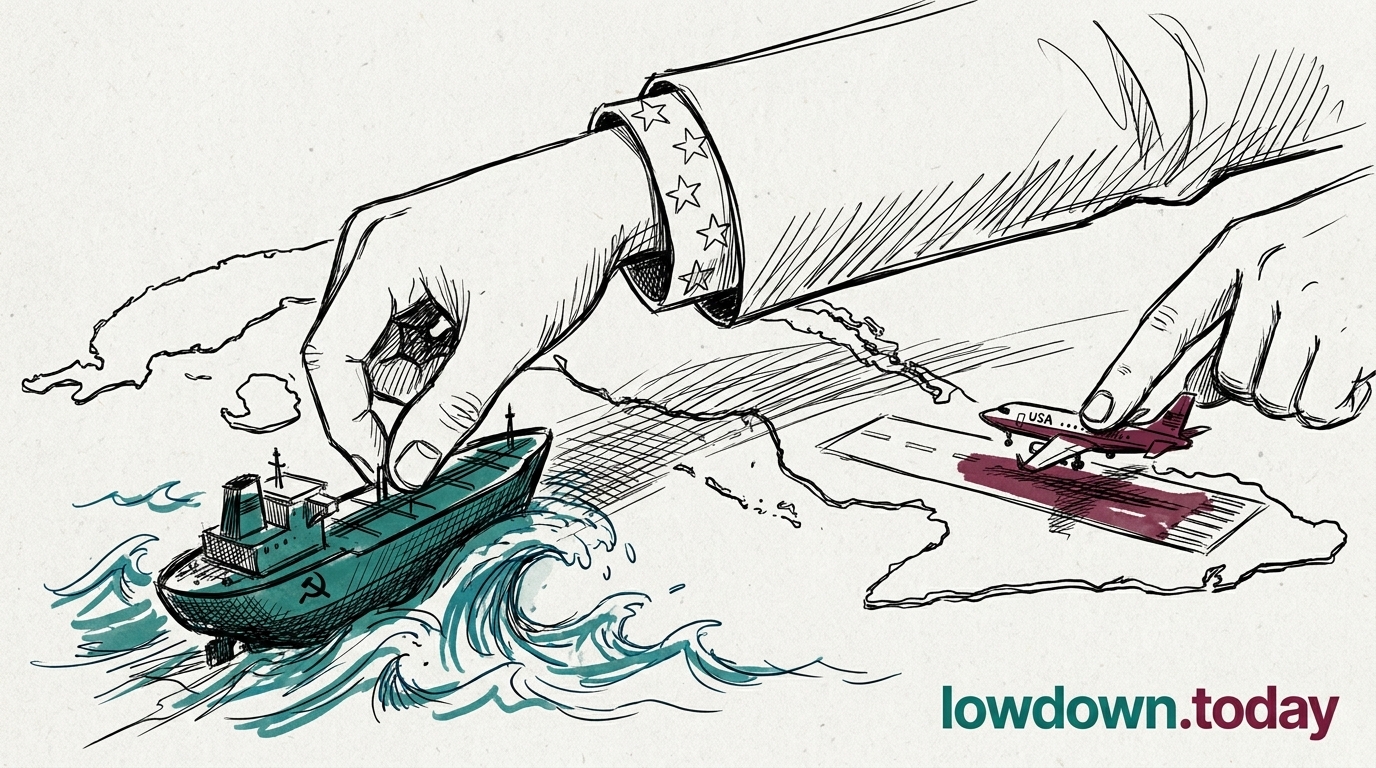
Russian tanker lands 730,000 barrels at Havana

3 min read
10:55UTC

The Anatoly Kolodkin delivered nine to ten days of Cuban demand on 31 March and Moscow announced a second vessel was loading.

PoliticsDeveloping
Key takeaway

Moscow's tanker is not normalisation, it is the difference between a dark evening and a darker one.

The Russian tanker Anatoly Kolodkin docked at Havana on 31 March 2026 carrying approximately 730,000 barrels of crude, the equivalent of nine to ten days of Cuban demand 1. Russian Energy Minister Sergei Tsivilyov announced at an energy forum in Kazan that a second vessel was being loaded, pledging Moscow would "not leave Cubans alone in trouble". No name, departure date or cargo volume has been confirmed for the second tanker.

The delivery has a specific role in the larger architecture. Venezuelan oil is the historical backbone of Cuba's state supply; the 18 March US Treasury carve-out blocks that pipeline. Mexican shipments ended in late January under Executive Order 14380 tariff pressure. Russia is the only remaining state-to-state source able to deliver tanker-sized cargoes into Cuban ports, and it is doing so in direct defiance of the US secondary-tariff threat. Moscow treats the deliveries as a low-cost strategic signal in a relationship that costs it little, sustains Havana, and extends Russian presence in the western hemisphere.

President Donald Trump dismissed the delivery in a brief exchange with reporters: "Cuba's finished. Whether or not they get a boat of oil, it's not going to matter." The phrasing treats Cuban state collapse as already determined and the tanker as theatrical. What the quote understates is that even nine to ten days of crude, arriving on a reliable cadence, materially changes the UNE grid arithmetic. It does not normalise supply; it buys survival. Whether Moscow sustains the cadence is the single most consequential external variable in the Cuba fuel picture over the next quarter.

Deep Analysis

In plain English

Russia sent a tanker with Cuban oil because it is one of the few countries willing to defy US sanctions and accept the tariff risk. The delivery covers Cuba's power station needs for about 10 days. Russia's energy minister announced another tanker was loading, suggesting this isn't a one-off. But Cuba used to get far more oil from the Soviet Union; what Russia is sending now is a fraction of what it once provided. Think of it as sending one ambulance when the patient needed a hospital.

What could happen next?
  • Risk

    If Russia encounters its own tanker capacity constraints or diplomatic incentive to pause Cuba deliveries, Havana's grid situation deteriorates immediately with no substitute source in the pipeline.

  • Consequence

    Moscow's public defiance of EO 14380 secondary tariff threats; delivering oil despite the declared tariff exposure; tests the enforcement credibility of the secondary mechanism against a nuclear-armed state.

First Reported In

Update #1 · Cuba carve-out survives Venezuela oil easing

Euronews / Reuters· 15 Apr 2026
Read original
Causes and effects
This Event
Russian tanker lands 730,000 barrels at Havana
Russia's direct-to-Havana tanker route is the only reliable state-level fuel backstop surviving the 18 March carve-out. {{EVREF:/t/russia-ukraine-war-2026/5/the-us-treasury-issued-30-day-sanctions-waivers/}}
Different Perspectives
Russia
Russia
Moscow has sent Havana solidarity gestures, including birthday messages to Raúl Castro, but no tanker has reached Cuba since the Sovcomflot Universal diverted away in May, and none arrived this week either. Russia's backing remains rhetorical while the fuel gap CUPET's designation created stays unfilled from any state-to-state source.
Observatorio Cubano de Derechos Humanos (OCDH)
The Madrid-based monitor published its half-year count of 1,949 repressive actions on 7 July, 299 in June, the highest monthly total it has logged in 2026, with independent journalists the most-targeted group. OCDH's figures moved the debate from sanctions cadence to security-state conduct in the same week Havana wanted the argument to stay on sanctions.
European Union (Stavros Lambrinidis)
Lambrinidis told the UNGA the embargo harms ordinary Cubans, then criticised Havana's Ukraine-ceasefire vote and Russian military participation, announcing no new measures. The EU is managing two separate Cuba files, human rights and Cuba's Russia alignment, that have not yet merged into one policy with teeth.
United States (Mike Waltz / OFAC)
Ambassador Mike Waltz held up photographs of named Cuban political prisoners, including Otero Alcántara, telling the delegation "this is not Havana", while OFAC issued no new Cuba designation between 1 and 9 July. Washington is running the prisoner-naming track and the sanctions track separately, and a re-charged Otero Alcántara would give the naming track a fresh case to press.
Cuban Ministry of Foreign Affairs (MINREX)
MINREX rebutted Mike Waltz's prisoner photographs at the UNGA debate, saying Cuba has nothing resembling the repression imagery Washington displayed, while giving no public account of Otero Alcántara's whereabouts. Havana's embargo case depends on external sanctions as the sole cause of harm, which a domestically caused grid failure and an unexplained disappearance both complicate.
Russia and China
Russia and China
Moscow and Beijing offered rhetorical solidarity but no relief. No Russian tanker has reached Cuba since the Sovcomflot Universal diverted on 26 May, and China has moved no substitute cargo, leaving Havana's fuel siege unbroken by its strategic partners.

