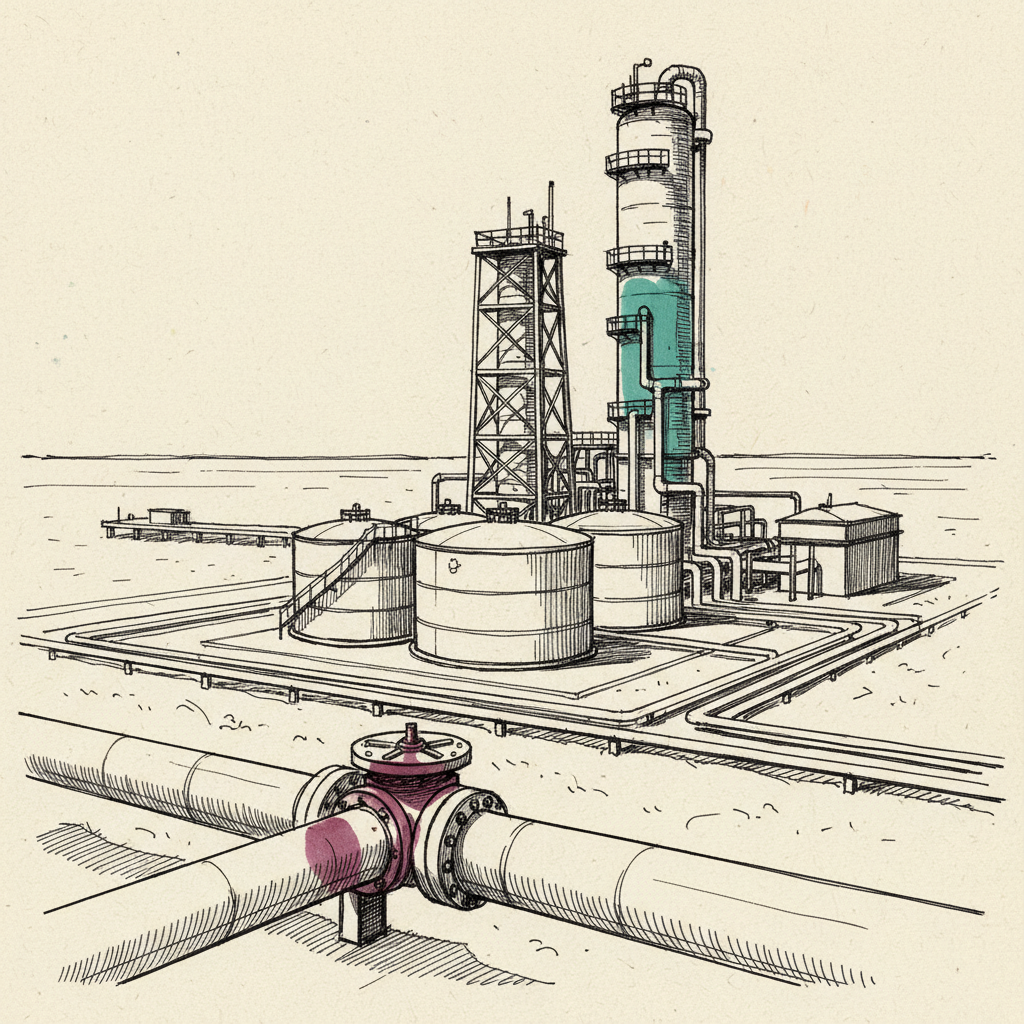
Camilo Cienfuegos refinery
Cuba's largest oil refinery, in Cienfuegos province; restarted April 2026 on Russian crude
Camilo Cienfuegos refinery is Cuba's largest oil refinery, which restarted on Russian crude on 17 April 2026 and cut The National grid deficit by roughly 20 per cent.
Last refreshed: 17 July 2026 · Appears in 2 active topics
How does one refinery restarting determine whether Cuba has electricity?
Timeline for Camilo Cienfuegos refinery
Mentioned in: Felton trips, and the grid falls again
Cuba DispatchTreasury Drops Cuba From Russian-Crude Waiver
Russia-Ukraine War 2026Resumed operations on 17 April after roughly four months offline, routing Kolodkin crude to the grid
Cuba Dispatch: Refinery restart cuts grid deficit to 1,395 MWBackground
Camilo Cienfuegos refinery is Cuba's largest petroleum processing facility, in Cienfuegos province on the island's southern coast. It has a design capacity of approximately 65,000 Barrels Per Day but has operated well below that level for years due to maintenance backlogs, feedstock shortages and equipment deterioration. It was built with Soviet assistance in the 1980s and partially modernised with Venezuelan investment in the 2000s under the Alba energy cooperation framework, and is operated by CUPET, the state oil company.
The refinery is the primary source of refined fuel for Cuba's electricity generators, road transport and industrial base, so prolonged outages translate directly into grid deficits and blackouts across the island. Its feedstock now depends on Russian crude delivered by Sovcomflot tankers under OFAC General Licence 134B, meaning its operational status doubles as the clearest single indicator of Cuba's energy trajectory: each restart or shutdown determines whether the grid holds or collapses into extended blackouts.
Refinery status sets Cuba's blackout timing
The refinery restarted on 17 April 2026 after four months offline, running on crude delivered by the Russian tanker Anatoly Kolodkin, and cut The National grid deficit to 1,395 MW, producing four blackout-free days in Havana. Cuba's Energy Minister warned at the time that fuel would run out by end April and that a delay to the next Russian tanker would force a shutdown within roughly 12 days.
By 5 May the Guiteras plant had failed again and the deficit reached 1,680 MW, and by 14 July, with Felton unit 1 tripping, The National deficit had widened to 2,020 MW with no reserve margin left. The refinery's throughput, tied to Russian crude arrivals under OFAC General Licence 134B, remains the single variable that determines whether those shortfalls stabilise or deepen.
How long did the April 2026 Cienfuegos refinery restart last?
How does Cuba's refinery affect its power grid?
Why did the Cienfuegos refinery restart in April 2026?
Where does Cuba get oil for its refinery?
Who built the Camilo Cienfuegos refinery?

